Friday, March 11, 2016

Top 5 Based-on-a-Book Movies

This weekend the venerable old Landmark Loew's Jersey Theatre is showing three classic movies that were based on popular books: The Postman Always Rings Twice (1946), Stand by Me (1986), and To Kill a Mockingbird (1962). Great books do not always make great movies. For every Gone With the Wind (1939) you have The Bonfire of the Vanities (1990). Screenplay adapters have to understand what makes a book resonate and translate it to the visual medium of film. Here are five movies that I think got it right- even if they didn't strictly follow the source material:

1.) Mildred Pierce (1945)
Everybody knows how much I adore this movie. Crawford is transcendent (and yes, sympathetic) and gives one of the greatest performances of her career. But interestingly enough, the movie is quite different from the book. Author James M. Cain was already a hit writer when he penned Mildred Pierce in 1941. His previous book The Postman Always Rings Twice and serialized Double Indemnity were both thrillers that swirled around crime and infidelity. Sexy stuff for the mid-Thirties. But Mildred Pierce was not a crime novel. It was a melodrama following the titular Mildred's dissolving first marriage and her struggles to give her daughters all the things she didn't have- resulting in a legendary spoiled brat. So why does the movie version of Mildred Pierce open with Monte Beragon (the slick Zachary Scott) getting filled full of lead?
It would seem that the makers of Mildred Pierce were worried that Cain's previous work and the successful movie version of Double Indemnity a year earlier had created an expectation in the audience for a crime story. Not to mention that violence sells, so why not try and meld together a film noir and a women's film? Enter the crime bookends at the beginning and end of Mildred Pierce.
Director Michael Curtiz did an amazing job weaving together the two genres and cinematographer Ernest Haller creates a wonderful visual juxtaposition between where Mildred began and the dark place she wound up using the contrasting lighting tropes of  noir and melodrama. That genre-blending is one of the reasons Mildred Pierce has stayed with us so long... and there's the slapping scene.

2.) A Clockwork Orange (1971)
Stanley Kubrick has a freak side. Sure, you see an orgy or two in his Eyes Wide Shut (1999), but nothing can top the vicious sexuality on display in A Clockwork Orange. Anthony Burgess' 1962 book that the film is based on was likewise provocative. The tale of Alex and his gang of no-goodniks takes place in a not-to-distant dystopian England where rape and violence proliferate the city's streets, and no one proliferates quite as much as Alex and his droogs. But this book wasn't just radical for its sex and violence. It is also challenging in its stance that the measures society takes to try and fix human behavior could be just as barbaric as the crimes themselves.
The movie version of Clockwork brings Burgess' ideas to startling life through the lens of one of the cinema's greatest visual artists. It's one thing to read about a gang rape. It's another to see it- and it's yet another to see it as if it's a surreal work of art. There are several rape scenes in the film (and one consensual sped-up lovefest) and none of them are filmed realistically. The violence and terror of rape are there, but they are abstracted.
The rape of a girl takes place on an abandoned stage to the strains of Beethoven. The rape of another woman is committed by men in phallic harlequin masks, who cut strategic holes in her pantsuit, all while singing the title tune from Singin' in the Rain'. A feisty older woman is attacked in her cat and erotic art-covered home with an enlarged penis sculpture. Kubrick re-imagines the rapes of Burgess' novel as violent art pieces instead of realistic acts of violence.

In the second half of the film as young Alex pays for his crimes, he is subjected to an experimental behavioral psychology "cure" for criminal thoughts called the Ludovico Technique. Alex is strapped to a chair in a theater, his eyes pried open by some nasty eye clamps, and is subjected to the cruelest images of rape and violence. The treatment works- but leaves poor Alex unable to defend himself in the real world- or to even enjoy his beloved Ludwig Van.

Unpacking a Kubrick film will take much more space and time than this blog can handle- but a good starting point is to think about the link between the distorted images of sex and violence depicted in Kubrick's film, and the more realistic images Alex is subjected to in the theater for his treatment. Kubrick has taken Burgess' material and skillfully applied it to the cinematic medium- making the ideas visual while at the same time confronting the medium presenting those visuals.

And then there's the Clockwork fan who made Alex's bedspread.

3.) Misery (1990)
 As far as I'm concerned, Stephen King is this century's (or is it last century's?) Charles Dickens. The man's consistent stream of fascinating horror books that create unforgettable characters who leap from the page into our nightmares is truly unique in the publishing world. One of my favorites was 1987's Misery. I will never forget reading it in one sitting during a weekend in my snowed-in one-room apartment. I don't recommend reading Stephen King books if your physical environment matches the story's. Just don't.
At the time, most of King's books were made into movies, and Misery was no exception. A mere three years after the book was published, Rob Reiner shot the film version starring James Caan and relative newcomer, Kathy Bates. Caan plays Paul Sheldon, author of a hit romance book series who is tired of selling out.
On a self-imposed writer's exile in Colorado to finish the last book in his Misery Chastain cycle, his car skids off a snowy road and he comes-to broken, but alive in a room in the house of his "number one fan", Annie Wilkes (Kathy Bates.) Annie goes from savior to torturer when she discovers the galley of the new book and demands that Paul re-write it so her favorite character doesn't die, or else...
Bates was inspired casting. She so perfectly embodies the homespun schizoid Annie, that you would think it was written for her. Bates is able to balance the lonely outcast with the manic curse-filled psycho to the point we are almost sad that Paul has to dispatch her. She found the dark humor that King had placed in Annie, and  it would earn Bates her first Oscar nom and to date- only win.
King has a thing for people who are stuck or trapped (think Cujo, Rita Hayworth and Shawshank Redemption, The Shining, The Mist, and Gerald's Game.) In a novel, it gives his main characters time to ruminate on themselves and their lives, as well as figure out a way to get un-trapped, but in a movie, it's a dangerous choice to set a film in one location. Reiner handles the obstacle of the one-room location with a tight, fast script by Oscar-Winner William Goldman that builds tension to scream-worthy levels.
There are occasionally breaths of fresh air as we go outside the room to follow Buster and Virginia (the adorably matched Richard Farnsworth and Frances Sternhagen) as they search for the missing Paul. But mainly, we are trapped in that room with Paul, desperately trying to figure out how to escape, dreading the sound of Annie's key turning in the lock.

4.) The Stepford Wives (1975)
Ira Levin was hot stuff in the late '60's and early '70's. His books Rosemary's Baby (1967) and The Stepford Wives (1972) were hits and the release of the film version of Rosemary's Baby in 1968 was a smash success. Levin tapped into the Women's Movement in this country in a creative way- depicting women who were trapped in supernatural situations that reflected a growing dissatisfaction with traditional marriage. The Stepford Wives addressed Women's Lib and how the male-dominated culture constructed women and their views of themselves.
In the film version, Joanna Eberhart (Katharine Ross) and her family move to a Connecticut town with the hopes of escaping the New York rat race. Everything seems idyllic- too much so. The wives of Stepford are all immaculately dressed, beautifully put together, and willing to make their husbands happy at any cost. Joanna isn't having any of this, and decides with her friend Bobbie (the hilarious Paula Prentiss) to find out what is in the water of Stepford that makes women such lovely doormats.
Not to be a spoiler queen, but it ain't the water that's the problem in Stepford, it's the men.
Critics of the movie (and they include feminist author Betty Freidan) felt that the movie dumbed down feminism and fetishized the image of the perfect woman. I hate to argue with the author of The Feminine Mystique, but she was totally missing the point. The image of the perfect wife in The Stepford Wives isn't attractive. It's terrifying.
The soft-focus perfection and robotic repetition of domestic patter about recipes and household cleaners is unsettling- not appealing. The final scene of the wives of Stepford walking through the supermarket isn't one of tranquil beauty- it is ghastly- almost like a uniformed fascist brigade that is looking for the softest two-ply.
The movie has become a camp classic due to its fashion and outdated vision of femininity- but I think it is a well-made social-issue horror movie- one that uses visuals instead of explicit ideology to spread its terror. And I think in a world where many women become more and more plastic, there is something to be learned in a movie about a town full of synthetic women.

5.) Breakfast at Tiffany's (1961)
Ah, Breakfast at Tiffany's- one of the great romance films from the end of the studio era where a carefree fashionista and an earnest writer fall in love living in the same New York apartment building. But if the movie had been made more faithful to Truman Capote's 1958 novella, it would have looked quite different. To begin with, Capote's main characters were a little rougher than their cinematic counterparts. In the novel, Holly Golightly is not a lovable pixie who gets through life having men give her money for the powder room. She's a hooker. Unrepentantly so. She has a foul mouth and admits to sleeping with men and women. This has little effect on neighbor Paul Varjack's interest in her, though, because in the book, Paul is a gay man.
A literary stand-in for Capote, Paul is fascinated by Holly, but has no intention of  marrying her. So it should come as no surprise that the rainy happy ending with Cat reunited with the two lovers doesn't exist in the book. In the book Holly and Paul part ways- and Cat disappears. And the wonderful character of "2E" Failenson that Patricia Neal has such delicious fun with doesn't even exist. There is a Mr. Yunioshi in the book but he is played by a real Japanese man.
So why all the changes? Simple. It was 1961. There was no way a movie could be made about a bisexual prostitute and her gay friend. The Production Code was beginning to wane- but not that much. The language in the book alone wouldn't be seen on American movie screens for another eight or nine years. So director Blake Edwards took a darkly funny story, removed the questionable parts, and made it more funny funny by throwing in a charming romance and Mickey Rooney in yellow-face (a funny fail). But the film does retain some of the sad undercurrent from the book with Audrey Hepburn's sensitive portrayal of a lost girl and Henry Mancini and Johnny Mercer's unforgettable Best Song Oscar-Winner "Moon River."

What "book-to-movie" films do you love?

Thursday, March 10, 2016

The Big Screen in the Sky: Ken Adam

Oscar-winning production designer Ken Adam has passed away at age 95. While his name might not ring any bells, his work certainly will. Adam was the production designer for the early Bond films including Dr. No (1962), Goldfinger (1964), and You Only Live Twice (1967). And every kid of a certain age will appreciate his work on Chitty Chitty Bang Bang (1968.)
Adam joined the ranks of legendary designers when he designed the famous war room set for Stanley Kubrick's Dr. Strangelove (1964), and would later win an Oscar for his work on Kubrick's 18th Century drama, Barry Lyndon (1975). Adam's sets were integral to the films he worked on, and he should be remembered in the same breath with the famous directors he worked with to bring such memorable visions to the screen.

Wednesday, March 9, 2016

Black Films Matter!

With all the talk this year about lily-white Hollywood, Anthology Film Archives is finishing up their American International Festival with eight Blaxpoitation Films that really go back to black. Now whether you feel that these films from the Seventies celebrate Black Power or stereotype and fetishize it, these films are amazing time capsules of a culture that was struggling with racial issues through its entertainments.

Made on the cheap and full of sex, violence, and outlandish fashions these films were created specifically for a black audience. Some of the first films of this genre were made by black directors like Melvin Van Peebles (whose film Sweet Sweetback's Baadasssss Song (1971) you can see at BAM next Wednesday 3/16)  and Gordon Parks who worked within the white film system to provide new cinematic images of Black Culture.
But once those films showed they could make money, Hollywood caught-on and started making Blaxpoitation films as well- with white directors. So the genre can lurch from strong images of black men and women subverting the sytem to chicks pulling each others' afros with their hoo-has out.

Either way, the films are a fun watch and start Friday 3/11. I would recommend catching the deep-voiced William Marshall in Blacula (1972) and the always entertaining Pam Grier in Coffy (1973) and Foxy Brown (1974).

For a really great documentary on Blaxpoitation films, check out Baadasssss Cinema (2002).

Catch you on the flipside!


Wednesday, March 2, 2016

These Movies Are Condemned!

The Catholic Legion of Decency.
No, CLOD is not from a Monty Python sketch. Nor is it a clandestine group of super-villains from a Venture Brothers episode.
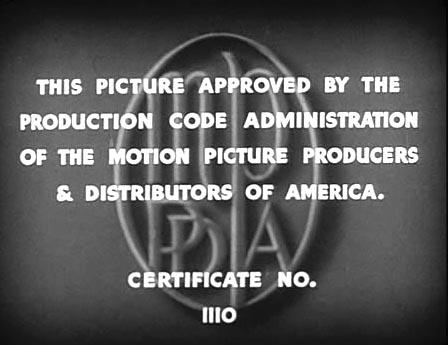
Founded in 1933, the organization was the moral police for Hollywood, ushering in the Production Code Era. Before 1933, Hollywood studios paid lip service to religious organizations who were upset with the morals of Tinseltown and the degenerate films it produced. (Their word, not mine.) The movie moguls knew that sex and violence sold tickets so they saw no reason to change their business plans, but they needed to appease the shrill moralists who could organize boycotts of films. In 1930, they propped-up an ex-Postmaster General (Will H. Hayes), had him come up with a strict list of Don'ts and Be Carefuls that they publicly said they would honor, and went merrily about their way making movies full of sex and violence.
This gambit worked for a couple years but religious leaders like the Archbishop of Cincinnati finally felt that enough was enough and organized the Legion of Decency to force Hollywood to clean up its act. While its mission statement was to provide a ratings system to alert their parishioners to movies that were "immoral", the more effective purpose was to organize boycotts of films the Legion deemed unfit for human consumption. The threat of well-organized boycotts by Catholics in the larger urban centers where most theaters made their money was enough to finally force the hand of Hollywood producers.
They created the Production Code Administration under the helm of super-Catholic Joseph I. Breen, or as I like to call him, JIB. The Administration would be given the authority to oversee the moviemaking process from script to final-cut and "suggest" edits based on the Production Code's strict guidelines. And by suggest, I mean that if you didn't do what JIB said, you would not get a PCA Seal of Approval and theaters would not release your film for fear of reprisals from the Legion. This meant that from 1934 on, movies had to punish wrongdoers, not show a toilet, keep the romance out of the bedroom, make sure women's bits were covered tastefully, and forget any depiction of homosexuality.
What a bore, right?
Of course creative filmmakers were quickly able to find ways around the code, using visual shorthand like fade-outs after kissing, eye-matches, and clues that someone "smelled of lavender" to still give their savvy audience members the verboten thrills they craved. These clever end-runs helped create the Hollywood style that would dominate the movies from the '30's until the Code was replaced by the MPAA ratings system in 1968. And we owe it all to the goody-goodies of the Legion of Decency.

Turner Classic Movies is having some fun this Lent by showing films that either helped bring on the Code or caused a stir with the Legion after the code was implemented. They're calling it Condemned and you can go to their oddly designed website to see a list of the movies they are showing.

My picks?

 The Story of Temple Drake (1933)- Based on the William Faulkner novel Sanctuary, Temple Drake would be a difficult movie to make even today. Temple (Miriam Hopkins) is the daughter of a prominent Southern judge and she likes to live fast with booze and boys.
One stormy night she accidentally winds-up held hostage by a rough bootlegger (luggy Jack La Rue) who kills her escort and rapes her. If that's not bad enough, when he heads to the big city he takes Temple with him. But is Temple being held against her will- or has she got a bad case of Stockholm syndrome- or Bad Boy-itis? It's a complicated story that goes to the edge with issues of rape and female sexuality. This is one of those "degenerate" movies whose content inspired the creation of the Legion.

Black Narcissus (1947)- What could the Legion have found objectionable in a movie about a group of nuns living in a monastery in the Himalayas? Plenty. The Powell and Pressburger classic has a palpable sexual undertone with looks flying between Sister Superior (the always wonderful Deborah Kerr) and Mr. Dean (the well-legged David Farrar) which makes Sister Ruth (creepy, creepy Kathleen Bryon) literally go mad with jealousy. As with all Powell and Pressburger films, the Technicolor palate and settings are visually lush and the tense ending is worth the wait. Unfortunately flashback scenes to when Kerr wasn't a nun were cut out of the American release to appease the Legion.


The Outlaw (1943)- This is the movie that made Jane Russell's ta-tas stars. This story of Jesse James with some feminine license taken with history was originally shot by gazillionaire film producer and aviation wunderkind Howard Hughes in 1941. But Russell's low-cut blouses caused so much trouble with the PCA that the film wasn't released widely until 1946. By then the film was so notorious that it sold bonkers tickets and launched Russell's career as a no nonsense actress and cross-your-heart bra pitchperson.

Baby Face (1933)- This is one of my favorite Pre-Code films. Barbara Stanwyck is an un-apologetic social climber who goes from her father's speakeasy to extravagant New York penthouse by using her feminine charms. Along the way there are broken engagements, blackmail, and murder, but Stanwyck always manages to survive. Stanwyck is young and vital here- and so down-to-earth that you hardly blame her for all her misdeeds. She is the product of a rotten world and just does the best she can to survive in it. The ending for this film was re-shot because the New York State Censorship Board had a cow, but much of the naughtiness is left intact with lascivious looks, sex-charged-banter, and camera movement that perfectly visualizes Stanwyck's climb up the corporate ladder. A must-see.

Baby Doll (1956)- This movie is weird- but worth a look. Elia Kazan and Tennessee Williams re-teamed to film the story of Southerner Archie Leigh Meighan (a drawling Karl Malden) who marries a 17-year-old (also drawling Carroll Baker) who coos like a child, sleeps in a nursery crib, and dresses like Jon Benet. It's bad enough that Archie is still waiting to consummate his marriage but along comes an Italian slickster (swarthy-toned Eli Wallach) who has his own ideas about Baby Doll. One look at the trailer and you can guess why the Legion lost their minds. Somehow this film got four Oscar noms- I'm assuming because the Academy figured if it was Kazan, it had to be Oscar-worthy. Eh...

Strange Cargo (1940)- I really like this movie. The final pairing of Crawford and Gable, this strange film is a hybrid of prison escape film, romance, and religious allegory. Verne (Gable) is a prisoner in a French penal colony and Julie (Crawford) is a lady of the night who wants to get back to the mainland and start over. They meet cute on a dock, and when Verne and some fellow prisoners plot an escape, Verne takes Julie along. The intrepid band fights their way through jungles, swamps, and an ocean crossing to find freedom.
One of the escapees, Bible-quoting Cambreau (Ian Hunter) is a calming spiritual influence and seems to know what will happen before it does. Is Cambreau a man, or the Son of you-know-who? The Legion was not too happy about this thinly-veiled depiction of Christ, and Julie's "vocation", so edits were made. Luckily the sparks between Crawford and Gable are impossible to dull, and their electric banter is a reminder of why these two were paired so often on the screen- and why they maintained a long-standing affair off-screen.

So tune into TCM and piss off the Legion by watching some "immoral" movies!

Sunday, February 28, 2016

Not Hating the Hateful Eight

I know I'm supposed to be preparing myself for the red carpet this evening... well, the red carpet in front of my television, but I can't stop thinking about seeing The Hateful Eight yesterday.
I am a pretty un-apologetic Tarantino fan. I have been critical of his preciousness with himself and dialogue diarrhea about hip things like mix tapes, but on the whole I have been impressed with how he has grown as a filmmaker. The Hateful Eight seems to me to be another complicated step in Tarantino's evolution.
There is very little I can say about the story of Hateful without ruining critical plot points.The film is a violent, western mystery thriller- Stagecoach meets Ten Little Indians meets The Wild Bunch. The plot twists are superb and Tarantino's love of the non-linear story comes to full bloom in the second act. In Inglorious Basterds (2009) Tarantino explored the use  of the length of a scene itself to create tension and he has continued that trend here- perhaps too much at times.
Robert Richardson's  Oscar-nominated cinematography is both expansive and uncomfortably closed-in by Yohei Taneda's wonderful one-room set. The actors are universally superb- with Samuel L. Jackson, Oscar-nommed Jennifer Jason Leigh, and Tarantino new-comer Walton Goggins standing out in a room crowded with acting talent. Ennio Morricone's tense yet familiar score that plays as the blizzard howls should win him the statuette.

But I don't want to talk about any of that. I want to talk about what the fuck Tarantino is doing.

Hateful Eight is a hateful movie. It assaults its audience with nausea-inducing gore, racially-vicious verbal warfare, and punishing violence towards women. It is too simplistic to say that Tarantino is being a provocateur or that he is just showing the West as it was- a place where racism and violence against women were commonplace- where death was bloody and drawn out.
The tenuous period after the Civil War where the truce between the North and South seemed always on the verge of exploding into violence over the issue of Blacks is the perfect setting for Tarantino's obsession with race. The gratuitous use of the "f" word of past films is replaced by a racheting-up of his characters' proud use of the "n" word. And it is used in its most hateful form- spat from the mouths that utter it. The disgust of hearing the expletive soon becomes numbed through overuse- uncomfortable laughter trying to muffle the sound of the word.
But like Django Unchained (2012), the hero of this movie is a black man. Samuel L. Jackson has starred in six Tarantino flicks- and this is the first one where he receives top billing. Major Marquis Warren is one tough, wily son-of-a-bitch, but he still has to deal with the indignities of black life after a barely concluded Civil War.
The Major is a flawed man- a bounty hunter with a history of shooting first and asking questions never- but he is the hero no matter how many times he is degraded. In his previous outting with Tarantino, Jackson's character was a racial capitulator- defending his white master to the death. Now he takes great pleasure in raining retribution on a cruel Confederate general (Bruce Dern in fine form) and punching a woman in the face who spits on a letter from Abraham Lincoln. So in that sense, despite the negative racial slanders, Tarantino is raising a Black Power salute, making his lead star a powerful, smart Black man.

But it's so complicated. Like the Blaxpoitation films that inspired Tarantino as a youth, the depiction of blackness is steeped in raging violence, as if blowing away all the racists was the answer. It was a depiction that shook white audiences in the '70's- and if the reaction to Beyonce's Superbowl performance is any indication- there are those who are still frightened of an image of Black Power.
I think Tarantino wants us to be uncomfortable with the issue of race- and partly achieves that sensation through the visceral use of vile language and gruesome violence- much of it heaped upon a woman. Maybe he is haunted by the image of himself as a quirky white boy watching Blaxpoitation movies in a crowded black theater, absorbing the culture of those around him through film, but still aware that he was "The Man." Whatever his motivation, three of his eight films have dealt directly with racism through the use of discomforting degradation and violence. And another two use the equation of Minority + Violence = Retribution? Revenge? Justice? (Kill Bill 1 & 2 (2003 & 2004)- Women and Inglorious Basterds- Jews). It makes me fantasize what the story of Stonewall would look like in Tarantino's hands. Drag queens marching down the street with machetes, castrating all those who stand in the way of marriage equality. The other F-word being spouted every few minutes.

Without ruining the ending- I think it can be argued that the film believes the races can come together in a sort of respectful partnership and serve justice- but the road of violence leads to a dark ending for everyone. A strangely self-destructive message from an artist whose whole career has been advanced by legendarily violent pictures.

The dear friend I saw the movie with will never watch a Tarantino film again. And I'm not sure that I will add The Hateful Eight to my film collection- but I can say that despite all the excesses of this film, I can't stop thinking about it- and that to me means there's more going on here than curse words and blood.

Friday, February 26, 2016

Lance's Werthwhile Top Oscar Losers


So The Oscars- or as I like to call it, My Superbowl- are fast approaching and everyone is busily prognosticating who will win which category. Will Leo finally get his man? Will Jennifer Lawrence win again because she showed up? How many times will people mispronounce Alejandro González Iñárritu's name?

Me? I'm more interested in what happens to the losers. Do they fight back the tears behind a maniacal grin until they get home and break expensive shit? Do they take out voodoo Scientology hits on the winners? Do they heave a sigh of relief knowing that in some categories (Best Actress I'm looking at you) the winners often disappear from the scene, unable to find roles that will top the performance they carted off the award for?

Oscar Losers is a much bigger club- and its members are pretty amazing. So here are my picks for Top Oscar Losers:

Best Picture- Sunset Boulevard (1950)
The Oscars of 1951 was a true clash of the titans with Sunset Boulevard up against All About Eve in all but one of the big 6 categories. The Best Actress category was a real Sophie's choice with Gloria Swanson up against Bette Davis and Anne Baxter. The joke was on all three of them when Judy Holliday nabbed the statuette for her fantastically ditsy work in Born Yesterday. All About Eve wound up taking Best Picture, Director, and Supporting Actor from Sunset. but did being the loser in those categories tarnish this great Hollywood classic?
Nope. Sunset Boulevard has endured as the definitive screen image of film obsolescence. Norma Desmond may be a silent film actress- but she represents all those elements of film that get left behind in the rabid advance of audience trends. She's the black and white film, VHS tape, 80's teen romance, Kodak celluloid, single-screen theater, Faye Dunaway- all those things that were once so much a part of the movies- but are now gone- relics tossed into the dustbin by the digital 3D superhero adventures that appear to replicate endlessly in multiplexes in malls around the country.
Sunset ends with an eternal, gauzy, fade-out of Norma's close-up, and All About Eve concludes with a shot of the new Eve reflected ad infinitum in a dressing mirror. Both seem to say that film is timeless, forever reaching across the years to speak to us... even if you don't win the Best Picture Oscar.

Best Director- Howard Hawks
Not only did film dialogue innovator Howard Hawks never win a competitive Oscar, but he was only nominated once! For so-so Sergeant York (1941)! The man who brought us such wonderfully lively comedies as Twentieth Century (1934), Bringing Up Baby (1938), His Girl Friday (1940), and Ball of Fire (1941) wasn't even nominated for any of those great films. And don't start with that old chestnut, "Comedies don't win Oscars." I know they don't. But It Happened One Night (1934), a comedy that won oodles of Oscars, came out the same year as Twentieth Century.
And Hawks was so proficient in many different genres: from early gangster flick Scarface (1932) to romantic dramas Only Angels Have Wings (1939) and To Have and Have Not (1944) to film noir The Big Sleep (1946) to sci-fi horror The Thing from Another World (1951) (he is uncredited, but it's pretty clear he had something to do with the dialogue) to sensitive western Red River (1948) to musical comedy Gentlemen Prefer Blondes (1953). The man could direct anything! Shouldn't that get him an Oscar?  The Academy threw him one of those honorary Oscars in 1975, two years before he croaked, but honestly, those honorary Oscars just scream, "We should have given you a real Oscar. Epic fail."

Best Actor- Richard Burton
There are those who say that Richard Burton was the finest actor of his time- and considering that included his most excellent English mates Peter O'Toole and Richard Harris, that is quite a distinction. But Mr. Elizabeth Taylor never won an Oscar despite being nominated seven times. Burton was one of those actors who brought an inborn, thinking-man's masculinity to his screen performances. Stage-trained, Burton used his intense focus and strong voice to project mastery over his scenes and characters. And when it worked best for him was when he was playing someone who was not really in control.

In 1966 Burton starred with his then wife Elizabeth Taylor in first-time film director Mike Nichols' screen adaptation of the Edward Albee play, Who's Afraid of Virginia Woolf? Much was made of the fact that Liz and Dick were playing a dysfunctional married couple- much like the public imagined their real-life marriage operated (it was super-dysfunctional). And while Taylor often gets more attention for plumping and uglying herself up for the role- Burton is extraordinary as George.
He is alternately powerful and weak and hides and exposes himself as the story of these two sad people unfolds. He hates and loves this woman, and himself, and watching him bring the story to its tragic end- knowing that it is destroying both of them- is devastating. His performance is such that it is hard to imagine anyone else playing the role. But that wasn't enough for the Oscar that year.
Fellow Brit Paul Scofield won for playing Thomas More in another stage-to-screen adaptation, A Man for All Seasons. Burton got some cinematic revenge three years later when he ordered Thomas More's execution as King Henry VIII in Anne of a Thousand Days. But he would lose the Oscar for that role to the king of the cowboys, John Wayne for True Grit. It seems like Dickie just couldn't catch a break.


Best Actress- Judy Garland
 There are iconic movie stars and then there is Judy Garland. This sensitive dynamo energized an era and whether she was singing "Over the Rainbow" or "Have Yourself a Merry Little Christmas" or "Come On Get Happy" Garland's voice and screen persona were unforgettable. But Garland fell into a common Hollywood rut. She was not really taken seriously. She was a musical star of great talent and fame- but she wasn't considered to be a serious actress because she danced and sang.
Not true. Aside from her unmistakable pipes, Garland was an expert at interpreting a song. What makes some of her greatest tunes unforgettable is her ability to evoke a pathos in songs that aren't obvious tear-jerkers. The best example of this was Garland's theme song "Over the Rainbow" where a childish tune about rainbows and bluebirds became wish-fulfillment for anyone longing for an escape to a better place. It was Garland's abilities as a song "actress" that made her performances unique.

In 1954, Garland staged a Hollywood comeback by throwing herself heart and soul into George Cukor's A Star is Born. The story about a young woman's rise to fame in Hollywood all while the husband who discovered her descends into alcoholism was not new. The original film in 1937 starring Janet Gaynor and Frederic March was a hit and the story seemed destined for re-visiting (its about to be re-visited again helmed by Bradley Cooper). But with Cukor and Garland this version became a musical highlighting the music of Ira Gershwin. Garland had a lot riding on this project. Four years earlier she had been summarily fired from MGM for erratic behavior, and this film would be her return to the silver screen after years of success on the concert circuit.
Watching Garland you get the sense that she is accessing every bit of her personal history to bring Vicki Lester, nee Esther Blodgett to life. Her degrading makeup session to fix what is wrong with her face seems far too close to home for L.B. Mayer's "little hunchback." And her performance of "The Man Who Got Away" not only evokes the sadness of lost love, but the survival mode that accompanies it. This number is a musical foreshadowing of the loss of Esther's husband to suicide- a scene she does beautifully without singing a single word.
From her hospital room where she had delivered her last child, Garland, along with everyone else, heard the Academy Award for Best Actress go to Grace Kelly for The Country Girl- a movie I've never heard anyone talk about. Judy got a juvenile Oscar in 1940 after The Wizard of Oz which was basically a studio marketing award- and she was nominated again in 1962 for Judgment at Nuremberg, but would never win a competitive Oscar- the man who truly got away.

Best Supporting Actor- Claude Rains
Holy cats, Claude Rains was in everything! Looking at the list of movies he made, it's amazing how many good films the English actor appeared in. From his first hit The Invisible Man (1933) to his final big screen appearance as King Herod in The Greatest Story Ever Told (1965) Rains brought a fascinating moral complication to both his heroic and dastardly roles. He was nominated for Best Supporting Actor four times: Mr Smith Goes to Washington (1940), Casablanca (1942), Mr. Skeffington (1944), and Notorious (1946), but he could have easily been nominated an additional two times for Now, Voyager (1942) and Lawrence of Arabia (1962).
Particularly in Mr. Smith and Casablanca, his characters meld charm and grace with an untrustworthy quality. We aren't entirely sure Senator Paine or Louis are good guys or not. In Notorious, we know Mr. Sebastian is a Nazi Spy- but his Old World appeal makes you want to hang out with him- just don't drink the coffee. Rains was always a pleasure to watch because he played with the ambiguity of good and evil rather than the black-and-white of it. It's a shame he was invisible to Oscar voters throughout his career.

Best Supporting Actress- Thelma Ritter
Hattie McDaniels famously said she'd rather get paid to play a maid than to be a maid- and considering how many times character actress extraordinaire Thelma Ritter played a domestic helper, you'd think she might say the same. Ritter started her film career in an uncredited role in the Christmas staple Miracle on 34th Street (1947), and three years later she was nabbing her first Oscar nomination as Birdie, Margot Channing's sassy dresser/maid/confidante in All About Eve. In Hitchcock's Rear Window (1954), she is a chatty massage therapist. In the romantic comedy Pillow Talk (1959) she is Doris Day's tipsy housekeeper. In the Misfits (1961) she is a lonely Reno boarding house owner who goes along for the ride with Marilyn Monroe and Clark Gable.
Glamour was not Ritter's thing, With her gravelly voice, and her pointed commentary, she was always the earthy gal on the outside looking in, letting fools know when they were fools. It was a refreshing read that put memorable sparks in the films she appeared in. Ritter was nominated six times for Best Supporting Actress but never made it to the top of the Oscar pile. After her fourth nomination she said, "Now I know what it feels like to be the bridesmaid and never the bride."
Don't worry, Thelma. The Oscar Losers Club is proud to have you.

So those are my Top Oscar Losers. What are yours?