Showing posts with label George Cukor. Show all posts

Friday, December 2, 2016

That's Showbiz, Kid

Tuesday night my friend Dave took me to Lincoln Center to see the new documentary Best Worst Thing That Ever Could Have Happened... (2016). Directed by one of the stars of the original doomed Broadway cast, Best Worst chronicles the creation of the Stephen Sondheim/Harold Prince musical Merrily We Roll Along (1981) which famously closed after only 16 performances.

It's a really great documentary that parallels the story of Merrily with the lives and careers of a cast of Broadway hopefuls whose lives didn't exactly turn out the way they thought they would. It reminded me that life in the spotlight isn't always what it's cracked-up to be- and often the backstage story is as interesting as what gets shown on the big screen.

Here are my Top 5 Documentaries about people in the movie biz:

Marlene (1984)

Marlene Dietrich was one of the biggest stars of the Golden Age of Hollywood. Launched as Paramount's answer to Greta Garbo, Dietrich quickly became a star in her own right, lighting up silver screens (and bedrooms) from the early '30's until the late '50's with her unique brand of Teutonic beauty and glamour. But after her performance as German war widow Frau Bertholt in Judgement at Nuremberg (1961), Dietrich said goodbye to Hollywood and focused on her traveling one-woman show until a nasty spill off a stage in 1975 broke her thigh and her spirit. Dietrich would eventually seek the comfort of her Paris apartment- and in true Garbo fashion- wanted to be left alone.

In the early '80's Dietrich's Nuremberg co-star, Maximilian Schell coaxed Dietrich into participating in a documentary about her legendary life. Well, sort of. Dietrich agreed to be interviewed for the documentary- but not to be filmed. So Schell was left with a set of audio tapes and film clips of her old movies to construct a whole documentary. But he did it. Shot like an art film, Marlene uses Dietrich's voice and shadowed reconstructions to bring to life the great star at a time when she was no longer the glamorous Hollywood icon- but an angry recluse whose memories bounce from German to English and from reverence to venom at the tap of a cigarette.

It's a strange and sad portrait of stardom that would garner an Oscar nom for Best Documentary. Read Dietrich's daughter's biography Marlene Dietrich for more fascinating insight into this riveting Hollywood personality.


Divine Trash (1998)

John Waters has always been an out-loud and proud ambassador for his unique brand of cinematic kitsch/filth. His pencil-thin mustache is as recognizable as the trashy characters from his films. But there's more to this indie film idol than meets the eye. Steve Yeager's documentary Divine Trash wonderfully chronicles Waters' rise in the Baltimore suburbs along with his muse, Glenn Milstead- better known as drag artist Divine. The two began making films together in 1966 and their unique brand of raunchy comedy and equally perverse castmates took them from 8mm short films to nationwide cult hits.

But what is intriguing about this offscreen look at some of the most notorious movies ever made (the "singing butthole" guy from Pink Flamingos (1972) refused to be filmed in full lighting) is Waters' dedication to filmmaking.

From the very beginning he studied editing and shooting to create the "homemade" quality of his films. While his eyes twinkle about all the drugs they were on, actress Mink Stole recalls how important the script was- having to endure multiple re-takes until she got lines and blocking exactly right.

As loose and amateur as Waters' films feel, he was in fact using his camera and his actors to very specific effect. While it doesn't deal with his more mainstream successes like Hairspray (1988), Divine Trash gives us a window on the mind and revolutionary times of one of filmdom's most unique storytellers. And if you'd like to see a list of movies that John Waters likes, click here.

On Cukor (2000)

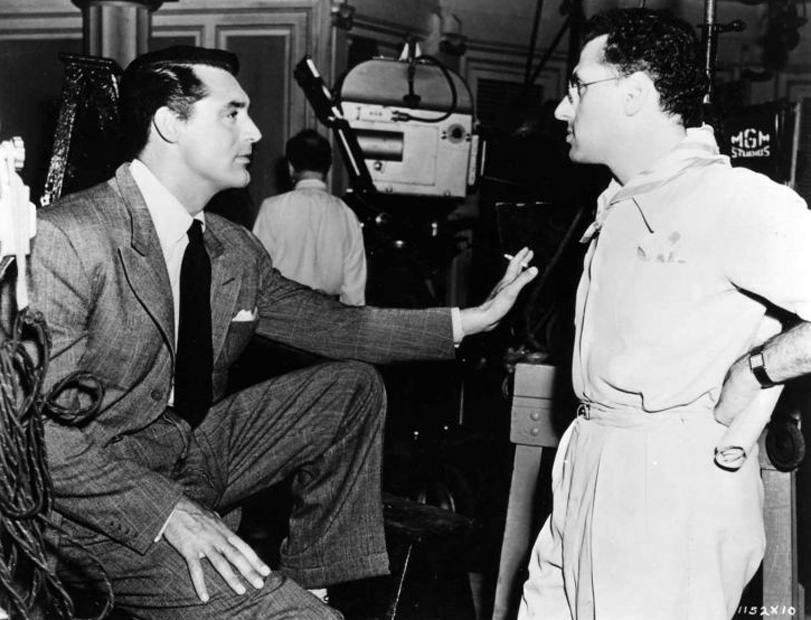
George Cukor was one of the greatest directors of the Studio Era. Not everyone thinks of Ol' George when naming iconic directors because he wasn't known for a striking visual style. What Cukor excelled at was smart properties and getting the best performances from his actors.

Twenty-one actors were nominated for Oscars in Cukor films and five of them took home the trophy. Cukor was labeled a woman's director because of his work crafting performances with actresses like Greta Garbo, Joan Crawford, and Kate Hepburn. But Cukor was also masterful with some of the best male actors in the business like Spencer Tracy, Cary Grant, and Jimmy Stewart.

Cukor's long history in Hollywood is covered in loving detail in the American Masters special On Cukor, and it's particularly fascinating because it delves into Cukor's homosexuality. Cukor was a classic example of a Hollywood mover and shaker whose sexuality was well-known, but never discussed publicly. The Tinsletown Closet allowed some artists to be gay, but never in situations where the public or press could find out.

For Cukor it meant hiding his sexuality at work, but Angela Landsbury who earned an Oscar nod in Cukor's Gaslight (1944) tells of Cukor's Sunday brunches at his home where he and his friends could let their hair down and be themselves. Oh if that pool could talk. On Cukor is a wonderful glimpse of Cukor's extraordinary body of work and his guarded private life.

Marilyn Monroe - The Final Days (2001)

Speaking of Cukor, Marilyn Monroe and Cukor paired-up on one of Hollywood's most famous unfinished films. Cukor directed Monroe in the My Favorite Wife (1940) re-make Something's Got to Give (1962). Their previous film together Let's Make Love (1960) was only successful in getting Monroe and her co-star Yves Montand's affair into the gossip rags. Monroe's next film The Misfits (1961), while fascinating, was a box office dud. So Monroe and 20th Century Fox hoped that Something and Cukor could re-establish her as the queen of the box office. She missed the throne... 

The Final Days details the making of Something with interviews with many of the people involved in the project and footage from the film- thought lost long ago. They reveal a woman who was fighting for her career while at the same time struggling with personal demons that would ultimately scotch the film- and later her life. It is a touching portrait of a woman the world has consistently tried to define- but always falls short of fully discovering.

The documentary ends with a reconstruction of forty-five minutes of Something so that we can take a peek into that remarkable world of "What if?" Monroe is luminous and funny- her Sixties look beguiling. It's hard to believe that the tragedy that would end her life was just two months away.

The Kid Stays in the Picture (2002)


Robert Evans was discovered by Norma Shearer because she thought he looked like her deceased producer husband, Irving Thalberg. Evans would go from playing a producer to being one. Producers and agents are often the catalysts to so much of what we see on the screen long before it ever makes it there. The deals, the dinners, the phonecalls- all the work that goes into a picture is usually hidden from public view. But The Kid Stays in the Picture is one of those movies that makes the audience feel like they are insiders in the Hollywood Game.

Evans started off as an actor, but quickly realized his charm and savvy could make more moolah as a producer. Evans landed at Paramount after nabbing the screenrights to The Detective (1968) for Frank Sinatra and for the next almost forty years he has been hustling to make some great movies. If his list of movies is impressive (The Godfather (1972), Chinatown (1974), and Marathon Man (1976)) his life as the quintessential Hollywood producer is the stuff of movie legend. 

The Kid is based on Evans' autobiography of the same name, so one gets the feeling that not all the bodies are exhumed (like his close friendship to Roman Polanski during his child rape case), but Evans' coke-fueled downfall is covered with enough candor to make us feel like Evans is shooting straight with us. His Rolodex is a collection of the biggest Hollywood stars of the '60's and '70's and this film allows us to flip through it... and watch Dustin Hoffman do his Robert Evans impersonation.

What are your favorites docs about Hollywood?


Friday, May 20, 2016

Jimmy, Jimmy, Oh, Jimmy, Jimmy!

H-h-h-h-he is one of the most recognizable stars of Classic Hollywood. With his boyish charm and humble stutter, James Stewart personified the thoughtful, passionate everyman in a career that spanned over fifty years. Born in Indiana, Pennsylvania, Stewart started his entertainment career in college and then went to Broadway. By the mid-Thirties he was making movies in Hollywood and was a bankable star by the end of the decade.

When America went to war, Stewart was drafted- but was found to be underweight. Rather than shrugging his bony shoulders and going back to the safety of a Hollywood soundstage, he kept re-applying (and eating) until he was accepted in the Air Corps, turning down a behind-the-lines instructor position to fly actual combat missions.
His return to Hollywood in Frank Capra's It's a Wonderful Life (1946) not only created an iconic film role, but signaled a more complex Stewart that reflected Post-War America. He would work with some of the masters of Fifties cinema: Hitchcock, Preminger, Mann, Ford. As he aged, Stewart continued to perform and remained immensely popular, earning a total of five Academy Awards and an Honorary Oscar in 1985.

Stewart was a star- but after an early reputation as a playboy, managed to avoid the kinds of scandal and rumor that attracted the likes of Hedda Hopper and Louella Parson (unless you consider the fact that he was a proud card-carrying Hollywood Republican scandalous). He was known as a consummate professional and an all-around swell fella. The lovable screen persona of Jimmy Stewart became the public image- and it has endured.

On what would have been his 108th birthday here are my Top 5 Jimmy Stewart Movies:

You Can't Take It With You (1938)

Director Frank Capra was on a roll with two Best Director Oscars for It Happened One Night (1934) and Mr. Deeds Goes to Town (1936) so the expectations for his film adaptation of Kaufman and Hart's Broadway hit You Can't Take it With You were high. Capra cast Stewart as Tony Kirby, the lovestruck son of a banker who has to re-examine his political beliefs when he falls for a gal (wise-crackin' Jean Arthur) from a kooky liberal family.

With a family of hams like Lionel Barrymore, Spring Byington, and Ann Miller, who wouldn't do a spit-take over Sunday dinner? The film hops between goofy family comedy and earnest political statement, so there are moments when Capra's social preachiness weighs-down the narrative. But Stewart was perfect as a young man addled by love and an eccentric family, finally succumbing to the charms of both.

The success of You Can't cemented Stewart's endearing stammer and open-mouthed "aw shucks" face in popular culture and became his first big hit. It also started a professional relationship with Frank Capra that would result in legendary films Mr. Smith Goes to Washington (1939) and It's a Wonderful Life (1946). Not to mention Capra earned his third and final Best Director statue. It seems in this case, you can definitely take it with you.

Destry Rides Again (1939)

Stewart's first Western in a career riddled with them is a real charmer. The town of Bottleneck is run by crooked mayor Hiram J. Slade who has just had his henchman dispatch the town sheriff. Enter son of a famous lawman Tom Destry, Jr. (Stewart) who without a gun, begins to clean up this one-horse town. Standing in his way is saloon chanteuse Frenchy (the not French- but who cares? Marlene Dietrich) who winds up falling for the lanky sharpshooter who ultimately has to whip out his pistol to break the bad guys.

Dietrich gives a career-defining performance, playing a world-weary gal who knows her way around a bar and a man. Her warbling of "See What the Boys in the Backroom Will Have" inspired Madeline Kahn's hilarious Lili Von Schtupp in Mel Brooks' classic Western parody Blazing Saddles (1974). And Dietrich's catfight with Una Merkel is a hair-pulling, glass-throwing, chair-breaking masterpiece that caused a ruckus with the censors.

Dietrich and Stewart are absolute magic together- a sort of odd couple with the seductive singer and the reluctant gunman throwing off sparks. Apparently they hit it off offscreen as well. In later years, Dietrich claimed she got pregnant during the affair but got rid of lil' Jimmy without telling the father. This did not prevent her from starring with Stewart years later in airplane drama No Highway in the Sky (1951) where Dietrich takes full advantage of the fact that you could still smoke on planes.

See what the boys in the backroom will have- Emphysema.

The Philadelphia Story (1940)

Is there such a thing as the perfect movie? I would venture to say there is- and this is one of them. George Cukor's romantic comedy about a society wedding was based on a successful Broadway play and had top star wattage. The great Kate Hepburn played uppercrust gal Tracy Lord (no not that Traci Lords) whose wedding to another uppercrust soul (John Howard staying out of the way of the rest of the stellar cast) is complicated when her ex-husband C.K. Dexter Haven (oh so handsome Cary Grant) shows up, along with a pair of newspaper reporters (Stewart and his gal Friday Ruth Hussey), and Tracy's philandering father (John Halliday).

Of course there are mix-ups and romantic entanglements, witty barbs, and enough cocktails to fill a backyard pool. It's one of those movies where you wish you could jump through the screen and tie one on at a garden party with these fascinating folk.

Stewart as disillusioned poet turned newshound plays against his famous image by being cynical and snide- mocking Tracy and her whims and fancies. But once he gets drunk, he gives in to his true feelings and gushes about his awe of her "magnificence." Here is the Stewart we know- the young man spilling out his heart to beat the band grabbing all of our heart strings in his thin hand. Macaulay Connor for this one shining moment becomes Jefferson Smith, giving a filibuster on love. It's a wonderful performance that earned him his only competitive Oscar. And as a member of this mostly Oscar nominated cast (someone was smoking crack and left Grant off the nomination list that year), he helped make one of the great romantic comedies of the Golden Era.


Harvey (1950)

Elwood P. Dowd has troubles. His live-in sister and niece are angry with him because his best friend Harvey is causing a stir. Why shouldn't he? He's an imaginary 6" tall rabbit. Based on the Pulitzer Prize-winning Mary Chase play (they used to make a lot of movies out of plays) Harvey was a pet project for Stewart. He had played Elwood on Broadway, and hoped to bring the success he had on stage to the screen. Spoiler alert: He did.

Stewart was at the peak of his genial abilities, making this lost alcoholic who saw the world differently irresistable. Most of the characters in the play believe Elwood is crazy, in fact they want him committed. But for the play to work, we have to believe that Elwood sees Harvey. We can't think he's crazy. And even though we don't see the hulking lepus, we want to. Stewart's innate ability to make us trust and love him achieves those aims, seemingly effortlessly. He would earn his fourth Academy Award nomination for it. 


Harvey is one of those showcase movies built around one star's performance that can feel like an ego-trip. But the supporting cast that includes Oscar winner Josephine Hull joins in the heavy-lifting with Stewart and delivers a picture that works even when Stewart (and Harvey) are offscreen. 

Rear Window (1954)

Before you Hitchcock fans get too up in arms, yes I chose Rear Window over Vertigo (1958) for my favorite Stewart/Hitchcock movie. Vertigo might be a better work of art- but I think Rear Window is a better movie.
Stewart plays photographer Jeff Jeffries who is laid-up in his New York apartment with a broken leg. Unable to get around he sits in his wheelchair and tunes in to a common New York City show- the neighbors. Jeff's apartment looks out onto a back courtyard that is ringed by the rears of multiple buildings, providing a view into the lives of all of his neighbors- or at least those that don't lower their shades. As we watch The Songwriter, Miss Torso, Miss Lonelyhearts, a pair of newlyweds, and Miss Hearing Aid, we become part of a community that doesn't know it's a community.

Jeff is the director linking all of these strangers' lives. When neighbor Lars Thorwald (a creep-a-rific Raymond Burr) begins acting very strangely, Jeff worries that a murder has occurred and uses his girlfriend Lisa (the oh-so posh Grace Kelly) to investigate.

Stewart's trustworthiness is again at the center of his performance. We have to believe that Jeff witnessed a murder- even if we don't see it. We must have faith something happened- even if other characters are reluctant to accept it. With Stewart, that belief comes unconditionally, so that even when doubts creep in, we know that ultimately he will be vindicated. It's watching how the proof is revealed that makes it so much fun.

Hitchcock's brilliant camerawork uses long takes and subtle POV shots to lure us into Jeff's voyeuristic world and link together all of the different characters. The camera rarely leaves Jeff's apartment, opting for long shots that immerse the audience in Jeff's immobile view, making us meta viewers of a viewer.

This "viewed from a distance" technique produces a feeling of helplessness- much how Stewart feels when watching Lisa in danger from the confines of his apartment. Instead of a simple gimmick, Hitchcock's use of the camera allows us to be part of the film- and that ups the thrill level as the mystery unfolds.

Oh and Thelma Ritter appears as a sassy visiting nurse. Who wouldn't want that rubdown?

If all that's not enough to prove how charming Jimmy is, watch him tell a joke.

Friday, February 26, 2016

Lance's Werthwhile Top Oscar Losers


So The Oscars- or as I like to call it, My Superbowl- are fast approaching and everyone is busily prognosticating who will win which category. Will Leo finally get his man? Will Jennifer Lawrence win again because she showed up? How many times will people mispronounce Alejandro González Iñárritu's name?

Me? I'm more interested in what happens to the losers. Do they fight back the tears behind a maniacal grin until they get home and break expensive shit? Do they take out voodoo Scientology hits on the winners? Do they heave a sigh of relief knowing that in some categories (Best Actress I'm looking at you) the winners often disappear from the scene, unable to find roles that will top the performance they carted off the award for?

Oscar Losers is a much bigger club- and its members are pretty amazing. So here are my picks for Top Oscar Losers:

Best Picture- Sunset Boulevard (1950)
The Oscars of 1951 was a true clash of the titans with Sunset Boulevard up against All About Eve in all but one of the big 6 categories. The Best Actress category was a real Sophie's choice with Gloria Swanson up against Bette Davis and Anne Baxter. The joke was on all three of them when Judy Holliday nabbed the statuette for her fantastically ditsy work in Born Yesterday. All About Eve wound up taking Best Picture, Director, and Supporting Actor from Sunset. but did being the loser in those categories tarnish this great Hollywood classic?
Nope. Sunset Boulevard has endured as the definitive screen image of film obsolescence. Norma Desmond may be a silent film actress- but she represents all those elements of film that get left behind in the rabid advance of audience trends. She's the black and white film, VHS tape, 80's teen romance, Kodak celluloid, single-screen theater, Faye Dunaway- all those things that were once so much a part of the movies- but are now gone- relics tossed into the dustbin by the digital 3D superhero adventures that appear to replicate endlessly in multiplexes in malls around the country.
Sunset ends with an eternal, gauzy, fade-out of Norma's close-up, and All About Eve concludes with a shot of the new Eve reflected ad infinitum in a dressing mirror. Both seem to say that film is timeless, forever reaching across the years to speak to us... even if you don't win the Best Picture Oscar.

Best Director- Howard Hawks
Not only did film dialogue innovator Howard Hawks never win a competitive Oscar, but he was only nominated once! For so-so Sergeant York (1941)! The man who brought us such wonderfully lively comedies as Twentieth Century (1934), Bringing Up Baby (1938), His Girl Friday (1940), and Ball of Fire (1941) wasn't even nominated for any of those great films. And don't start with that old chestnut, "Comedies don't win Oscars." I know they don't. But It Happened One Night (1934), a comedy that won oodles of Oscars, came out the same year as Twentieth Century.
And Hawks was so proficient in many different genres: from early gangster flick Scarface (1932) to romantic dramas Only Angels Have Wings (1939) and To Have and Have Not (1944) to film noir The Big Sleep (1946) to sci-fi horror The Thing from Another World (1951) (he is uncredited, but it's pretty clear he had something to do with the dialogue) to sensitive western Red River (1948) to musical comedy Gentlemen Prefer Blondes (1953). The man could direct anything! Shouldn't that get him an Oscar?  The Academy threw him one of those honorary Oscars in 1975, two years before he croaked, but honestly, those honorary Oscars just scream, "We should have given you a real Oscar. Epic fail."

Best Actor- Richard Burton
There are those who say that Richard Burton was the finest actor of his time- and considering that included his most excellent English mates Peter O'Toole and Richard Harris, that is quite a distinction. But Mr. Elizabeth Taylor never won an Oscar despite being nominated seven times. Burton was one of those actors who brought an inborn, thinking-man's masculinity to his screen performances. Stage-trained, Burton used his intense focus and strong voice to project mastery over his scenes and characters. And when it worked best for him was when he was playing someone who was not really in control.

In 1966 Burton starred with his then wife Elizabeth Taylor in first-time film director Mike Nichols' screen adaptation of the Edward Albee play, Who's Afraid of Virginia Woolf? Much was made of the fact that Liz and Dick were playing a dysfunctional married couple- much like the public imagined their real-life marriage operated (it was super-dysfunctional). And while Taylor often gets more attention for plumping and uglying herself up for the role- Burton is extraordinary as George.
He is alternately powerful and weak and hides and exposes himself as the story of these two sad people unfolds. He hates and loves this woman, and himself, and watching him bring the story to its tragic end- knowing that it is destroying both of them- is devastating. His performance is such that it is hard to imagine anyone else playing the role. But that wasn't enough for the Oscar that year.
Fellow Brit Paul Scofield won for playing Thomas More in another stage-to-screen adaptation, A Man for All Seasons. Burton got some cinematic revenge three years later when he ordered Thomas More's execution as King Henry VIII in Anne of a Thousand Days. But he would lose the Oscar for that role to the king of the cowboys, John Wayne for True Grit. It seems like Dickie just couldn't catch a break.


Best Actress- Judy Garland
 There are iconic movie stars and then there is Judy Garland. This sensitive dynamo energized an era and whether she was singing "Over the Rainbow" or "Have Yourself a Merry Little Christmas" or "Come On Get Happy" Garland's voice and screen persona were unforgettable. But Garland fell into a common Hollywood rut. She was not really taken seriously. She was a musical star of great talent and fame- but she wasn't considered to be a serious actress because she danced and sang.
Not true. Aside from her unmistakable pipes, Garland was an expert at interpreting a song. What makes some of her greatest tunes unforgettable is her ability to evoke a pathos in songs that aren't obvious tear-jerkers. The best example of this was Garland's theme song "Over the Rainbow" where a childish tune about rainbows and bluebirds became wish-fulfillment for anyone longing for an escape to a better place. It was Garland's abilities as a song "actress" that made her performances unique.

In 1954, Garland staged a Hollywood comeback by throwing herself heart and soul into George Cukor's A Star is Born. The story about a young woman's rise to fame in Hollywood all while the husband who discovered her descends into alcoholism was not new. The original film in 1937 starring Janet Gaynor and Frederic March was a hit and the story seemed destined for re-visiting (its about to be re-visited again helmed by Bradley Cooper). But with Cukor and Garland this version became a musical highlighting the music of Ira Gershwin. Garland had a lot riding on this project. Four years earlier she had been summarily fired from MGM for erratic behavior, and this film would be her return to the silver screen after years of success on the concert circuit.
Watching Garland you get the sense that she is accessing every bit of her personal history to bring Vicki Lester, nee Esther Blodgett to life. Her degrading makeup session to fix what is wrong with her face seems far too close to home for L.B. Mayer's "little hunchback." And her performance of "The Man Who Got Away" not only evokes the sadness of lost love, but the survival mode that accompanies it. This number is a musical foreshadowing of the loss of Esther's husband to suicide- a scene she does beautifully without singing a single word.
From her hospital room where she had delivered her last child, Garland, along with everyone else, heard the Academy Award for Best Actress go to Grace Kelly for The Country Girl- a movie I've never heard anyone talk about. Judy got a juvenile Oscar in 1940 after The Wizard of Oz which was basically a studio marketing award- and she was nominated again in 1962 for Judgment at Nuremberg, but would never win a competitive Oscar- the man who truly got away.

Best Supporting Actor- Claude Rains
Holy cats, Claude Rains was in everything! Looking at the list of movies he made, it's amazing how many good films the English actor appeared in. From his first hit The Invisible Man (1933) to his final big screen appearance as King Herod in The Greatest Story Ever Told (1965) Rains brought a fascinating moral complication to both his heroic and dastardly roles. He was nominated for Best Supporting Actor four times: Mr Smith Goes to Washington (1940), Casablanca (1942), Mr. Skeffington (1944), and Notorious (1946), but he could have easily been nominated an additional two times for Now, Voyager (1942) and Lawrence of Arabia (1962).
Particularly in Mr. Smith and Casablanca, his characters meld charm and grace with an untrustworthy quality. We aren't entirely sure Senator Paine or Louis are good guys or not. In Notorious, we know Mr. Sebastian is a Nazi Spy- but his Old World appeal makes you want to hang out with him- just don't drink the coffee. Rains was always a pleasure to watch because he played with the ambiguity of good and evil rather than the black-and-white of it. It's a shame he was invisible to Oscar voters throughout his career.

Best Supporting Actress- Thelma Ritter
Hattie McDaniels famously said she'd rather get paid to play a maid than to be a maid- and considering how many times character actress extraordinaire Thelma Ritter played a domestic helper, you'd think she might say the same. Ritter started her film career in an uncredited role in the Christmas staple Miracle on 34th Street (1947), and three years later she was nabbing her first Oscar nomination as Birdie, Margot Channing's sassy dresser/maid/confidante in All About Eve. In Hitchcock's Rear Window (1954), she is a chatty massage therapist. In the romantic comedy Pillow Talk (1959) she is Doris Day's tipsy housekeeper. In the Misfits (1961) she is a lonely Reno boarding house owner who goes along for the ride with Marilyn Monroe and Clark Gable.
Glamour was not Ritter's thing, With her gravelly voice, and her pointed commentary, she was always the earthy gal on the outside looking in, letting fools know when they were fools. It was a refreshing read that put memorable sparks in the films she appeared in. Ritter was nominated six times for Best Supporting Actress but never made it to the top of the Oscar pile. After her fourth nomination she said, "Now I know what it feels like to be the bridesmaid and never the bride."
Don't worry, Thelma. The Oscar Losers Club is proud to have you.

So those are my Top Oscar Losers. What are yours?