A great friend of mine forwarded me an excellent article in the New York Times the other day, and me being the old Hollywood gossip I am, I had to share. When Billy Wilder shot footage of Marilyn Monroe standing over a subway grate in New York City in 1954 for the film The Seven Year Itch, he didn't know the shots would become world famous- a veritable image of rebellion against Fifties strait-laced culture. What he also didn't realize was that the footage would be useless and he would have to reshoot the scene in a studio in Hollywood- consigning the original footage to the cutting room floor.
But Wilder wasn't the only man with a camera there that summer night, and as luck would have it, the footage from furrier turned filmman Jules Schulback has surfaced. It shows a luminous star at one of her most iconic moments. As with most things Monroe, there is a backstory that is not as bubbly as the actress' onscreen persona, but that is what makes her story, and these images so compelling. And if you haven't seen The Seven Year Itch, what are you waiting for?
Showing posts with label Marilyn Monroe. Show all posts
Monday, January 16, 2017
Friday, December 2, 2016
That's Showbiz, Kid
Tuesday night my friend Dave took me to Lincoln Center to see the new documentary Best Worst Thing That Ever Could Have Happened... (2016). Directed by one of the stars of the original doomed Broadway cast, Best Worst chronicles the creation of the Stephen Sondheim/Harold Prince musical Merrily We Roll Along (1981) which famously closed after only 16 performances.
It's a really great documentary that parallels the story of Merrily with the lives and careers of a cast of Broadway hopefuls whose lives didn't exactly turn out the way they thought they would. It reminded me that life in the spotlight isn't always what it's cracked-up to be- and often the backstage story is as interesting as what gets shown on the big screen.
Here are my Top 5 Documentaries about people in the movie biz:
Marlene (1984)
Marlene Dietrich was one of the biggest stars of the Golden Age of Hollywood. Launched as Paramount's answer to Greta Garbo, Dietrich quickly became a star in her own right, lighting up silver screens (and bedrooms) from the early '30's until the late '50's with her unique brand of Teutonic beauty and glamour. But after her performance as German war widow Frau Bertholt in Judgement at Nuremberg (1961), Dietrich said goodbye to Hollywood and focused on her traveling one-woman show until a nasty spill off a stage in 1975 broke her thigh and her spirit. Dietrich would eventually seek the comfort of her Paris apartment- and in true Garbo fashion- wanted to be left alone.
In the early '80's Dietrich's Nuremberg co-star, Maximilian Schell coaxed Dietrich into participating in a documentary about her legendary life. Well, sort of. Dietrich agreed to be interviewed for the documentary- but not to be filmed. So Schell was left with a set of audio tapes and film clips of her old movies to construct a whole documentary. But he did it. Shot like an art film, Marlene uses Dietrich's voice and shadowed reconstructions to bring to life the great star at a time when she was no longer the glamorous Hollywood icon- but an angry recluse whose memories bounce from German to English and from reverence to venom at the tap of a cigarette.
It's a strange and sad portrait of stardom that would garner an Oscar nom for Best Documentary. Read Dietrich's daughter's biography Marlene Dietrich for more fascinating insight into this riveting Hollywood personality.
Divine Trash (1998)
John Waters has always been an out-loud and proud ambassador for his unique brand of cinematic kitsch/filth. His pencil-thin mustache is as recognizable as the trashy characters from his films. But there's more to this indie film idol than meets the eye. Steve Yeager's documentary Divine Trash wonderfully chronicles Waters' rise in the Baltimore suburbs along with his muse, Glenn Milstead- better known as drag artist Divine. The two began making films together in 1966 and their unique brand of raunchy comedy and equally perverse castmates took them from 8mm short films to nationwide cult hits.
But what is intriguing about this offscreen look at some of the most notorious movies ever made (the "singing butthole" guy from Pink Flamingos (1972) refused to be filmed in full lighting) is Waters' dedication to filmmaking.
From the very beginning he studied editing and shooting to create the "homemade" quality of his films. While his eyes twinkle about all the drugs they were on, actress Mink Stole recalls how important the script was- having to endure multiple re-takes until she got lines and blocking exactly right.
As loose and amateur as Waters' films feel, he was in fact using his camera and his actors to very specific effect. While it doesn't deal with his more mainstream successes like Hairspray (1988), Divine Trash gives us a window on the mind and revolutionary times of one of filmdom's most unique storytellers. And if you'd like to see a list of movies that John Waters likes, click here.
On Cukor (2000)
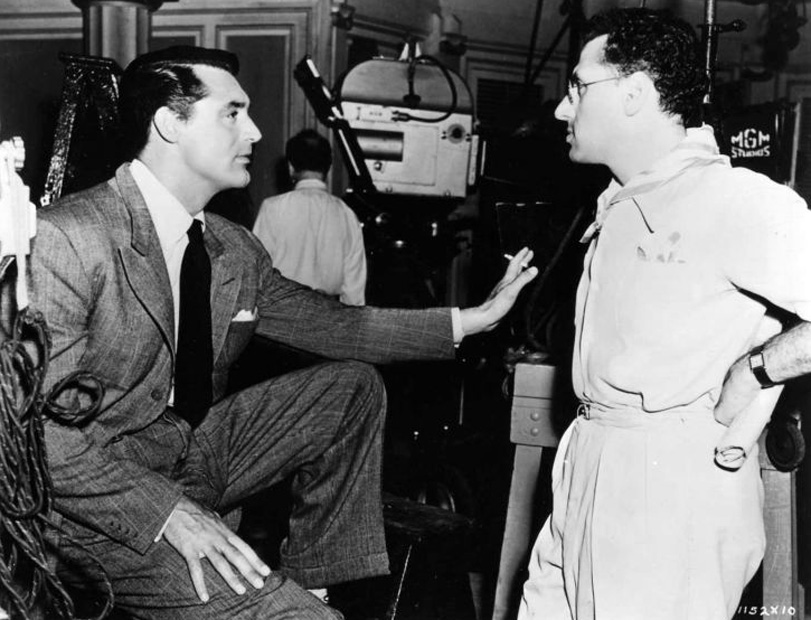
George Cukor was one of the greatest directors of the Studio Era. Not everyone thinks of Ol' George when naming iconic directors because he wasn't known for a striking visual style. What Cukor excelled at was smart properties and getting the best performances from his actors.
Twenty-one actors were nominated for Oscars in Cukor films and five of them took home the trophy. Cukor was labeled a woman's director because of his work crafting performances with actresses like Greta Garbo, Joan Crawford, and Kate Hepburn. But Cukor was also masterful with some of the best male actors in the business like Spencer Tracy, Cary Grant, and Jimmy Stewart.
Cukor's long history in Hollywood is covered in loving detail in the American Masters special On Cukor, and it's particularly fascinating because it delves into Cukor's homosexuality. Cukor was a classic example of a Hollywood mover and shaker whose sexuality was well-known, but never discussed publicly. The Tinsletown Closet allowed some artists to be gay, but never in situations where the public or press could find out.
For Cukor it meant hiding his sexuality at work, but Angela Landsbury who earned an Oscar nod in Cukor's Gaslight (1944) tells of Cukor's Sunday brunches at his home where he and his friends could let their hair down and be themselves. Oh if that pool could talk. On Cukor is a wonderful glimpse of Cukor's extraordinary body of work and his guarded private life.
Marilyn Monroe - The Final Days (2001)
Speaking of Cukor, Marilyn Monroe and Cukor paired-up on one of Hollywood's most famous unfinished films. Cukor directed Monroe in the My Favorite Wife (1940) re-make Something's Got to Give (1962). Their previous film together Let's Make Love (1960) was only successful in getting Monroe and her co-star Yves Montand's affair into the gossip rags. Monroe's next film The Misfits (1961), while fascinating, was a box office dud. So Monroe and 20th Century Fox hoped that Something and Cukor could re-establish her as the queen of the box office. She missed the throne...
The Final Days details the making of Something with interviews with many of the people involved in the project and footage from the film- thought lost long ago. They reveal a woman who was fighting for her career while at the same time struggling with personal demons that would ultimately scotch the film- and later her life. It is a touching portrait of a woman the world has consistently tried to define- but always falls short of fully discovering.
The documentary ends with a reconstruction of forty-five minutes of Something so that we can take a peek into that remarkable world of "What if?" Monroe is luminous and funny- her Sixties look beguiling. It's hard to believe that the tragedy that would end her life was just two months away.
The Kid Stays in the Picture (2002)
Robert Evans was discovered by Norma Shearer because she thought he looked like her deceased producer husband, Irving Thalberg. Evans would go from playing a producer to being one. Producers and agents are often the catalysts to so much of what we see on the screen long before it ever makes it there. The deals, the dinners, the phonecalls- all the work that goes into a picture is usually hidden from public view. But The Kid Stays in the Picture is one of those movies that makes the audience feel like they are insiders in the Hollywood Game.
Evans started off as an actor, but quickly realized his charm and savvy could make more moolah as a producer. Evans landed at Paramount after nabbing the screenrights to The Detective (1968) for Frank Sinatra and for the next almost forty years he has been hustling to make some great movies. If his list of movies is impressive (The Godfather (1972), Chinatown (1974), and Marathon Man (1976)) his life as the quintessential Hollywood producer is the stuff of movie legend.
The Kid is based on Evans' autobiography of the same name, so one gets the feeling that not all the bodies are exhumed (like his close friendship to Roman Polanski during his child rape case), but Evans' coke-fueled downfall is covered with enough candor to make us feel like Evans is shooting straight with us. His Rolodex is a collection of the biggest Hollywood stars of the '60's and '70's and this film allows us to flip through it... and watch Dustin Hoffman do his Robert Evans impersonation.
What are your favorites docs about Hollywood?
It's a really great documentary that parallels the story of Merrily with the lives and careers of a cast of Broadway hopefuls whose lives didn't exactly turn out the way they thought they would. It reminded me that life in the spotlight isn't always what it's cracked-up to be- and often the backstage story is as interesting as what gets shown on the big screen.
Here are my Top 5 Documentaries about people in the movie biz:
Marlene (1984)
Marlene Dietrich was one of the biggest stars of the Golden Age of Hollywood. Launched as Paramount's answer to Greta Garbo, Dietrich quickly became a star in her own right, lighting up silver screens (and bedrooms) from the early '30's until the late '50's with her unique brand of Teutonic beauty and glamour. But after her performance as German war widow Frau Bertholt in Judgement at Nuremberg (1961), Dietrich said goodbye to Hollywood and focused on her traveling one-woman show until a nasty spill off a stage in 1975 broke her thigh and her spirit. Dietrich would eventually seek the comfort of her Paris apartment- and in true Garbo fashion- wanted to be left alone.
In the early '80's Dietrich's Nuremberg co-star, Maximilian Schell coaxed Dietrich into participating in a documentary about her legendary life. Well, sort of. Dietrich agreed to be interviewed for the documentary- but not to be filmed. So Schell was left with a set of audio tapes and film clips of her old movies to construct a whole documentary. But he did it. Shot like an art film, Marlene uses Dietrich's voice and shadowed reconstructions to bring to life the great star at a time when she was no longer the glamorous Hollywood icon- but an angry recluse whose memories bounce from German to English and from reverence to venom at the tap of a cigarette.
It's a strange and sad portrait of stardom that would garner an Oscar nom for Best Documentary. Read Dietrich's daughter's biography Marlene Dietrich for more fascinating insight into this riveting Hollywood personality.
Divine Trash (1998)
John Waters has always been an out-loud and proud ambassador for his unique brand of cinematic kitsch/filth. His pencil-thin mustache is as recognizable as the trashy characters from his films. But there's more to this indie film idol than meets the eye. Steve Yeager's documentary Divine Trash wonderfully chronicles Waters' rise in the Baltimore suburbs along with his muse, Glenn Milstead- better known as drag artist Divine. The two began making films together in 1966 and their unique brand of raunchy comedy and equally perverse castmates took them from 8mm short films to nationwide cult hits.
From the very beginning he studied editing and shooting to create the "homemade" quality of his films. While his eyes twinkle about all the drugs they were on, actress Mink Stole recalls how important the script was- having to endure multiple re-takes until she got lines and blocking exactly right.
As loose and amateur as Waters' films feel, he was in fact using his camera and his actors to very specific effect. While it doesn't deal with his more mainstream successes like Hairspray (1988), Divine Trash gives us a window on the mind and revolutionary times of one of filmdom's most unique storytellers. And if you'd like to see a list of movies that John Waters likes, click here.
On Cukor (2000)
George Cukor was one of the greatest directors of the Studio Era. Not everyone thinks of Ol' George when naming iconic directors because he wasn't known for a striking visual style. What Cukor excelled at was smart properties and getting the best performances from his actors.
Twenty-one actors were nominated for Oscars in Cukor films and five of them took home the trophy. Cukor was labeled a woman's director because of his work crafting performances with actresses like Greta Garbo, Joan Crawford, and Kate Hepburn. But Cukor was also masterful with some of the best male actors in the business like Spencer Tracy, Cary Grant, and Jimmy Stewart.
Cukor's long history in Hollywood is covered in loving detail in the American Masters special On Cukor, and it's particularly fascinating because it delves into Cukor's homosexuality. Cukor was a classic example of a Hollywood mover and shaker whose sexuality was well-known, but never discussed publicly. The Tinsletown Closet allowed some artists to be gay, but never in situations where the public or press could find out.
For Cukor it meant hiding his sexuality at work, but Angela Landsbury who earned an Oscar nod in Cukor's Gaslight (1944) tells of Cukor's Sunday brunches at his home where he and his friends could let their hair down and be themselves. Oh if that pool could talk. On Cukor is a wonderful glimpse of Cukor's extraordinary body of work and his guarded private life.
Marilyn Monroe - The Final Days (2001)
Speaking of Cukor, Marilyn Monroe and Cukor paired-up on one of Hollywood's most famous unfinished films. Cukor directed Monroe in the My Favorite Wife (1940) re-make Something's Got to Give (1962). Their previous film together Let's Make Love (1960) was only successful in getting Monroe and her co-star Yves Montand's affair into the gossip rags. Monroe's next film The Misfits (1961), while fascinating, was a box office dud. So Monroe and 20th Century Fox hoped that Something and Cukor could re-establish her as the queen of the box office. She missed the throne...
The Final Days details the making of Something with interviews with many of the people involved in the project and footage from the film- thought lost long ago. They reveal a woman who was fighting for her career while at the same time struggling with personal demons that would ultimately scotch the film- and later her life. It is a touching portrait of a woman the world has consistently tried to define- but always falls short of fully discovering.
The documentary ends with a reconstruction of forty-five minutes of Something so that we can take a peek into that remarkable world of "What if?" Monroe is luminous and funny- her Sixties look beguiling. It's hard to believe that the tragedy that would end her life was just two months away.
The Kid Stays in the Picture (2002)
Robert Evans was discovered by Norma Shearer because she thought he looked like her deceased producer husband, Irving Thalberg. Evans would go from playing a producer to being one. Producers and agents are often the catalysts to so much of what we see on the screen long before it ever makes it there. The deals, the dinners, the phonecalls- all the work that goes into a picture is usually hidden from public view. But The Kid Stays in the Picture is one of those movies that makes the audience feel like they are insiders in the Hollywood Game.
Evans started off as an actor, but quickly realized his charm and savvy could make more moolah as a producer. Evans landed at Paramount after nabbing the screenrights to The Detective (1968) for Frank Sinatra and for the next almost forty years he has been hustling to make some great movies. If his list of movies is impressive (The Godfather (1972), Chinatown (1974), and Marathon Man (1976)) his life as the quintessential Hollywood producer is the stuff of movie legend.
The Kid is based on Evans' autobiography of the same name, so one gets the feeling that not all the bodies are exhumed (like his close friendship to Roman Polanski during his child rape case), but Evans' coke-fueled downfall is covered with enough candor to make us feel like Evans is shooting straight with us. His Rolodex is a collection of the biggest Hollywood stars of the '60's and '70's and this film allows us to flip through it... and watch Dustin Hoffman do his Robert Evans impersonation.
What are your favorites docs about Hollywood?
Wednesday, September 7, 2016
Early Christmas Present Ideas
The first person who puts Marilyn's JFK Birthday dress under my Christmas tree gets more than a kiss under the mistletoe.
The auction is November 17th, so you have time to come up with the dough.
Friday, August 5, 2016
Happy Birthday, Mr. Huston!
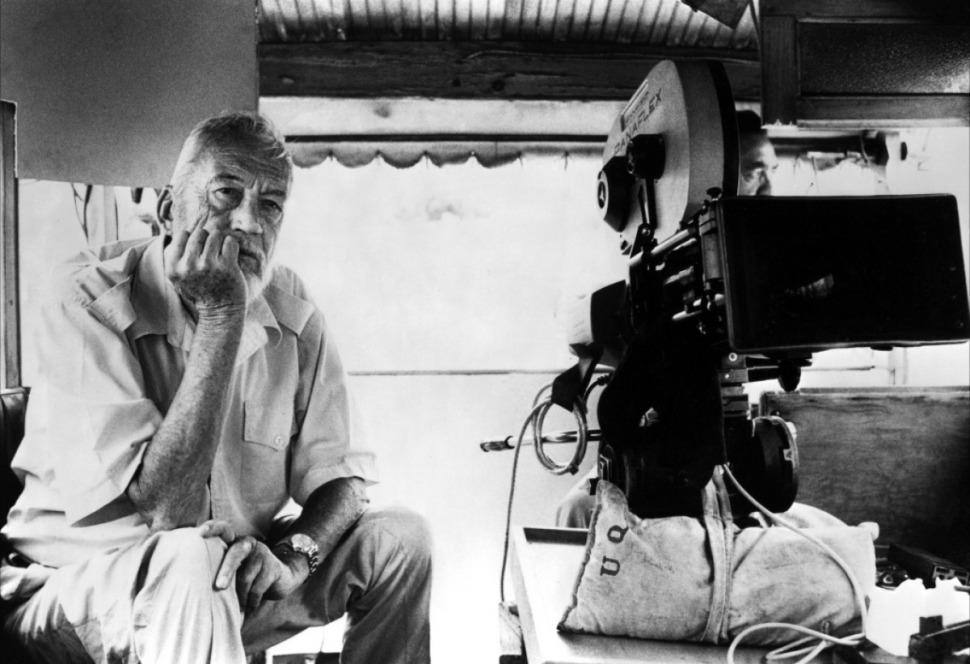
His style evolved over the years- but always maintained a certain grittiness- a desire to show the rougher side of the human soul. With nine nominations and two Oscar wins, Huston was well-regarded during his own lifetime and his The Maltese Falcon (1941) is considered the archetype for film noir- even if that designation is arguable.
So in honor of what would be Mr. Huston's 110th birthday, here are my Top 5 Hustons (minus Maltese Falcon which my faithful readers will recall I previously opined on.)
The Treasure of the Sierra Madre (1948)
Based on a novel by B. Traven, Treasure stars Humphrey Bogart, Tim Holt, and Walter Huston as a trio of down-on-their luck Americans in Mexico who tramp into the mountains to mine some easy gold. But nothing goes quite as planned and soon bandits, thirst, and good old fashioned greed tear the group apart proving that what glitters might be gold, but gold ultimately sucks.
Huston wanted his actors to be more realistic, so he convinced his father to do the role of Howard without his false teeth. The dedication to gritty realness makes this film stand-out from other studio product of the time- and it made an impact with critics and the Oscars. Treasure took home three golden statues- two for John as Best Director and Best Adapted Screenplay and one for his old pa.
Walter accepted the award saying, "Many, many years ago, I brought up a boy and I said to him, 'Son, if you ever become a writer, try to write a good part for your old man sometime'. Well, by cracky, that's what he did!" This shared golden moment between a son and his father would not happen again. Walter Huston died a year later, and John never won another Oscar.
Look out for the childhood cameo of future Baretta star and accused murderer, Robert Blake as a Mexican lottery ticket vendor. So much for realistic casting...
Key Largo (1948)
The first time I watched Key Largo, I thought, "Here we go again. Bogey and Bacall." But on repeated viewings, I've come to realize that while Humphrey and Lauren are the stars, it's the character actors around them that shine. Ex-soldier Frank McCloud (Bogart doing his reliable world-weary routine) goes to see his old Army pal's widow Nora (the beguiling Lauren Bacall) who runs a Key Largo hotel with her wheelchair-bound father (Lionel Barrymore grumping it up).
If the visit from the best friend of your dead husband isn't enough, Nora has to house a vicious gangster (Edward G. Robinson at his sadistic best) while a hurricane threatens to blow them all away. The ending feels eerily like the movie that Bogey and Bacall met on (To Have and Have Not (1944)), and that may be because Huston used the ending for that movie that Howard Hawks didn't shoot back in '44.
What really makes this film unique are the performances from recognizable stars playing washed-up versions of their typical screen personae. Robinson as an aging mobster who may be losing his grip, Oscar-winner Claire Trevor playing his drunken moll who has to sing for her drinks, and the always crotchety Barrymore who, if he could, would get out of his chair and do something! But you can't Lionel, you can't get out of that chair.
Unlike Treasure, Key Largo was shot almost entirely on the Warner's lot. Huston returned to the manufactured world of noir with shadows, shutters, and fog hiding faces, secrets, and desires. Where Treasure exposes greed in the hot Mexican sun, Key Largo hides it in the dark of a Florida hurricane.
Key Largo is a heck of a lot of fun, even if you have to watch Edward G. Robinson take a bath.
The African Queen (1951)
There aren't alot of movies whose shoots are worthy of a book being written about them. Certainly Gone with the Wind (1939), The Wizard of Oz (1939), Cleopatra (1963), and Apocalypse Now (1979) have spawned books, documentaries, and hours of "Making Of" segments. In 1987 Katherine Hepburn wrote a book titled The Making of "The African Queen": or how I Went to Africa with Bogart, Bacall and Almost Lost My Mind. It's a perfect illustration of the madness that Huston seemed to thrive on when making his films.
The African Queen takes place in WWI German East Africa where an uptight missionary named Rose (Hepburn, of course) finds herself marooned after Germans burn down the village she was living in and kill her brother. Crude mailboat captain Charlie Allnut (Bogart again) rescues this damsel in distress and soon finds that his plans to just get the heck out of Africa have been commandeered by his feisty passenger. Rose intends to strike a blow for Mother England and take The African Queen down the river to blow up a German battleship. A war of wills and a fight against nature bring these two opposites together as they steam towards their fate down the dark river.
Huston was determined to get as much of the real Africa into this film as possible. So much so that he hauled the cast, the boat, and the unwieldy Technicolor cameras to Uganda and the Congo. The very thought sounds nightmarish- and apparently it was. The entire crew was struck with dysentery- with the exception of Huston and Bogart.
It seems the two were spared because rather than drink the affected water, the two drank whiskey and gin. Everyone else had to suffer through vomiting and diarrhea and in one instance a black mamba in the outhouse. Scenes were shot on the actual river rapids nearly killing Hepburn when the boiler almost fell on her, and the ship itself sank twice.
Dragging bulky equipment through the wilderness, torrential rains, wild animals, and frayed nerves all worked to put an end to The African Queen. But the intrepid moviemakers soldiered on, and in the end they wound-up with a hit film that earned Bogart his only Oscar, and Hepburn and Huston more nominations. Huston received another gift during the shoot- a telegram delivered by a barefoot runner announced his wife had given birth to his daughter Anjelica in America.
The Misfits (1961)
The Misfits is often overshadowed by it's tragic place in film history as the last film made by both Clark Gable and Marilyn Monroe. While not well-received at the time, the film (especially when viewed on the big screen) is a stunning black-and-white picture that marries Huston's love of stark nature and conflicted character in a tragic tale of inevitable change.
Roslyn (Monroe) is in Reno getting a quickie divorce from a husband who "just wasn't there." Along the way she runs into toe-truck driver Guido (Eli Wallach) who convinces her and her new friend Isabelle (the always enjoyable Thelma Ritter) to join him and his mustangin' friend Gay (a not gay Clark Gable) at his unfinished house out in the Nevada desert. When they rope Perce (a much gay-er Montgomery Clift) into their group, the collection of lost souls is complete.
Like African Queen, the production history for Misfits was fraught with trouble. Monroe's marriage to Misfits author Arthur Miller was visibly falling apart, and her reliance on sleeping pills caused her to be late or not to show up at all- which angered her co-stars and her director. Huston took to gambling (as one in Nevada does) and soon his gambling debts became a liability to the production, as did his heavy drinking. Gable was frustrated with the situation and blithely said, "Working with Marilyn Monroe on The Misfits nearly gave me a heart attack." Gable died of a heart attack ten days after shooting finished.
Despite all the drama off-camera, the performances and visuals of this film are striking. Monroe has never seemed so ethereal- her blond hair and pale skin filmed up against the white desert- making her seem a part of nature. The familiar musical comedienne is nowhere to be found here. She is open and vulnerable in a way that she had never been filmed before.
Gable's performance is equally impressive in that he digs deep into a sense of despair that seems a contradiction to his normally strong, masculine screen persona. His eyes project the exhaustion and fear of a man who sees the world changing around him- into a world he no longer wants to be part of.
The Misfits feels very modern to me- and looks very much like many of the more independent features that would be coming out in the ensuing decade when the Hollywood studio machine broke down. Huston's stark black-and-white use of the Western terrain coupled with a more open, realistic acting style is an example of the changes happening in filmmaking, but they were ideas that Huston had been playing with all along.
Annie (1982)
Poor Annie. Nobody wants her. No matter how hard she tries- nobody seems to like her. And yes, I'm talking about the movie and not the redhead. I know there are alot of people out there who hate the movie version of the 1977 Broadway musical and feel about "Tomorrow" much the same way as Kathleen Turner does in Serial Mom (1994). But look at the cast! Carol Burnett, Albert Finney, Ann Reinking, Tim Curry, Bernadette Peters, and Geoffrey Holder! Edward Herrman plays FDR for God's sake! How can you not want to watch those people? And to think that this musical starring a bunch of little girls was directed by a drunken 76-year-old who hadn't really directed a musical before (unless you count the couple of dancing sequences and Zsa Zsa numbers in Moulin Rouge (1952)- How could you not want to see that?
I get that Huston is an odd choice. The producers chose him because they said he was an "outsider." Annie's insufferably chipper song-and-dance numbers could use some of that old Huston roughness. And we get that with the superb Burnett as she chugs bathtub gin, woozily spinning and clunking through her apartment bitching about "Little Girls", making out with her radio to the sound of Huston's voice.
Hannigan garners our sympathy for having to take care of these squealing moppets- even if they are underprivileged orphans. She's a wasted character that Huston knew just how to film.
The Oscar-nominated set design for the orphanage and Miss Hannigan's apartment is dingy and cheap- evoking a Depression era reality that reminds us that while Annie may seem like a sugar high hallucination, the rest of the world at that time was not fully dressed with a smile.
Even though it was critically savaged Annie garnered enough kiddie viewers to become one of the Top 10 movies of 1982- a feat Huston hadn't achieved in over a decade. Huston would direct three more films before he rode off into the sunset- Under the Volcano (1984), Prizzi's Honor (1985), and The Dead (1987) and each of them garnered Oscar nods. Not a bad way to go.
What are your favorite John Huston flicks?
Monday, July 25, 2016
The Big Screen in the Sky: Marni Nixon
Heaven's heavenly chorus added a beautiful new voice on Sunday. Movie singer Marni Nixon passed away at the age of 86. Nixon was famous for being the voice of many a Hollywood actress in some of the great musicals from the Golden Era. If you thought you were listening to Deborah Kerr singing "Getting to Know You" in The King and I (1956) or Natalie Woods crooning "Tonight, Tonight" in West Side Story (1961) or Audrey Hepburn twittering "I Could Have Danced All Night" in My Fair Lady (1964) you were beguiled by arguably the best ghost singer in the industry.
Studios needed Nixon to help cover-up the fact that the actors cast in their musicals while stars, weren't always the best singers. So Nixon was used to sing full roles and sometimes as in the case with a high note in "Diamonds are a Girl's Best Friend" for Marilyn Monroe- bits of numbers. Nixon went unheralded for much of her career, but in an interview the gracious lady gave a couple years ago at a King and I screening, she admitted that Kerr was happy to tell the press it wasn't her singing. Wood, however, was devastated that the producers didn't use her voice and was always touchy about the subject.
Nixon took her unheralded work in stride and made many stage appearances as well as playing small parts in movies and television. Yes, she's Sister Sophia in The Sound of Music (1965).
Nixon was an integral part of some magical movie moments- and I for one, will not forget that voice.
Subscribe to:
Posts (Atom)