Showing posts with label Rosemary's Baby. Show all posts

Friday, September 14, 2018

What the Hell Happened to Horror?

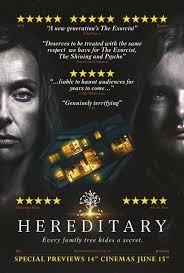
Sometimes I'm accused of being a bit of a cinematic stick in the mud. "Oh, Lance. You don't like anything made after 1968- or that doesn't have Joan Crawford in it." Not true. I can enjoy modern movies especially when they give me an opportunity to talk about how current films relate to the movies that came before them (see Get Out (2017)). Recently I was excited to see two very much  buzzed aboot horror movies: A Quiet Place (2018) and Hereditary (2018).

Unfortunately my initial excitement turned to true horror.

Before I go negative- let me talk about what I liked. Quiet Place has a deafening premise! The idea of how you re-think your life based on how much sound you make is fascinating. Be quiet or die. I'm pretty sure I would have been a goner in the first wave of this extraterrestrial invasion. And John Krasinski spent a good deal of time behind the camera, but I'm all for every minute he spends in front of it... preferably nude.
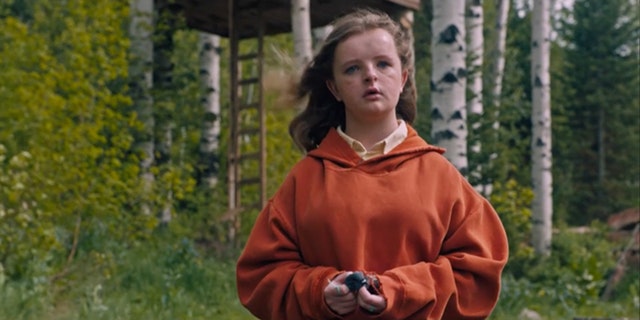
Hereditary contains the exceptional acting wiles of Toni Collette, who I could watch paint miniature houses for hours. And Alex Wolff is a cutie... as long as he washes his hair. Both films use some fascinating non-traditional casting with two Millies- Millicent Simonds (Quiet Place) and Milly Shapiro (Hereditary) both depicting young ladies that don't look like one of the Fanning sisters. That's what I liked. Now on to what chaps my film snob hide- and yes, there will be spoilers.

As much as I loved the premise for Quiet Place, the execution of this end-of-the-world/monster survival flick is as messy as the monsters' faces. Can we start with one of the first and most obvious head-slappers? How can you pull a nail out of a step with a laundry bag when the nail is turned upside down? Aside from being a violation of the simple, physical laws of how nails are put into stairs, it is amazingly clumsy foreshadowing. Gee, I wonder if someone's going to step on that at some point- perhaps at a hugely inconvenient moment- like going into labor.

If you can build a sound-proof room to safeguard your newborn, why not do the whole house in newspaper and Hearos ear plugs? Or at the very least, use the room as a place to communicate with each other- like a DIY Big Brother Diary Room.

Then of course there's all the difficulties of grain elevators, busted water pipes, and a hearing aid that only screeches feedback when the script deems it necessary- which is apparently not when it could save your father. How many ridiculous complications does this family have to endure beyond being hunted by these terrifying creatures? As much as the scriptwriters (hint: director and star Krasinski is one of them) wants.

There is also a big missed opportunity to allude to the abortion debate. A horror movie like Rosemary's Baby (1968) can successfully weave the controversial topic into a film without being preachy- making a statement within an unexpected format.

For Quiet Place, we never hear anyone question the sanity of giving birth to a child that will scream and make noise constantly- endangering the whole family. Wouldn't it be wiser to not give birth to the monster magnet in the first place? At a time when the future of Roe v. Wade is in question, I think this movie missed an amazing opportunity to be part of the cultural conversation.

Hereditary starts off in the creepy vein of modern atmospheric chillers like It Follows (2014), The Boy (2016), and A Ghost Story (2017), but quickly devolves into a supernatural stew that takes ingredients from successful films without creating anything unique of its own. Pacing is key for this genre- and while a slow-paced horror film like The Shining (1980) or A Ghost Story can overcome their plot speed with shocking revelations, Hereditary luxuriates in taking its time- to a brutal point.

By the time we discover what the F is going on thanks to Grandma's box (not sure I still fully know), we've already moved on to the more attention-worthy topics of "Did I remember to call my mom on her birthday?" or "Would Alex look better with or without that mole?"

Arbitrary plot points abound here as well. It's not enough that little Charlie's windpipe is closing up due to her brother's negligence in watching her and what she sticks in her mouth, but she has to have her head knocked off when said brother dodges an animal carcass in the road as he races to the hospital and Charlie unluckily happens to have her head hanging out the window to get more air and says hello to a telephone pole. It's shocking- and then you have to laugh. It's just too much.

The plot suffers from the same problem. Is this movie about a haunting (Poltergeist (1982)?) A satanic cult (Rosemary's Baby?) Creepy possessions where people can contort their bodies and climb walls (Exorcist (1973) meets The Ring (2002)?) It is all of these things- and that's way too many familiar ingredients to create anything unique.

The final line of the movie isn't even original. The old, naked people chanting "Hail Paimon!" are way too close to the geriatrics chanting "Hail Satan" at the end of Rosemary's Baby. With a droning, atmospheric soundtrack that resembles those of Wendy Carlos and Rachel Elkind (The Shining) and John Carpenter, Hereditary doesn't as much use horror films of the past as inspiration, but as a blueprint.

So what do I think is wrong with these two very popular horror movies? They don't trust their premises and are working too hard to add extraneous details. They have a case of the "Horror Cutes."

Simplicity is an underrated virtue in horror films and I think both of these properties could have benefited from a vicious red pencil that would make the writers and directors distill these stories into tighter, more focused projects that transcend (or at least creatively re-imagine) the bells and whistles we've seen before. Don't worry about the next jump scare- or poster-worthy visual. Boil your story down to the bones.

I wonder if I should go see The Nun (2018) or just watch Two Mules for Sister Sara (1970).


Friday, July 28, 2017

Getting in to Get Out

Jordan Peele's directorial debut Get Out (2017) made quite a splash when it came out in February. It grossed $175m at the box office, ranking #9 so far this year. That's quite a feat for a non-franchise independent horror flick. It's also a rarity because it is a horror movie viewed through an African-American lens.

African-American actors have appeared infrequently in lead roles in the genre- perhaps most famously in "late of late" George Romero's Night of the Living Dead (1968). There were a couple Blaxpoitation horror flicks like Blacula (1972) and the hysterical Exorcist rip-off Abby (1974). Will Smith became the last man on earth amidst a horde of undead New Yorkers in I am Legend (2007).  But in general, there aren't alot of horror movies directed by Black artists that use the social anxiety tropes of the genre to focus on Black lives. With Get Out's success, that may change.

Chris (the teary-eyed Daniel Kaluuya) takes a trip with his girlfriend Rose (Allison Williams in all her post-racial glory) to meet her parents in their familial home on an idyllic country estate. One would think this is a set-up for a modern Who's Coming to Dinner?. It's really not. The first scene of the film features the mysterious assault and kidnapping of a young Black man who happens into the wrong neighborhood to the haunting strains of WWII ditty "Run Rabbit Run."

Then Chris and Allison's drive is interrupted by a gruesome deer collision, so it is clear there is more than an awkward dinner awaiting Chris. I hesitate to go into much more plot detail because the movie has some great surprises. Instead, I'm going to discuss how Get Out is connected to classic films- because it's what I do.

The two films critics have mentioned the most are Rosemary's Baby (1968) and The Stepford Wives (1975)- and they are spot onThe Black folk at the Armitage House are creepy racial versions of the wives of Stepford. When Georgina and Andrew speak of their happiness (the hair-raisingly excellent Betty Gabriel and Lakeith Stanfield) there is a smooth, manufactured quality that while not mechanical like Nanette Newman's recipe breakdown, has the same inhuman impact.

The upper crust elder community that comes to the annual garden party could be right out of the Castavet living room in Rosemary's Baby, and the soundtrack tips a fiendish hat to a satanic chorus that must miss the work since the Damien TV series flopped.

But these are just cosmetic similarities. What Get Out does is cleverly adapt the themes of these two earlier works (and other Female Gothic films) from questioning and stylizinging cultural gender issues to racial ones. The poised wives of Stepford were the perfectly outfitted, coiffed, and submissive images that women were burning their bras about during the Feminist Movement.


Get Out projects the placid image of Blacks as inoffensive, servile, and complacent- at once both horribly outdated, and for some, completely expected in a post-Obama world. Allison's dad keeps saying how he would vote for Obama a third time. The attitude is White people have fully accepted Blacks- so we must be beyond racial issues, right? Nope.

As in Stepford, Peele makes this regressive image uncomfortable- a version of Blackness that just wants to get along- that doesn't rock the boat- assimilated into instead of being part of. It's an aesthetically pleasing image that struggles to hide what's wrong with it. And that's what creeps us the fuck out about it.

Peele astutely makes his hero a photographer- as is Katharine Ross' character in Stepford. They are artists viewing and recording their twisted world- which in the tradition of horror- is often a reflection of our real one.

Friday, May 6, 2016

The Insanity of Roman Polanski

Let me start off by saying if you are hoping for a blog post about Roman Polanski's personal life, I will be a huge disappointment to you. I apologize ahead of time, and assure you it is not the first time I have disappointed someone... ask some of my exes.

What I want to talk about instead is Polanski's cinematic triptych about decaying sanity called his "Apartment Trilogy": Repulsion (1965), Rosemary's Baby (1968), and The Tenant (1976). Although made a little over ten years apart, and based on different source material, these three movies have very similar elements that make watching them together a trip down a bizarre rabbit hole of Polanski's twisted design.

Let's start with Repulsion. This dark little number was Polanski's first English-language, full-length film. Set in London, it follows young manicurist Carol (a luminous Catherine Deneuve) who has a case of man trouble. The trouble is, she doesn't want them around. She blows off (not literally) a date and is grossed-out by her sister's boyfriend's razor being left in her toothbrush glass.

When the noise of her sister screwing wafts through the wall of her bedroom, it's all she can do to keep from pounding on it and telling her to knock it off. So when her sister takes a vacation to the leaning Tower of Pisa, you would think it is a good opportunity for Carol to get some alone time. The problem is, Carol's not alone.

Carol hears noises outside her bedroom door, and the walls start to crack. Soon men are appearing in her room, raping her. She can no longer concentrate at work, mutilating rich, white cuticles as she stares into space.
Polanski films these episodes so that we know Carol is hallucinating- but it is so skillfully done that we can't help but join Carol in her first-person madness. The problem intensifies when real men show up in the apartment and Carol is assaulted. The imagined men are joined by the corpses of real ones.

Polanski uses Carol's homespace as a representation of Carol's headspace. The claustrophobia of the apartment mirrors Carol's stifling fears of men. The gaping cracks in the wall are cracks in reality. The decaying food a symbol of the rotting away of Carol's mind.
What is so interesting about Repulsion is that the focus is less about explaining why Carol goes off the tracks, and more about the visualization of madness- the creating of an atmosphere that makes us experience Carol's downward spiral rather than explain it. The film closes with a close-up of a picture of Carol as a child creepily standing out from a family portrait. Apparently she was just born that way.

Repulsion was a very successful independent import, and it turned out to be an excellent dry-run for Polanski's first high-profile Hollywood project, the controversial Rosemary's Baby. Based on the popular Ira Levin best-seller, Rosemary is the story of young New York City newlyweds Guy (John Cassavetes married to Gena Rowlands at the time) and Rosemary (Mia Farrow getting divorced from Frank Sinatra at the time) who move into a new apartment to start their lives together. After a visit  from their kooky next-door neighbors (Sidney Blackmer and Oscar-winning cutie patootie Ruth Gordon) Guy's acting career takes off, and Rosemary gets a bun in her oven.
The American dream sours, however, when Rosemary sickens and suspects that there's something not right with the bundle of joy growing inside her. Add to that she fears her neighbors are more than just herbal supplement enthusiasts. And why is Guy always defending them? Are they in cahoots?

As with Repulsion, Rosemary focuses on the question of sanity. Are Rosemary's wild suspicions about Satan worshipers and visions of being raped by the Devil real, or is she losing her mind?
The questions of sanity go from affecting a single woman as the target of men's advances (poor Carol's dilemma) to a young wife bearing the burdens of motherhood both physical and social. Polanski's surreal shooting and editing styles create absorbing, visual madness, making us doubt Rosemary and what we ourselves have seen.

Here too, the apartment is a centerpiece for depicting this internal conflict. The apartment is isolated by the dark, decrepit hallway, and Rosemary hears strange, unintelligible whispering from the other side of her bedroom wall. It's as if the apartment is set aside from reality. Rosemary has to try and discern what's going on outside the walls of her own perception.

In the end, Rosemary discovers the truth by finding a secret passageway that leads her from what she thinks she knows in her apartment to the secrets enshrined in the world next door.

Rosemary was a huge hit and made Polanski a hot director in Hollywood. But a year later, he would experience his own real-life horror movie when his wife and unborn child were murdered by the Manson Clan in their home. (I guess it's hard to avoid Polanski's f-ed up personal life.)


In 1976 after getting an Oscar nom for Chinatown (1974), Polanski returned to the theme of apartment insanity with The Tenant. In this film Polanski cast himself as Trelkovsky, a man who snags an apartment in Paris because the former occupant, Simone, jumped out the window. Feeling guilty for getting an apartment because of someone else's misfortune, Trelkovsky visits Simone in the hospital, only to find her encased in a body cast unable to speak.
She lets out a big scream and croaks, though, when Stella (Isabelle Adjani) arrives. This doesn't prevent Trelkovsky and Stella from going to the movies and fondling each other.
Trelkovsky's stroke of real estate luck goes south as his neighbors and the concierge (the eternal Shelley Winters) begin to nag him about the noise from his apartment. He begins watching his neighbors through windows- seeing their forms and their shadows- a voyeur of the outside world instead of a part of it.

He is absorbed in the grungy apartment, finding a hole in the wall that contains a tooth, and Simone's dress stuffed in a cupboard. Paranoia morphs into personality incoherence as Trelkovsky begins to believe he is Simone- dressing up like a woman; gushing over shoes and realizing, "I think I'm pregnant,"; and finally jumping from his window mimicking Simone's fate.

The film's spiral into weirdness is only heightened by the fact that Polanski is the main character. He is the director of two previous films about women going insane who then directs himself as a man who turns into a woman who goes insane. The final scene with all of the neighbors watching his meltdown as if he is on a stage leaves us with the feeling that Polanski was struggling with the very public exposure of his work and tragic private life.

His life had become a must-watch horror movie, so he blurred the lines between his life and his art- by literally inserting himself  into the surreal visions that he had depicted in his earlier films. It's one of the strangest descents into madness by a character (and perhaps a director) in film.