Sometimes I'm accused of being a bit of a cinematic stick in the mud. "Oh, Lance. You don't like anything made after 1968- or that doesn't have Joan Crawford in it." Not true. I can enjoy modern movies especially when they give me an opportunity to talk about how current films relate to the movies that came before them (see
Get Out (2017)). Recently I was excited to see two very much buzzed aboot horror movies:
A Quiet Place (2018) and
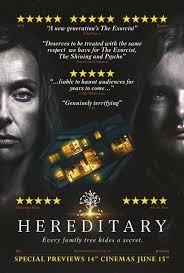
Hereditary (2018).
Unfortunately my initial excitement turned to true horror.
Before I go negative- let me talk about what I liked.
Quiet Place has a deafening premise! The idea of how you re-think your life based on how much sound you make is fascinating. Be quiet or die. I'm pretty sure I would have been a goner in the first wave of this extraterrestrial invasion. And John Krasinski spent a good deal of time behind the camera, but I'm all for every minute he spends in front of it... preferably nude.
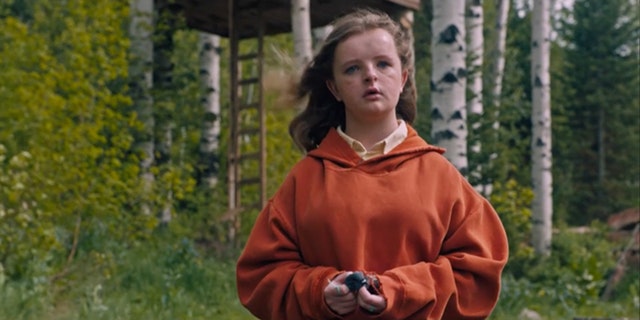
Hereditary contains the exceptional acting wiles of Toni Collette, who I could watch paint miniature houses for hours. And Alex Wolff is a cutie... as long as he washes his hair. Both films use some fascinating non-traditional casting with two Millies- Millicent Simonds (
Quiet Place) and Milly Shapiro (
Hereditary) both depicting young ladies that don't look like one of the Fanning sisters. That's what I liked. Now on to what chaps my film snob hide- and yes, there will be spoilers.
As much as I loved the premise for
Quiet Place, the execution of this end-of-the-world/monster survival flick is as messy as the monsters' faces. Can we start with one of the first and most obvious head-slappers? How can you pull a nail out of a step with a laundry bag when the nail is turned upside down? Aside from being a violation of the simple, physical laws of how nails are put into stairs, it is amazingly clumsy foreshadowing. Gee, I wonder if someone's going to step on that at some point- perhaps at a hugely inconvenient moment- like going into labor.
If you can build a sound-proof room to safeguard your newborn, why not do the whole house in newspaper and Hearos ear plugs? Or at the very least, use the room as a place to communicate with each other- like a DIY Big Brother Diary Room.
Then of course there's all the difficulties of grain elevators, busted water pipes, and a hearing aid that only screeches feedback when the script deems it necessary- which is apparently
not when it could save your father. How many ridiculous complications does this family have to endure beyond being hunted by these terrifying creatures? As much as the scriptwriters (hint: director and star Krasinski is one of them) wants.
There is also a big missed opportunity to allude to the abortion debate. A horror movie like
Rosemary's Baby (1968) can successfully weave the controversial topic into a film without being preachy- making a statement within an unexpected format.
For
Quiet Place, we never hear anyone question the sanity of giving birth to a child that will scream and make noise constantly- endangering the whole family. Wouldn't it be wiser to not give birth to the monster magnet in the first place? At a time when the future of Roe v. Wade is in question, I think this movie missed an amazing opportunity to be part of the cultural conversation.
Hereditary starts off in the creepy vein of modern atmospheric chillers like
It Follows (2014), The Boy (2016), and
A Ghost Story (2017), but quickly devolves into a supernatural stew that takes ingredients from successful films without creating anything unique of its own. Pacing is key for this genre- and while a slow-paced horror film like
The Shining (1980) or
A Ghost Story can overcome their plot speed with shocking revelations,
Hereditary luxuriates in taking its time- to a brutal point.
By the time we discover what the F is going on thanks to Grandma's box (not sure I still fully know), we've already moved on to the more attention-worthy topics of "Did I remember to call my mom on her birthday?" or "Would Alex look better with or without that mole?"
Arbitrary plot points abound here as well. It's not enough that little Charlie's windpipe is closing up due to her brother's negligence in watching her and what she sticks in her mouth, but she has to have her head knocked off when said brother dodges an animal carcass in the road as he races to the hospital and Charlie unluckily happens to have her head hanging out the window to get more air and says hello to a telephone pole. It's shocking- and then you have to laugh. It's just too much.
The plot suffers from the same problem. Is this movie about a haunting (
Poltergeist (1982)?) A satanic cult (
Rosemary's Baby?) Creepy possessions where people can contort their bodies and climb walls (
Exorcist (1973) meets
The Ring (2002)?) It is all of these things- and that's way too many familiar ingredients to create anything unique.
The final line of the movie isn't even original. The old, naked people chanting "Hail Paimon!" are way too close to the geriatrics chanting "Hail Satan" at the end of
Rosemary's Baby. With a droning, atmospheric soundtrack that resembles those of Wendy Carlos and Rachel Elkind (
The Shining) and John Carpenter,
Hereditary doesn't as much use horror films of the past as inspiration, but as a blueprint.
So what do I think is wrong with these two very popular horror movies? They don't trust their premises and are working too hard to add extraneous details. They have a case of the "Horror Cutes."
Simplicity is an underrated virtue in horror films and I think both of these properties could have benefited from a vicious red pencil that would make the writers and directors distill these stories into tighter, more focused projects that transcend (or at least creatively re-imagine) the bells and whistles we've seen before. Don't worry about the next jump scare- or poster-worthy visual. Boil your story down to the bones.
I wonder if I should go see
The Nun (2018) or just watch
Two Mules for Sister Sara (1970).