It's that time of year again when I look back at the movies I saw this year that made me all fuzzy, fractured, or freaked out.
Here (in no particular order) are the movies that made me squeee in 2018:
La Habanera (1937)/All That Heaven Allows (1955)/Written on the Wind (1956)
I went on a Douglass Sirk-et this year. Sirk is the Master of Melodrama! The Titan of Technicolor! The Sultan of Soap Opera! I hadn't seen two of his biggest films,
Heaven and
Wind, and they not only didn't disappoint, they enchanted me. So I jumped at the chance to see one of his very early Austrian works,
La Habanera. Once you get past the fact that everyone's speaking German in Puerto Rico, this film proves that Sirk had an early affinity for the decadence of melodrama on film.
Shoeshine (1946)
I'm a hug fan of Vittorio De Sica's
Bicycle Thieves (1948). In particular, his postwar verite style really strikes a chord with me both visually and dramatically. When you're literally shooting your movie in the ruins of a war-torn city, it adds a little something' somethin'. It really works in
Shoeshine. Two young Roman boys get by the only way they know how- shining shoes and dealing in contraband. It's a De Sica film, so they get caught and wind-up in a juvenile facility that mixes
Lord of the Flies with
Orange is the New Black. The film is tragic, and beautiful, showing the tenderness between young men who have nothing but each other... and a horse.
Three Identical Strangers (2018)
This documentary about three triplets who were separated at birth might actually be my favorite film of the year. (No, it's not you
Roma (2018).) Director Tim Wardle expertly unspools this story in such a way that around every corner is a new, shocking surprise. I literally yelled at the screen when I saw it. Look for this one to give
Won't You Be My Neighbor (2018) a run for its money for Best Documentary at this year's Oscars.
Judgment at Nuremberg (1961)
Spencer Tracy, Montgomery Clift, Burt Lancaster, Judy Garland, Marlene Dietrich, Richard Widmark, Maximillian Schell, and even a pre-
Trek William Shatner and a pre-
Hogan's Heroes Werner Klemperer. Now THAT'S a cast. I'd heard about Stanley Kramer's Oscar-winning drama about the infamous Nuremberg Trials, but the three hour running time often kept me from slipping it into my DVD player. I'm glad I finally did. The performances are a primer in film acting and the concentration camp footage wrenching. Before this film, the footage (some of which was shot by director George Stevens) had never been shown in public. The message of questioning what we are told to do when we know it is wrong resonates across 57 years so clearly. It makes this movie feel less like a history lesson and more like a warning.
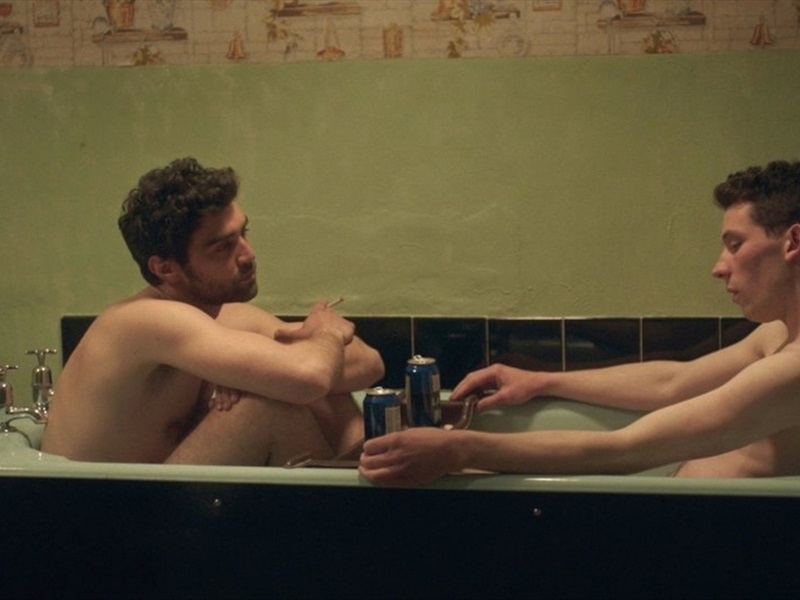
God's Own Country (2017)
While everyone was falling over themselves about
Call Me By Your Name (2017) this English gay indie gave me all the feels that were missing for me in
Name. You can read all about my dirty thoughts
here.
What We Do in the Shadows (2014)
Director Taika Waititi hit a home run last year with
Thor: Ragnarok (2017). But three years earlier he directed, wrote, and starred in a real comic gem.
What We Do is a mockumentary about a group of vampires living in New Zealand.
The Real World meets
Twilight as these roommates deal with girlfriends, chore wheels, and being undead. It's a bloodsucking hoot- and will soon be an FX TV show.
The future's so bright for Taika, he'd better wear shades.
Ex Machina (2014)
Ex Machina does what sci-fi does better than any other genre- expose our humanity (or lack thereof) through the lens of the machines we create. Caleb (the pleasingly pale Domhall Gleason) is a hotshot programmer who wins the chance to visit the wilderness compound of tech guru and self-imposed hermit Nathan (furry Oscar Isaac). Caleb is humbled to be tasked by this genius to help test his latest cyborg, Ava (the partially there Alicia Vikander.)
But he quickly discovers that he is just another one of the guinea pigs in Nathan's heartless experiment. The visual effects for Ava are perfection. But their Oscar-winning wizardry does not detract from the compelling performances and the harrowing story of a world perhaps not so far away from the technology-obsessed time we currently text in.
The Shape of Water (2017)
I've gotten a lot of flack from people I respect on this Oscar-winning movie. I stand by my original blog post.
Shape of Water is beautiful to look at and is a loving opus to classic movies, re-transmitting their power to stir our imaginations to a new generation. Add in uncharacteristic performances from Sally Hawkins, Octavia Spencer, and Richard Jenkins and you have a film that I think is better than
Call Me By Your Name... but maybe not
Get Out (2017). I loved it. So there.
The Thin Red Line (1998)
Terrence Malik isn't so much of a film director, as a film poet. What he has done in each of his cinematic creations is transmit feelings and emotions not necessarily through a tight plot line, but through powerful, fragmented imagery.
The complicated and conflicted realities of the Vietnam War seem to be tailor-made for the Malik treatment: the loyalty of a commander to his men, the natural beauty of the country, the desire to help human beings, the urge to rip their bodies apart with machine guns, the fear of dying, and the power of hope- no matter how futile.
Thin Red Line is my favorite Vietnam war film with perhaps the exception of Kubrick's
Full Metal Jacket (1987). The uber-talented cast under the guidance of this exceptional director brings the emotions of Vietnam to vivid life- not to shock us- but to allow us to experience them.
Coco (2017)
This one goes under the category of Films That Make Lance Bawl Like a Baby. Sure the animation that takes inspiration from Dia de Muertos and Mexican culture and art is ravishing. But it's the heart of this movie that stays with you. I challenge anyone to listen to little Miguel sing the song "Remember Me" to his failing great grandmother without getting misty. We all have family members that have passed on- and
Coco reminds us that passing on what made them special is the only way to keep them with us.
Black Panther (2018)
I'm tired of the super hero genre. The stories all sound the same to me. The various origin stories that always portray conflicted heroes coming from a place of otherness while the supermodel bodies and faces of the heroes themselves make it impossible for me to relate. More things blow-up than you can keep track of. Superheroes save the entire planet, proudly standing over the unknown number of bodies of citizens who were vaporized without so much as a screen credit. And somehow I'm supposed to feel safer after this.
So imagine my shock when I watched
Black Panther with utter and complete enjoyment. Maybe it's the amazing African-inspired styling of the costumes, set, and gadgets. Maybe it's the amazing black faces that we rarely see in such numbers unless we're watching a slavery epic.
Maybe it's the equal-pairing of women and men in this world- both sexes given the ability to rule and kick-ass. Maybe it's Michale B. Jordan's half-naked body. Whatever, it is-
Black Panther feels fresh in a genre that needed a real shake-up. I suspect
Black Panther will give
A Star is Born (2018) some heavy competition at this year's Oscar's.
Wakanda forever indeed!
To all my readers and friends- may 2019 give you all the movie thrills you desire!