Friday, April 8, 2016

Amazing Grace?

I've always felt bio-pics were a bit tricky. Actors and actresses who take on the task of having to portray famous people have to not only convincingly perform complex emotional characters, but they also have to project the image of the historical figure that we all expect. If Daniel Day Lewis wants to play Lincoln, he has to have a beard, a stovepipe hat, and a mole.

When the bio-pic is about a famous entertainer- it becomes even more difficult as the image shown to the world is so precise- with film footage and recordings of stars all over Youtube to constantly remind us what these people walk and talk and act like.  So an actor is forced into the daunting task of mimicking that image convincingly while at the same time trying to dig beneath the mask to portray the "real" person. Even when you have a good subject and a great actor, bio-pics about movie stars are really tough. Just ask Faye Dunaway. But what happens when the star you are portraying doesn't have memorably distinct characteristics?

Case in point- Grace of Monaco (2014) the Nicole Kidman starrer about Hollywood fairy-tale princess, Grace Kelly. I can go on and on about how this film was doomed from the start with a script that the Grimaldis themselves considered historically inaccurate and a production history that ended with Harvey Weinstein and director Olivier Dahan publicly feuding over cuts to the film. All this resulted in its being swept under the rug with a limited US release and no awards season love.

Maybe in some previous draft the political intrigue and Kelly's shining moment as a rescuer of her adopted country made sense- but the version I saw created about the same amount of drama as a PTA meeting... with better gowns. The stakes of Monaco possibly being invaded by France seemed inflated- and one speech from a beautiful Hollywood actress seemed insufficient to quell that disaster if we were to buy into it in the first place.

But I have a bigger issue than just poor story structure and historical inaccuracy. I know who Grace Kelly is. I love a couple of her movies and know all about her story as a "top drawer" Philadelphia girl who went to New York to model and act, and then wound-up in Hollywood as one of Hitchcock's favorite chilly blondes. From there she met a real-life Prince, and married him. The fairy tale angle was all the rage and her wedding footage and pictures were broadcast around the world. The Hollywood Princess left America and moved to her adopted home of Monaco where she would reign until her untimely death in a car accident in 1982. But what I didn't realize until I watched Grace of Monaco was that Grace Kelly is a bit of a blank for me.

I looked at Kidman as Kelly. My first thought was, "Oh- she doesn't not look like her. But then I can't be certain she does look like her..." I realized at that moment that while I could definitely pick Grace Kelly out of a line-up, her looks themselves were not necessarily iconic. She was blonde and beautiful, but I was struggling to recall anything distinctive about her look. I thought of her in High Noon (1952), Rear Window (1954), Dial 'M' for Murder (1954), and To Catch a Thief (1955) and what I kept seeing were costumes or a hairstyle- not a face. Grace Kelly was beautiful- no question. But her image is not one that sticks in the mind like other Hollywood beauties ala Marilyn Monroe, Marlene Dietrich, or Elizabeth Taylor.

So then I listened to Kidman and paid attention to her performance. I found myself thinking, "Is this woman I'm seeing Grace Kelly- or just Nicole Kidman moping around the palace?" And again, I was stumped. I couldn't remember how Grace Kelly acted.

Her Hitchcock performances usually involved playing a well-bred woman itching to throw-off the wrap of convention by climbing a fire escape or speeding-off in a fast car. But her rebellion did not involve the emotional explosions that cemented actresses like Bette Davis, Joan Crawford, or Susan Hayward into our collective unconscious.

Grace Kelly was great at playing roles that required glamour, poise, and understatement- so it's hard to find the mannerisms or ticks that would make her definitive. There's nothing specific in her acting that makes me say, "Ah! That's Grace Kelly!" Can you imagine RuPaul tasking one of his neophyte queens with, "Give me Grace Kelly realness!"? They might throw on a pair of sunglasses and a scarf and pretend to drive off a cliff- but in lieu of that- what would they do that would read unmistakable Grace Kelly?

I guess what I'm trying to say is, I love Grace Kelly. She was a good actress who starred in some memorable movies- but her glamorous look and persona alone are not distinctive enough to be the central focus of a bio-pic. No actress is going to be able to pull off that essential bio-pic thrill of walking onto the screen and making the audience gasp, "That's so-and-so!"

I'm not saying that you can only make bio-pics about iconic entertainers like Marilyn Monroe, Kate Hepburn, and Edith Piaf. But if you're going to make a Grace Kelly bio-pic you have to focus on the most dramatically rich part of her story- that day an American movie star gave up her film career and married a wealthy prince. That's what Grace of Monaco should have done- but they didn't.

File it under "If They'd Only Listened to Lance..."

Sunday, April 3, 2016

Movies To Be Sick By

Being sick with the flu sucks. Being sick with the flu over a weekend really sucks. So when you're stuck in your home with nowhere to go but to the medicine cabinet to chug Vick's Nyquil or slather yourself in Vapo-Rub, why not watch a movie... or two... or three? I was sick this weekend myself, so I thought I'd review the movies I watched, just in case any of these might appeal to you- whether you're sick or well.

1.) We Need to Talk About Kevin (2011)


I don't know about you, but when I get sick, I can get a bit gloomy. So sometimes my taste will head for the dark side of things. I'd heard great buzz about We Need to Talk About Kevin - and Tilda Swinton is such a weird treat to watch, I figured it would be a good one to watch while I sucked at my chicken noodle soup. Mmmm...Mmmm... Holy shit this movie is dark.
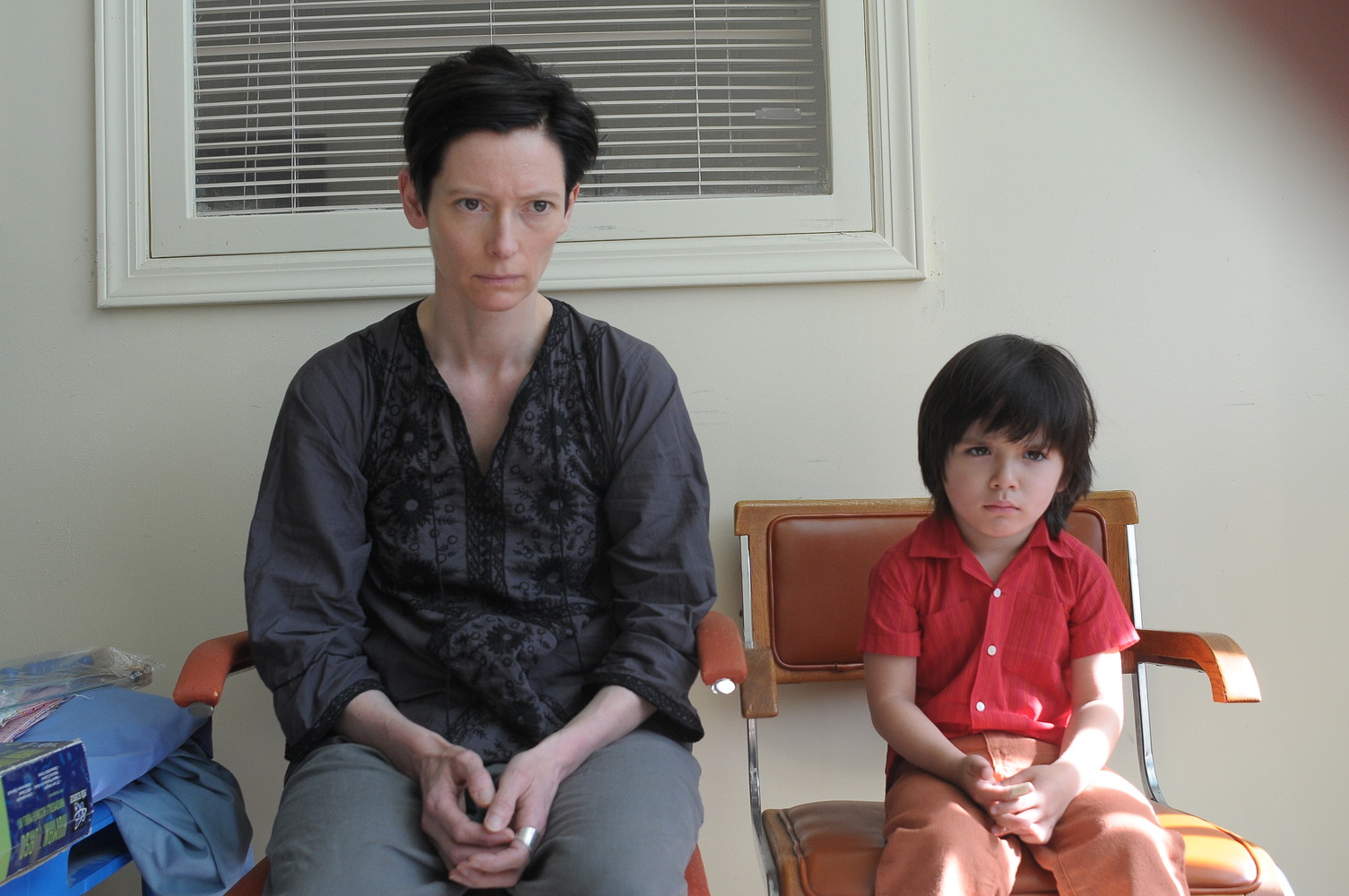
Told in fragmented memories in non-linear fashion, Kevin is the story of Eva Khatchadourian (Swinton), a wife and mother whose life has been drastically altered by a catastrophic event that has left her alone in a crappy house- the pariah of the town.

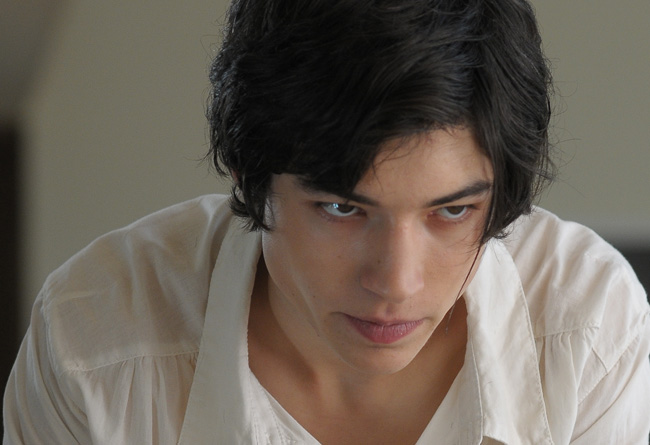
As the pieces of this puzzle fall into place we learn that Eva's son Kevin (creepy, creepy Ezra Miller) has committed an atrocity that has left lives shattered. What makes this movie so interesting (aside from its clever use of non-linear storytelling) is its focus on Eva. Because, you see, Eva didn't really enjoy being a mother. Played with Tilda's expert sense of coolness, Eva misses her life as a well-known travel author as her child screams, and screams, and screams. She finds peace standing next to a jackhammer in the street.
However, when daddy comes home (John C. Reilly in his typical role as lovable, but clueless dope) the baby stops crying immediately- ooing and cooing to daddy's delight. As the child grows, little Kevin comes close to a real-world version of Damien- torturing his mother any chance he gets. By the time he is a teenager in the form of Ezra Miller, it is clear that Kevin is an unrepentant asshole.

I like that director Lynne Ramsay is not trying to explain the childhood killers we so frequently read about. No causal links are drawn here. Kevin is not a sweet baby turned evil by his mother's admission that her life was better when he wasn't there cause she could be in "France." That wicked gleam in his eye was there from birth. What we focus on instead is a woman trying to deal with a motherhood that destroys instead of fulfilling her.

Swinton is such a master at playing a multi-faceted ice queen in films like Michael Clayton (2007) (and a literal one in The Narnia Chronicles) that this role works right in her sweet spot- a woman who would have been better off not being a mother and must struggle to find some new way to exist.

2.) The Pianist (2002)


So apparently chilling teen violence wasn't enough to quench my fever-influenced movie taste. I moved on to Roman Polanski's depressing WWII drama set in the Warsaw ghetto. Adrien Brody is pianist Wladyslaw Szpilman, a promising Polish pianist whose life is upended when the Germans invade Poland in 1939. Wlady and his Jewish family soon get to experience all the indignities, tortures, and death that the Nazis were notorious for.

Wlady is able to escape the Jewish ghetto but is then sentenced to a life in hiding- going from safehouse to safehouse until Warsaw falls apart and he creeps, scavenger-like from bombed-out structure to bombed-out structure trying to survive. Adrien Brody won an Oscar for his role- which reminded me in some ways of Leonardo DiCaprio's like-awarded performance in The Revenant. It feels like a game of "torture the actor" as Brody becomes more and more debilitated- his performance a physical exertion for survival.

The Pianist is based on the true story of Szpilman, but it may just as well have been based on Polanski's story of survival in German-occupied Poland. The level of detail is so visually rich- images of death and destruction pulled from Polanski's own memory. The color palette of the film is muted in greys, a gloom that descended on the country of Poland that fateful day in 1939. Polanski likes to play with conversations overheard from other rooms. It is an integral part in Rosemary's Baby (1968) and The Tennant (1976) and he uses it here too.
As Wlady cowers, locked in a room waiting for liberation, the sounds from the apartments and the world outside filter in through the walls, making the real world unreal to one who had been purposefully and cruelly cut-off from it. I have my issues with Polanski as a person, but I can't begrudge him the Best Director Oscar he won for The Pianist. He had an opportunity to imbue a film with his own harrowing story of survival- and he did it beautifully.

3. From the Terrace (1960)


After my fever broke, I was in the mood for something a little less depressing than the Holocaust, so I turned to an old pot-boiler starring the ever so handsome Paul Newman. When we think of the classic '50's melodrama we usually think of Douglas Sirk- and rightly so. But director Mark Robson had his share of big screen-sized soap operas with Peyton Place (1957) and Valley of the Dolls (1967). Terrace doesn't approach the kitsch greatness of either of those movies- but then neither of those flicks has Paul Newman in his prime in his boxer shorts.

Newman is Alfred Eaton, son of a steel mill owner who arrives back from the war to find his mother a hopeless philandering drunk (Myrna Loy at her tipsiest) and his father still mad because his favorite son died and he's left with Alfred to bring into the family business. With such a wonderful home life, it's no wonder Alfred strikes out on his own and falls in love with Mary, a girl beyond his class (Newman's real-life wife Joanne Woodward). Alfred's luck seems golden when by chance he rescues a young boy who falls through the ice, only to find the son's grandfather is a wealthy Wall Street scion who immediately takes to Alfred and gives him the chance to be a bigshot.

In true potboiler fashion, this great situation can't last and soon Mary is slutting it up with her ex-fiance cause Alfred is spending too much time at the office. Then Alfred meets a young woman (Ina Blain- Most-Promising Newcomer Golden Globe Winner who quickly disappeared from the limelight) who opens his heart to the possibilities of a truer love and Alfred has to choose between his unfulfilled Golden Life or his brown-eyed chippie.

The film was based on a hit book written by John O'Hara- but it's a schtick we've all seen before. What makes the movie watchable is Newman and Woodward. You can't take your eyes off Newman- his ease on screen is hypnotic. Did I mention there's a scene where he's just in boxer shorts? Woodward is delicious as a dissatisfied lover who is not a good girl- but not a caricature of a bad one.

This was shot in Cinemascope so the use of bright colors is disarming with a red dress or flower arrangement leaping off the screen practically screaming "LOOK! It's Cinemascope!!!" And they used a strange silver wash in Woodward's hair that might have been used to suggest the maturity of this young woman... or maybe they were just trying to make blonde pop even more.

Of the three, From the Terrace is probably the best movie to recuperate to because it requires such little emotional investment. But I'm feeling better- so maybe depressing movies about teen psychotics and Nazis are also good pills to swallow.


Friday, April 1, 2016

Top 5 Comedies

It's April Fool's Day- and while I don't suffer fools, I do love comedies. But comedy is probably one of the most subjective of the movie genres. I mean, we don't judge dramas by how hard you cry. But comedies- you better be laughing the whole way through. What makes someone laugh is as diverse as the human experience. For instance, I and the rest of my family think farting is hysterical. It's totally a sound thing. But even try releasing so much as a "toot" around my boyfriend and he will roll his eyes and act like you just disgraced the family name. So different people find different things funny... it's the only explanation for the careers of both Seth McFarlane and Adam Sandler.

Here are my five favorite classic film comedies:

1.) Young Frankenstein (1974)


A lot of people talk about this film as a Mel Brooks comedy- and he did direct it. But what many people don't realize is that it was written by its star Gene Wilder. Mel Brooks is one of the great spoofers of our time with Blazing Saddles (1974), High Anxiety (1977), Spaceballs (1987), Robin Hood: Men in Tights (1993), and Dracula: Dead and Loving It (1995) in his filmography.

But Young Frankenstein feels different from these films- mainly because it's not so much a spoof, as it is a loving homage to the original Frankenstein films. The characters here do not just make jokes about former iconic characters, they develop their own unique, hysterical personae.

Case in point- Igor. In the hands of googley-eyed Marty Feldman he is not a pitiable, deformed hunchback- but a smart aleck who refuses to even recognize that he has a hump. Frau Blucher is not just some creepy, soothsaying gypsy, but a passionate, widowed girlfriend who can't understand why the horses neigh everytime her name gets mentioned. (Blucher is German for gluehouse.)

Perhaps the greatest evidence of something more than spoof is The Monster himself. Peter Boyle elevates this character beyond square-headed, neck-bolted parody. The Monster is a creature that desperately wants to be loved, so much so that he will attempt a song and dance routine with his overeager creator played with such wonderfully manic tenderness by Wilder.

Rounding out this top-notch comedy cast is Terri Garr, Madeline Khan, Kenneth Mars, and an unforgettable cameo by Gene Hackman. While there are a million quotable one-liners ("Put ze candle back!") this movie never stops being funny because the characters are so much more than just punchlines.


2.) The Palm Beach Story (1942)


Preston Sturges is known as one of the great comic filmmakers of the early 1940's- and as far as I'm concerned, this insane relationship comedy is his funniest. Gerry Jeffers (the impeccable Claudette Colbert) is tired of living the not-good life because her inventor husband (the uber handsome Joel McCrea) can't get his landing strip of the future off the ground. (Literally. His idea is to stretch it like a net over cities.) So she leaves him for greener pastures where she can get him the money to seed his project by romancing rich men. But Tom won't let her go and follows her down the coast by train and by boat to Palm Beach, Florida where the air is thick with millionaires.
The script is wacky and the pratfalls a delight- but again- what makes this stand above the comedy crowd is the wonderful characters that jump in and out of the story: The Wienie King (Robert Dudley) a "deef" hot dog magnate; Toto (Sig Arno) a vaguely Eastern Euorpean tagalong who speaks in a made-up language that nobody fully understands; and my favorite- Mary Astor as the Princess Centimillia, a man-hungry heiress who has slept and married her way across the world looking for love.

Palm Beach Story is light and silly and such a product of its time with a Pullman Car full of a travelling quail hunting club (Sturges favorite William Demarest whoops it up with a shotgun and some crackers) and sight gags involving pince-nez glasses. The Princess gives the advice, "Nothing is permanent in this world... except for Roosevelt, dear." It's a reminder that a month after this movie's release, the country was plunged into the Second World War and laughter on the screen would be a much-needed escape.

3.) Bringing Up Baby (1938)


Hollywood legend portrays Bringing Up Baby as a flop when it was first released. It did not make the Top 20 movies of the year in box office- but some sources show it almost making its money back. Critics were rumored to have hated it- Frank S. Nugent's New York Times review would seem to support that. And Katherine Hepburn was placed on a dubious "box office poison" list after the film came out. So how is it possible that such a sparkling movie did so poorly?


Bringing Up Baby was practically born with a silver spoon its mouth. Hepburn was joined by box office golden boy Cary Grant (their second film together) and successful director Howard Hawks for this romantic screwball comedy. David Huxley (Grant) is a paleontologist who is trying to finish a brontosaurus skeleton, fundraise for his museum, and get married. Along comes flighty socialite Susan Vance with a pet leopard to mess it all up. The Hawks dialogue is fast, witty and furious and the pratfalls are classic vaudeville- all adding up to what I consider a fun time.

What I enjoy most is how Grant and Hepburn play against their typical screen types. Grant eschews his erudite charm for an awkward academic who is so focused on bones, little else seems to make his radar. Hepburn- used to playing smart, no-nonsense women- twists her uppercrust persona by playing Susan as a flighty "million thoughts a minute" gal who gets leopards as pets. The chemistry between these two stars is undeniable and you can't help but feel sorry for any love interest in a Hepburn/Grant romantic comedy that isn't Grant or Hepburn cause they are bound to be left at the altar.

Maybe Baby was ahead of its time. Maybe film history revisionists have painted its performance more negatively than it actually was. Maybe- who cares? It's considered a great comedy now- and that's good enough for me.


4.) What's Up Doc? (1972)


Another fan of Bringing up Baby was Peter Bogdanovich. Bogdanovich was raised on the bible of the Cahiers du Cinema and started his career by writing about film and interviewing the directors and actors he so idolized. So it makes sense that once he became a director himself, the films of the past would influence his work- and nowhere is that influence as obvious as in What's Up Doc? To try and condense the plot of Doc is not only difficult- but probably useless. The fun in this film feeds from its madcap non-sensicalness.

There's a meet cute story, a scientist with a bag of musical rocks, a jewel heist, a car chase through the streets of San Francisco, lots of mistaken identities, and even a lively courtroom scene. It's as if Bogdanovich wanted to cram every screwball comedy trope into one film.
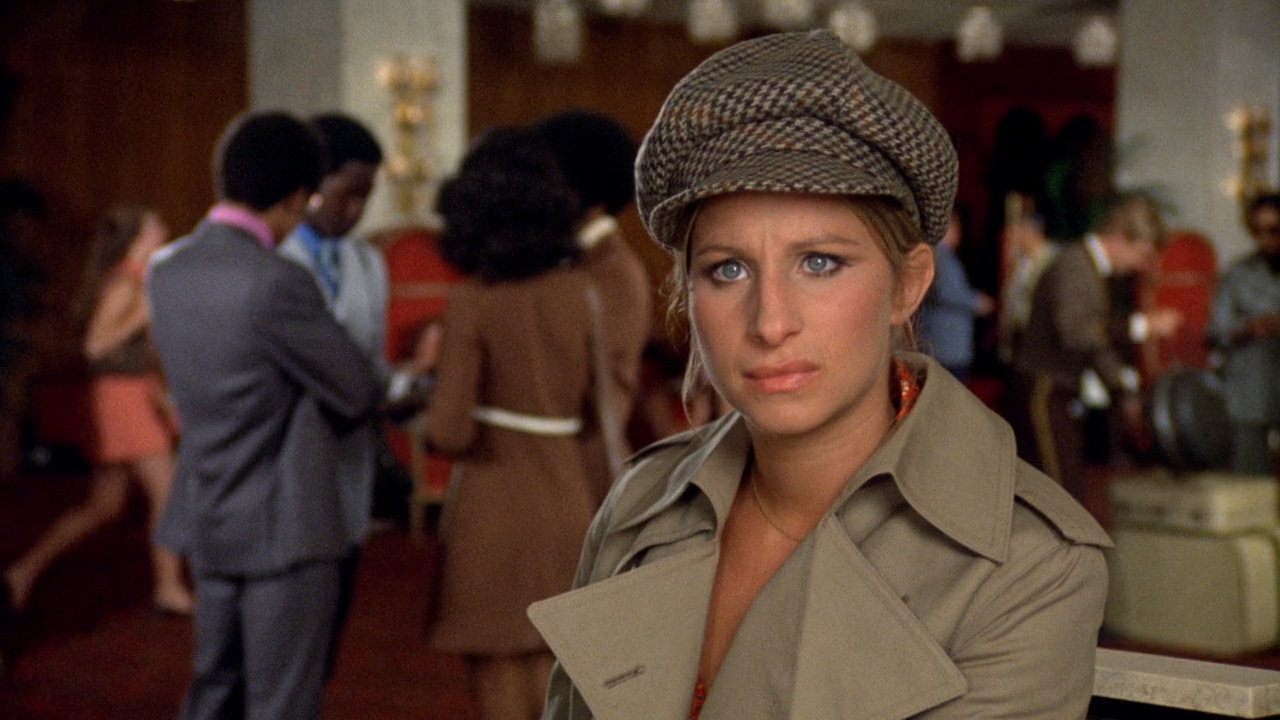
And running through this comic Garden of Eden are two of the Seventies biggest stars, Barbra Streisand and Ryan O'Neal.

Streisand is fresh and quirky here- her not-all-together schtick working perfectly as a well-intentioned girl who leaves disaster in her wake.

O'Neal follows Cary Grant's lead by playing against the romantic lead type and going full-on nerd- albeit a well-toned nerd who has a couple scenes in boxer shorts that will remind you why he was one of the lead hunks of the day.

Rounding out the cast are such wonderful character actors as Kenneth Mars, Sorrell Booke (who would go on to later fame as Boss Hogg), Mabel Albertson (formerly Derwood's mother on Bewitched,  doing one of my all-time favorite pratfalls) and in her first film, Madeline Kahn. Watching Kahn is like watching an astronomical event- no matter how many times you see her- she always dazzles. What fun it must have been to see her for the very first time.

5.) Dr. Strangelove (1964)


Most people don't think of comedy and director Stanley Kubrick together, but Kubrick's films are full of his dark sense of humor. His most completely comic movie Dr. Strangelove or: How I Learned to Stop Worrying and Love the Bomb takes the rather ominous topic of nuclear annihilation, and makes it laughable.

When loony general Jack D. Ripper (Sterling Hayden) falls off his fluoride rocker and orders a nuclear attack on Russia, a chain of events is triggered that threatens to destroy the world. Sounds hilarious, right? Well maybe after I list some of the character names, you'll get Kubrick's drift: President Merkin Muffley, General 'Buck' Turgidsen, Maj. 'King' Kong, Col. 'Bat' Guano, and the titular Dr. Strangelove.

Kubrick fills this Cold War thriller with outlandish characters to show the ridiculousness of nuclear proliferation. The President oohs and coos into the red phone connected to the Soviet Premier like a cuckolded husband. One of the lead generals acts like a spoiled teen when someone comes into his War Room. A lead scientist has an orgiastic Nazi breakdown at the thought of being able to start all over again with a better master race.

The book that the film was loosely based on was a thriller called Red Alert, so all credit goes to Kubrick and co-writer Terry Southern for twisting the material into something we could laugh at. I mean, if the world's gonna end, why not go out whoopin', "Yee-Haw!" from the backside of a nuclear warhead?

So those are my favorite comedies. What are yours?