Friday, March 30, 2018

I Love You Fish Face: Guillermo del Toro's The Shape of Water

I know, I know. You've already heard about The Shape of Water (2018). It won 4 Oscars this year including Best Picture and has been the punchline to every possible fish sex joke that a late-night comedy writer could come up with. While you might say I'm late to the game, I like to think that I waited to see the movie once the hype cooled down. But warm or cold hype, this movie is worth soaking in.

Much has been made of the fish-out-of-water (literally) romance element of Guillermo del Toro's latest gem and rightly so. It's a beaut of a love story between "others" who don't belong in this world- but who do belong to each other. The remarkable acting from all the leads, the green-infused design, and Alexander Desplat's score are all beguiling, but there's another wonderful thematic structure in the movie that I am equally geeked about- the romance that del Toro has with the movies.

Shape is based on- or at the very least inspired by- a classic sci-fi movie character. While no direct mention is made, del Toro's Amphibian Man for all intents and purposes is The Creature from The Creature of the Black Lagoon (1954) and its sequels Revenge of the Creature (1955) and The Creature Walks Among Us (1956). 

Maybe all fish-men look alike (del Toro directed the same actor , Doug Jones, as walking fish dude hero Abe Sapien in Hellboy (2004)), but the design similarities between these two characters is more than coincidence. It's clearly del Toro's "what-if" scenario for the 1950's monster movie icon.

But wait, there's more! Elisa (the fearlessly naked and Oscar-nommed Sally Hawkins) literally lives over a second-run movie theater. Marquee letters spell-out the titles of movies that only a true cineaste would remember- The Story of Ruth (1960) and Pat Boone starrer Mardi Gras (1958).  Next door neighbor and friend Giles' (Richard Jenkins in another Oscar-nommed role) television is tuned to catch Hello Frisco (1943) with movie musical/gay icon Alice Faye crooning "You'll Never Know."

And where does the creature escape to after his horrific, yet hilarious encounter with one of Giles' housecats? Elisa finds him at the movies gazing up at the screen as the biblical epic about a woman who abandons her life for a new faith unfolds in front of an empty audience. When Elisa is finally able to express her love to her amphibious sweetheart, she does so in the magical form of a Hollywood musical number- imagine Ginger dancing next to a slimier Fred.

All of these references lead to a meta-cinematic experience where del Toro shows how we dream and communicate through the language of the movies- in a movie. It's that kind of thoughtful filmmaking that nabbed del Toro the Best Director Oscar and makes The Shape of Water so much more than a girl-meets-fish story.

Friday, March 16, 2018

Please Screw the Gardener: Douglas Sirk's All That Heaven Allows

I love director Douglas Sirk. His devotion to his off-the-chain visual film style makes me happy, no matter who is pining away, dying, or going blind in his films. But I had never seen one of his most definitive works. Until now...

All That Heaven Allows (1955) stars Jane Wyman and Rock Hudson in their second teaming for Sirk. As in Magnificent Obsession (1954), they play lovers who encounter barriers to the fulfillment of their passions. In Obsession it's the fact that Hudson had a hand in Wyman's husband's death, and the unlucky Wyman's blindness. In Heaven, the roadblocks to love seem more realistic- but no-less daunting.

Wyman plays Cary Scott, a widow who lives in an upper crust home in a tony community whose two children are leaving the nest. The image of the respectable town pillar is shattered visually, however, when Cary shows up to a cocktail party in a very un-widowly red dress. Tired of the advances of white-haired insurance executives, Cary instead takes up with her handsome, sensitive, and younger (gasp!) gardener.

Said gardener, Ron Kirby, is played by Rock Hudson- and honestly, I can't think of a good reason to not bang your gardener if he's Rock Hudson. But the rest of the town and her own children are aghast at this flagrant violation of Fifties social mores. Will Cary give up her social standing for her working class man? It's the stuff that soap operas are made of.

What elevates Sirk's films above their treacly plots is his saturated use of color, costumes, and sets to bring out his character's feelings. Technicolor greys, reds, greens, yellows, and violets are frequently used to accentuate moods and underline social levels.

In the opening scene, the color coordination of the dress and car of Cary's best friend (the always enjoyable Agnes Moorehead) with the sky shows that she is woven into the patterns of the town- whereas Cary's red dress is a striking departure from that portrait.

Sirk is also fond of contrasting man's social structures with nature. As in Obsession and Written on the Wind (1956), nature is where we can explore our true selves outside of the ordered lives of our homes, families, and villages. The house that Hudson is planning for he and Cary is built in a rustic old mill- the site of toil and labor in a majestic forest setting. Nothing could be further from the staid, manicured life contained within her colonial home in town.

Todd Haynes used Heaven as a template for his Oscar-nominated film Far From Heaven (2002). Haynes goes one step further by making the gardener a black man, and his leading lady not a widow- but the rejected wife of a closeted gay man. But he uses much of the color technique that Sirk popularized to create a lush world that cloaks social truths in rich hues and idealized nature. It's yet another example of how classic films from the past inform and enrich the movies that directors make today.


Monday, March 5, 2018

Top 5 Movies to Watch When You're Unemployed

If any of you faithful readers have been wishing I would have more time to write blog posts, your wish was my former employer's command! I'm currently unemployed.

Being out of a job isn't all bad. I mean, there are the late night panic attacks about what I will do if I can't pay my rent and have to sleep on a weathered Amazon cardboard box on Hobo's Row on 31st St., and belt-tightening measures like canceling cable and buying wine in a box instead of a bottle- but it's not all bad. Like Burgess Meredith in the famous Twilight Zone episode, I have time enough at last to watch all the movies my DVD collection and Netflix can provide.

Here are my Top 5 movies about folks who are out of work- and tips on how to get by until that next great opportunity arrives:

Sullivan's Travels (1941)

Hot shot movie director John L. Sullivan (Joel McCrea) is tired of making light-hearted Hollywood fare. He wants to make the great American movie about the great American novel O Brother, Where Are Thou? (Yes, the Coen Brothers paid homage to that fictitious title by naming their Depression-era musical after it.)

Sully plans to tell the truth about America's forgotten man, and promptly gets a costume designer to fix him up in the latest hobo chic to join the unfortunate rail-riding men who can’t get a job or a break. After ditching the press corps and picking up a game starlet (the always well-coiffed Veronica Lake) Sullivan learns that life on the other side of the tracks is a desperate struggle for survival where laughs are as hard to come by as pieces of pie.


Sullivan is writer/director Preston Sturges' most ambitious picture. While he was known as a master of farce, this film questions the very validity of comedy. In a society that had struggled through the Great Depression and was on the brink of the Second World War,  Sullivan's Travels asks, how can we laugh when there is so much ugliness in the world? Sturges' answer- Because that's how we'll make it through.

Unemployment Tip #1- Take time to have fun. It helps. It really does.

Midnight Cowboy (1969)

This movie is one of my favorite dramas. Joe Buck (Best Actor Nominee Jon Voight) leaves his dish-washing gig in po-dunk Texas and heads to the big city to be famous as- well, as a cowboy. It's hard to say what the naive Buck intends to do to make it in the Big Apple so he resorts to hustling with what he thinks is a Park Avenue sugar mama (Sylvia Miles in an Oscar-stealing turn), a religious nutjob (a decidedly non-Disney John McGiver), and a yearning student in a porn theater (a young Bob Balaban).

None of these tricks is enough for him to get by- so he goes back to the condemned building he shares with pathetic grifter Ratso (Dustin Hoffman in a gut-wrenching Oscar -nommed performance- even if he's been a real heel of late.) They are a pair of losers without jobs, but they still hold on to their palm-tree shaded dreams.

Unemployment Tip #2- Friends are super important when you're out-of-work. They can raise your spirits and help you make the contacts you'll need for your next big break.

Tootsie (1982)

I didn't plan on having two Dustin Hoffman entries in this category, but apparently he likes to play guys who are out of work in NYC. Tootsie stars Hoffman as Michael Dorsey, an actor who can't get anyone to hire him. They don't understand his art says Michael. You're a pain in the ass to work with says his agent (Sydney Pollack who also directed). Michael decides to show everyone by auditioning for a role in a soap opera as a woman- a gamble that pays off when he is not only cast, but becomes the next 'It' girl.

Michael gets tired of his double D life when he falls in love with co-star Julie (Jessica Lange who won Best Supporting Actress the same year she was also nominated for Best Actress for Frances.) How he solves his gender conundrum is one of my favorite movie moments and earned the film ten Oscar nominations.

Unemployment Tip #3- Think outside the box. The next great job might not be exactly what you did previously.

Up in the Air (2009)


At the height of the most recent recession, who in Hollywood said, "Let's make a movie about a guy who fires people for a living?" Director/Writer Jason Reitman- and with six Oscar nominations, including Best Picture, Best Director, and Best Adapted Screenplay, he was right. Up in the Air opens with a montage of corporate downsizer Ryan Bingham (Best Actor Oscar nominee and all-around suave king George Clooney) canning people. It's hard to say if it's more funny or devastating.

As Bingham flies around the country handing out pink slips like Altoids and pronouncing advice to his new protege Natalie (another Oscar nominee, Anna Kendrick), he begins to see the empty futility of his "What's in your backpack?" life and falls in love with his airport bootycall (yes, another Oscar nominee- Vera Farmiga.) The film expertly walks the tightrope between cynical and schmaltzy, making the point that life is full of chances- whether they come in the form of that uncomfortable call to the HR office, a fleeting airline lounge conversation, or a cinematically-timed epiphany.

Unemployment Tip #4- You're not alone. Lots of people lose their jobs. Talk to some of them and find out what they did to get to their next chapter.

Two Days, One Night (2014)


Marion Cotillard is one of the most thrilling actresses working today, and this dark Belgian gem proves it. Sandra (Cotillard) is a single mother who after taking time off for a nervous breakdown, returns to her job at a solar panel plant.

Unfortunately, her co-workers did such a great job of covering for her, the company has decided her position is redundant and with her gone, they can give a bonus to the remaining workers. Sandra begs for another chance and her sadistic boss tells her that if she can convince her co-workers to give up their bonuses, she can keep her job.

The rest of the film is her desperate quest to connect with her associates over a weekend and save her job. It's heartbreaking. Cotillard is so raw and fragile and frantically compelling. Each small bit of hope she digs up, brings us to the edge of our seats. She earned an Oscar nom for the effort, but that was also a job she lost.

Unemployment Tip #5- Be persistent. Sometimes you can't take 'no' for an answer.

So, if you're out of work (like moi) know that movies can show you how to get your next big break- or at least entertain you in the meantime.


Saturday, January 6, 2018

Live in the Movie Moment

Hello Lance's Werthwhile Movie Fans!

I know it's been awhile since I've posted something scintillating, but I've made a resolution for 2018 to share my classic cinema burblings with all off you more often.

Sometimes I'm daunted by the amount of time I want to take talking about movies when the rest of my life is so consuming. There is not enough time in the day for me to be a television executive, a man about town, and write about why Darren Aronofsky's mother! nails all the classic Female Gothic tropes without bothering to make us care about his tortured heroine.

Today as I was trying to take a nap, my evil brain stayed awake and pestered me with the thought, "What if rather than expounding on films in movie-nut detail, I look for the little things?" Movies should be indulged in full, but often when we think of them, a single image or scene evokes all the feels.

So here is a list (in no particular order) of some of my favorite moments in film:

Dorothy Malone's frenzied dance while her father croaks on the stairs in Written on the Wind (1956).

Marilyn's "fuzzy end of the lollipop" speech in Some Like it Hot (1959). 


Gene Tierney watching Darryl Hickman drown after she gives him a rubdown in Leave Her To Heaven (1945).

The end credits of West Side Story (1961).

The helium-infused warehouse gun battle in Broadway Danny Rose (1984).

The scissor scene in The Furies (1950).

Martin Balsam going down the stairs in Hitchcock's Psycho (1960).

Peter O'Toole watching the approaching lone rider in Lawrence of Arabia (1962).


Olivia de Havilland hollering at the phone from her "small, private elevator" in Lady in a Cage (1964).

Gloria Swanson descending the staircase at the end of Sunset Boulevard (1950).

Those fucking twins in The Shining (1980).

Little Edie's Flag Dance in Grey Gardens (1985).

Bette Davis not watching her husband die of a heart attack in The Little Foxes (1941).

The Star Destroyer swallowing up the screen in the first scene of Star Wars (1977).

Parker Posey freaking out about the Busy Bee in Best in Show (2000).

Marlene Dietrich as a Mexican madame at the end of Touch of Evil (1958).

Judith Anderson fondling her old boss' nightie in Rebecca (1940).

Toshiro Mifune getting perforated at the end of Throne of Blood (1957).

Hattie McDaniels giving Scarlet over-the-shoulder side eye in the wagon when Scarlett prattles on about not being interested in someone she's totally interested in in Gone with the Wind (1939).


Robot Maria's sexy dance in Metropolis (1927).

Joan Crawford getting her cigarette lit by a pack of gents in Humoresque (1946).

Susan Kohner throwing herself on her mother's coffin in Imitation of Life (1959).

The kid trapped under the ice in Damien: Omen II (1978) (with honorable mention going to the reporter who gets attacked by satanic ravens and then a semi.)


Christopher Walken's watch scene in Pulp Fiction (1994).

Dustin Hoffman's live coast-to-coast un-masking in Tootsie (1982).

Peter Lorre screeching from his cell in Casablanca (1942).

Spock's death scene in Star Trek: The Wrath of Khan (1982).

Faye Dunaway orgasming to ratings-points in Network (1976).

Partygoers parachuting out of a doomed blimp in Madame Satan (1930).

Tallulah Bankhead trying to seduce John Hodiak while he reads the paper in Lifeboat (1944).

Glen Close losing her shit at the end of Dangerous Liaisons (1988).

Lana Turner taking a drive after she's been dumped in The Bad and the Beautiful (1952).


Here's hoping 2018 is full of magical movie moments.

Friday, August 25, 2017

Fight the Hate- Watch a Movie!

After the horrible events of a couple weeks ago, you may be saying to yourself, "What can I do to fight hatred and bigotry?" Well, if you're Alamo Drafthouse founder Tim League, you throw a film festival. League announced that the Charlottesville Alamo Drafthouse along with other locations, will be hosting Intolerable: Reflections of Bigotry and Hatred in the Cinema . Starting September 5th, they will be screening an assortment of films that shine Hollywood's spotlight on bigotry.

Classics like Cabaret (1972), The Battle of Algiers (1966), 12 Angry Men (1957), Blazing Saddles (1974), and Hairspray (1988) explore how insidious hatred is in our culture and how the movies can play a vital part in exposing it. Proceeds from ticket sales will go to the Southern Poverty Law Center and voter registration and talkbacks will be available after the showings- so it's a movie festival with a vital mission- beyond just selling popcorn.

Mr. League didn't ask me, but there are a few classics I would add to the lineup:

Gentleman's Agreement (1947)

Antisemitism doesn't always come with torches and hand salutes. When a reporter Philip Schuyler Green (Gregory Peck) goes undercover for a story on antisemitism, he (and his family) discover what good, clean Americans really think of Jews. Elia Kazan directs this Oscar-winner with knockout performances by John Garfield, Celeste Holm (Best Supporting Actress winner), and a heartbreaking, young Dean Stockwell.

A Raisin in the Sun (1961)

Lorraine Hansberry also takes a homegrown approach to racism in Raisin. Raisin tells the story of the Youngers, a Black family who earn a piece of the American Dream only to discover that dream is not colorblind. It's a brutal lesson about how racism poisons whole generations of families and communities in the quiet shade of our finest neighborhoods. Sidney Poitier and Ruby Dee star.

The Children's Hour (1961)

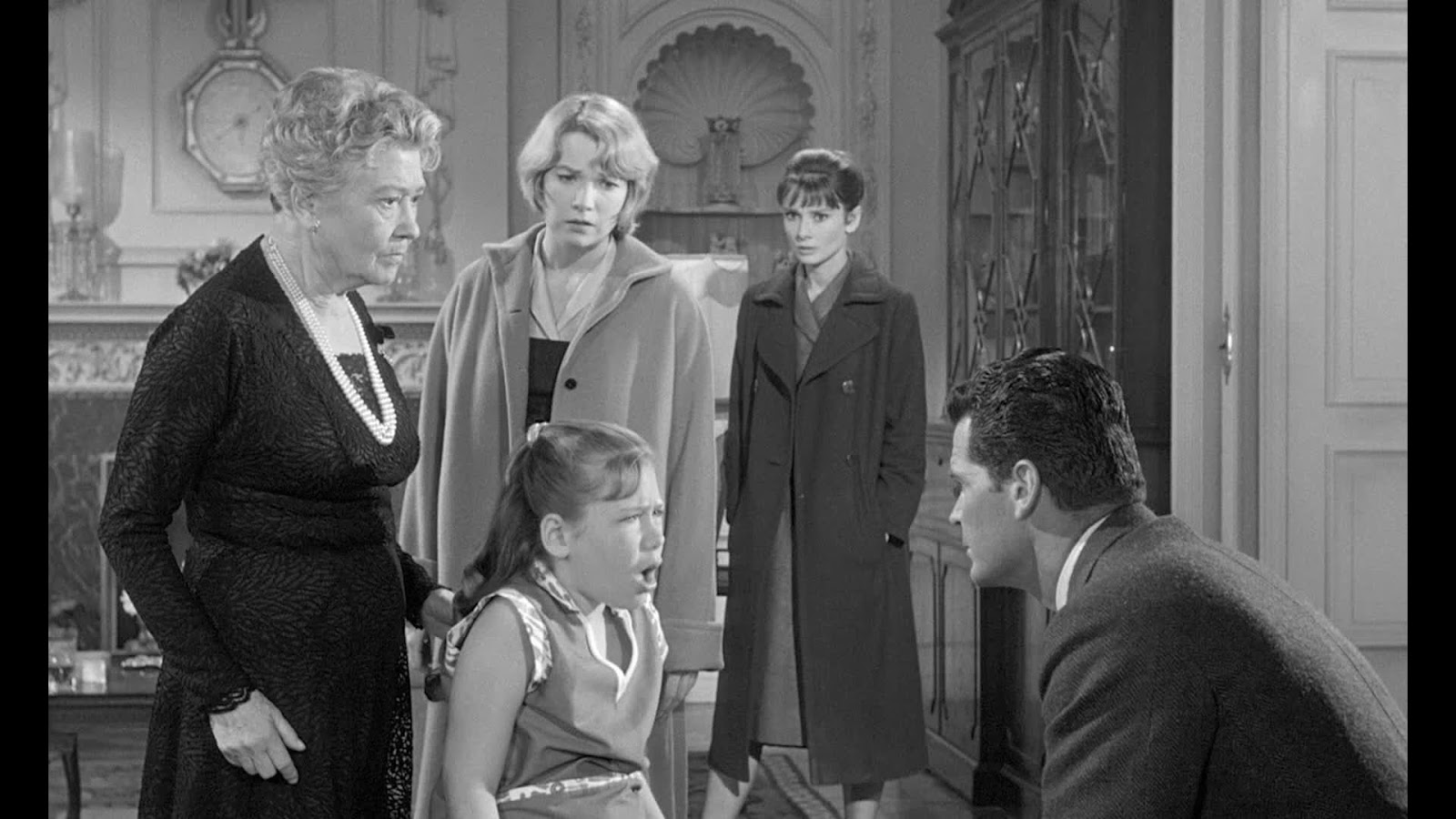
The same year that Raisin was made, William Wyler directed the film version of Lillian Hellman's stageplay The Children's Hour. Martha and Karen (Shirley MacLaine and Audrey Hepburn) are a couple of teachers at a girls' school who become the target of a lesbian witchhunt, instigated by a finger-pointing girl who might as well be yelling, "The yellow bird! The yellow bird!"

There are critics that feel the portrayal of the tragic lesbian is hackneyed and unhelpful. But any lesbian story to make it to the big screen in 1961 that wasn't set in a women's prison feels like a win. More importantly The Children's Hour rates highly on the "Lance Cried Like a Baby Meter."

So if you can't make it to an Alamo Theater- rent a couple of these classics and donate your money and/or time to a cause that helps this world be a little less hateful.