Showing posts with label Audrey Hepburn. Show all posts

Friday, August 25, 2017

Fight the Hate- Watch a Movie!

After the horrible events of a couple weeks ago, you may be saying to yourself, "What can I do to fight hatred and bigotry?" Well, if you're Alamo Drafthouse founder Tim League, you throw a film festival. League announced that the Charlottesville Alamo Drafthouse along with other locations, will be hosting Intolerable: Reflections of Bigotry and Hatred in the Cinema . Starting September 5th, they will be screening an assortment of films that shine Hollywood's spotlight on bigotry.

Classics like Cabaret (1972), The Battle of Algiers (1966), 12 Angry Men (1957), Blazing Saddles (1974), and Hairspray (1988) explore how insidious hatred is in our culture and how the movies can play a vital part in exposing it. Proceeds from ticket sales will go to the Southern Poverty Law Center and voter registration and talkbacks will be available after the showings- so it's a movie festival with a vital mission- beyond just selling popcorn.

Mr. League didn't ask me, but there are a few classics I would add to the lineup:

Gentleman's Agreement (1947)

Antisemitism doesn't always come with torches and hand salutes. When a reporter Philip Schuyler Green (Gregory Peck) goes undercover for a story on antisemitism, he (and his family) discover what good, clean Americans really think of Jews. Elia Kazan directs this Oscar-winner with knockout performances by John Garfield, Celeste Holm (Best Supporting Actress winner), and a heartbreaking, young Dean Stockwell.

A Raisin in the Sun (1961)

Lorraine Hansberry also takes a homegrown approach to racism in Raisin. Raisin tells the story of the Youngers, a Black family who earn a piece of the American Dream only to discover that dream is not colorblind. It's a brutal lesson about how racism poisons whole generations of families and communities in the quiet shade of our finest neighborhoods. Sidney Poitier and Ruby Dee star.

The Children's Hour (1961)

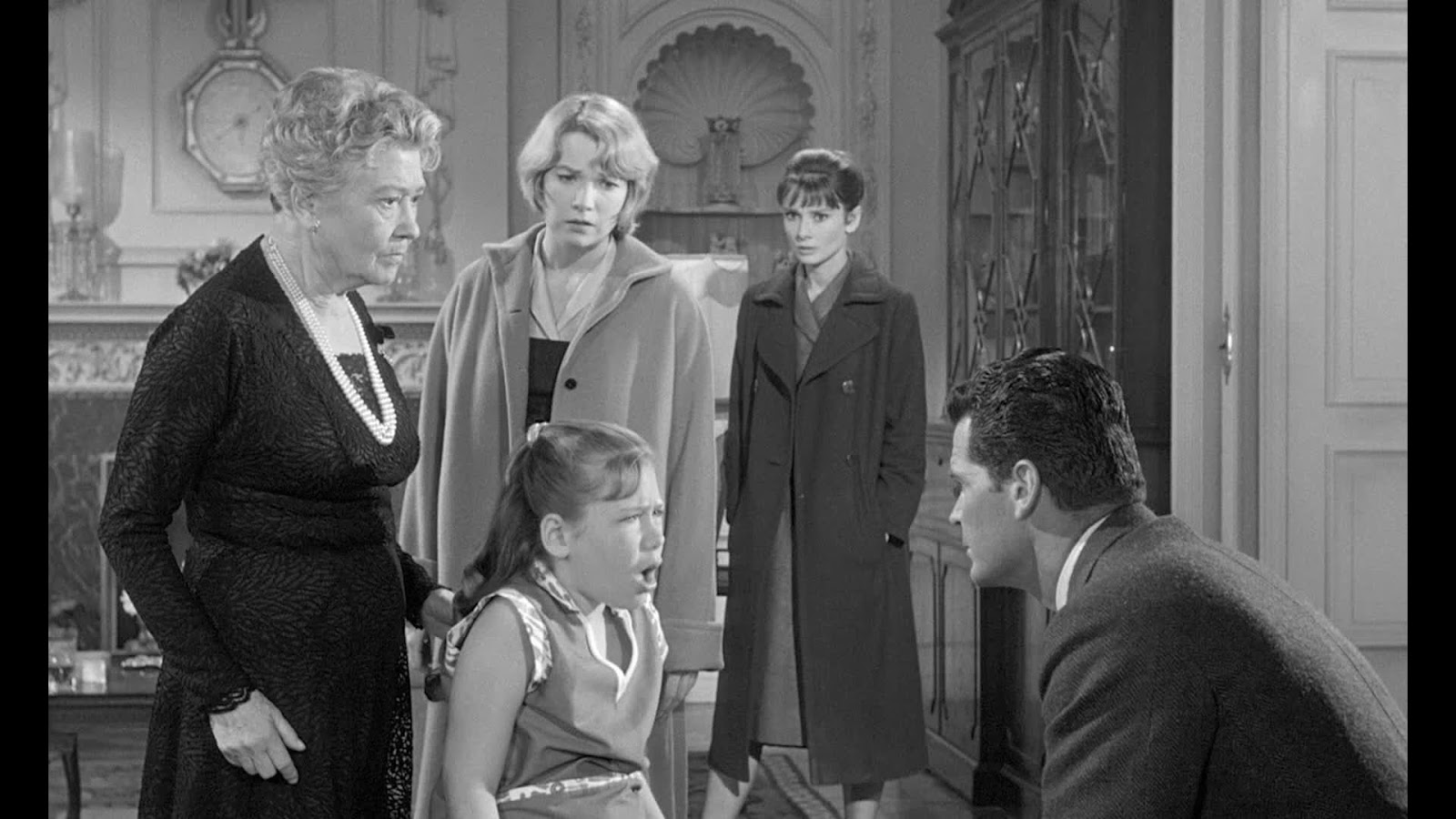
The same year that Raisin was made, William Wyler directed the film version of Lillian Hellman's stageplay The Children's Hour. Martha and Karen (Shirley MacLaine and Audrey Hepburn) are a couple of teachers at a girls' school who become the target of a lesbian witchhunt, instigated by a finger-pointing girl who might as well be yelling, "The yellow bird! The yellow bird!"

There are critics that feel the portrayal of the tragic lesbian is hackneyed and unhelpful. But any lesbian story to make it to the big screen in 1961 that wasn't set in a women's prison feels like a win. More importantly The Children's Hour rates highly on the "Lance Cried Like a Baby Meter."

So if you can't make it to an Alamo Theater- rent a couple of these classics and donate your money and/or time to a cause that helps this world be a little less hateful.

Saturday, December 31, 2016

Buh-Bye 2016!

I don't think I'm overstating it when I say that 2016 was a super-huge dick this year. When 2016 wasn't chopping down what felt like an inordinate amount of classic film notables like Alan Rickman, Marni Nixon, Haskell Wexler, Gene Wilder, and the double-whammy of Carrie Fisher, and Debbie Reynolds, it was busily shooting up nightclubs, and saddling us with the tacky, infantile reign of one Donald J. Trump.

Like many of you, I often find solace from the cold, hard world in the flickering of an old movie, so to insure that you start 2017 off right, here are my Top 5 Films I Saw in 2016:


The Boys in the Band (1970)

For years I had been hearing about this movie. Whether lauded or reviled, Boys is seen as a landmark in gay film history. Adapted from the stageplay, it chronicles the goings-on in a New York apartment when a group of gay friends gather together to celebrate a birthday. Like an all-gay Who's Afraid of Virginia Woolf, booze and pot cause the party to spiral out-of-control, and when an old friend of the host's shows up, secrets (and the host) come out.

This may not sound like much of a plot now, but in 1970, gay issues were just starting to be discussed in national forums. The Stonewall Riots of 1968 ignited a public movement and gays and lesbians were not going to be quiet anymore. Boys works so well because while that spirit of revolution is evident in the film, the underbelly of shame and masculine overcompensation are still there- reminding us that coming out of the closet is only the first step in a long march to equality and acceptance from others and ourselves.

While some have been critical of the gay stereotypes and the fetishization of gay life as tragedy portrayed in the film, (director William Friedkin would court gay controversy again in his movie Cruising (1980)), I was surprised how timely this film felt. Issues of femininity, self-loathing, and how to define gay couples are still active debates in our culture.

I've heard scathing ripostes about looks and love like the ones between Michael and Donald at many a party from people who weren't even alive when the film came out. This movie could be made today, and with a cast that would include Matt Bomer, Neil Patrick Harris, Jim Parsons, Chris Colfer, Tituss Burgess and Drew Droege, people would go see it.

The only thing absent is the haunting presence of AIDS, which wouldn't make national headlines for another ten years. Five of the original cast members would succumb to the dreaded disease, however- a bitter reminder how AIDS would shape the gay community for decades to come.

We Need to Talk About Kevin (2011)

When Tilda Swinton isn't in a fight with Maragret Cho about Asian invisibility in Hollywood, she is one of the most interesting actresses in film today. Like a more punk version of Cate Blanchett, Swinton adds beautiful complexity to her roles making us feel the emotional immediacy of her characters' dilemmas. Swinton's dilemma in Kevin is gut-wrenching and everytime some jackass commits some heinous act of barbarity in the world, I think of this film and Swinton's desperate, empty gaze.

I wrote about Kevin after recuperating from the flu, but I've never recovered from this movie.

Repulsion (1965)

If you're thinking of staying in alone this New Year's, read my review of Repulsion and get out of your apartment before the walls start sprouting arms. Roman Polanski is a master of psychological horror, and Repulsion set the stage for his later masterwork on women losing it in apartments, Rosemary's Baby (1968).

Two for the Road (1967)

New Year's is all about the passage of time, and no film handles time and our memory of it quite like Two for the Road. Many people like this movie for its refreshing leads Albert Finney and Audrey Hepburn, but I was really taken away by director Stanley Donen's editing, which made the concept of life seem so fleeting and circular. It's important in these times to remember a life is more than just this moment- so instead of dreading Trump's next tweet, read my review of Two for the Road.

Madame Satan (1930)

This New Year's I hope you have a great party full of friends and wine and little nibbly bits- but I guarantee no matter how fabulous your party, it won't compare with the dirigible masquerade party in Cecil B. DeMille's Madame Satan. I can't stop thinking of the sheer decadence and visual over-stimulation of the last half of this movie. It's like an Adrian costume collection disaster movie. What better way to ring out the old than by pushing it out of a blimp?

To all my Lance's Werthwhile readers, I wish you the most movie-filled 2017!

Friday, August 12, 2016

Love, European Style

I love getting good movie recommendations from friends- and boy did one of my bosses come up with a lu-lu!

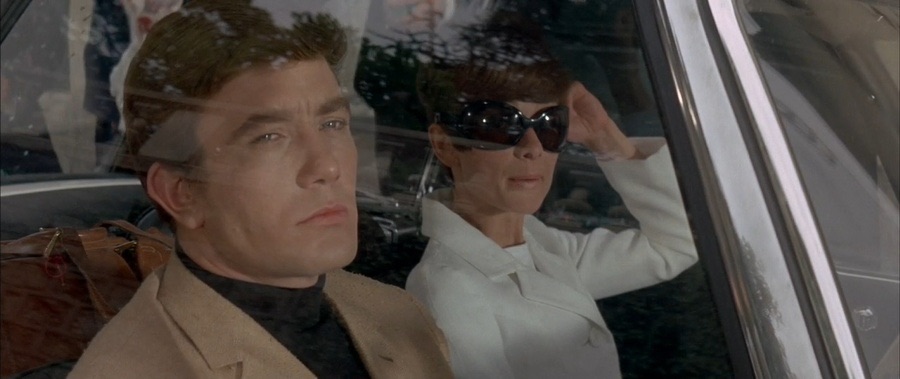
My boss' office is decorated with some delightful framed lobby cards from a movie I was not familiar with- Two for the Road (1967). Audrey Hepburn and Albert Finney grin and kiss in what appears to be a romantic European road movie directed by Stanley Donen. And one look at the trailer reinforced that this would be a charming affair between a pair of silly lovebirds. Two is so much more than that.

As Two begins we see jaded couple Mark and Joanna (Finney and Hepburn) sniping at each other over the details of the next leg of their trip. Their gorgeous Mercedes pulls up to an airplane and they transfer their bags and their cigarettes to the main cabin. In between heated puffs on their ciggies (the cigarette girl/stewardess has more if they need them) the two continue to bicker sounding like they are on the verge of a divorce. Where did the two ooey-gooey in love people on the poster go? How did these two seemingly mismatched people get together in the first place? The flashbacks reveal all.

Throughout the rest of the film the action bounces back-and-forth between the couple's past and present and it's done in a non-linear fashion- juxtaposing incidents between different timeframes, and using matching shots of cars and match-on-action shots to flow so quickly between the past and the present that it takes a moment to realize that we've moved forward or back in time.

Mark and Joanna's lovestruck first trip hitchhiking in France quickly becomes the married couple driving through the countryside arguing about how little time Mark has for Joanna and their baby, and then back to newlyweds in a riotous shared roadtrip with another couple. It's seamless and fascinating in how it depicts the changes in the relationship without the use of a traditional timeline.

Whereas most romance films build linearly to tell the story of a marriage, Donen mixes all the moments (good and bad) up, simulating our actual memories- relying on the moment to determine what specific memory our minds go to. It is a technique that shows piecemeal the totality of emotions wrapped-up in this struggling marriage. The fragments of time fall into place until the puzzle that is this relationship is finished. It has a sense of immediacy and uncertainty- a detour from the tried and true Hollywood romance narrative.

Hepburn, in particular, has never felt more "in the moment" to me. She smiled, laughed, and goofed throughout her long career as the iconic gamine, but it often felt stiff and staged. There are moments here, too, where her lightheartedness seems forced- but for the most part, this older Hepburn seems more open and relaxed.

Perhaps that's because it's rumored she fell in love and had an affair with her co-star. One moment in particular where she looks at Finney contains such electricity and tenderness, it's easy to imagine that their film roles had slid into reality. Whatever the cause, Hepburn glows in Two and gets to wear some of the ill-est Sixties plastic couture.

Finney seems rather cold and not-as-charming- almost as if he was tired of re-creating his appealing ne'er-do-well Tom Jones (1963) character. But he looks great in a swimsuit and does a helluva Bogey impersonation. The scenes with William Daniels and Eleanor Bron as an anal, Freud-obsessed couple with a child-in-charge are priceless. Add an appearance by a young Jacqueline Bisset and a groovy soundtrack by Henry Mancini and you have a cinematic trip well worth taking.

Monday, July 25, 2016

The Big Screen in the Sky: Marni Nixon

Heaven's heavenly chorus added a beautiful new voice on Sunday. Movie singer Marni Nixon passed away at the age of 86. Nixon was famous for being the voice of many a Hollywood actress in some of the great musicals from the Golden Era. If you thought you were listening to Deborah Kerr singing "Getting to Know You" in The King and I (1956) or Natalie Woods crooning "Tonight, Tonight" in West Side Story (1961) or Audrey Hepburn twittering "I Could Have Danced All Night" in My Fair Lady (1964) you were beguiled by arguably the best ghost singer in the industry.

Studios needed Nixon to help cover-up the fact that the actors cast in their musicals while stars, weren't always the best singers. So Nixon was used to sing full roles and sometimes as in the case with a high note in "Diamonds are a Girl's Best Friend" for Marilyn Monroe- bits of numbers. Nixon went unheralded for much of her career, but in an interview the gracious lady gave a couple years ago at a King and I screening, she admitted that Kerr was happy to tell the press it wasn't her singing. Wood, however, was devastated that the producers didn't use her voice and was always touchy about the subject.

Nixon took her unheralded work in stride and made many stage appearances as well as playing small parts in movies and television. Yes, she's Sister Sophia in The Sound of Music (1965). 
Nixon was an integral part of some magical movie moments- and I for one, will not forget that voice.

Friday, March 11, 2016

Top 5 Based-on-a-Book Movies

This weekend the venerable old Landmark Loew's Jersey Theatre is showing three classic movies that were based on popular books: The Postman Always Rings Twice (1946), Stand by Me (1986), and To Kill a Mockingbird (1962). Great books do not always make great movies. For every Gone With the Wind (1939) you have The Bonfire of the Vanities (1990). Screenplay adapters have to understand what makes a book resonate and translate it to the visual medium of film. Here are five movies that I think got it right- even if they didn't strictly follow the source material:

1.) Mildred Pierce (1945)
Everybody knows how much I adore this movie. Crawford is transcendent (and yes, sympathetic) and gives one of the greatest performances of her career. But interestingly enough, the movie is quite different from the book. Author James M. Cain was already a hit writer when he penned Mildred Pierce in 1941. His previous book The Postman Always Rings Twice and serialized Double Indemnity were both thrillers that swirled around crime and infidelity. Sexy stuff for the mid-Thirties. But Mildred Pierce was not a crime novel. It was a melodrama following the titular Mildred's dissolving first marriage and her struggles to give her daughters all the things she didn't have- resulting in a legendary spoiled brat. So why does the movie version of Mildred Pierce open with Monte Beragon (the slick Zachary Scott) getting filled full of lead?
It would seem that the makers of Mildred Pierce were worried that Cain's previous work and the successful movie version of Double Indemnity a year earlier had created an expectation in the audience for a crime story. Not to mention that violence sells, so why not try and meld together a film noir and a women's film? Enter the crime bookends at the beginning and end of Mildred Pierce.
Director Michael Curtiz did an amazing job weaving together the two genres and cinematographer Ernest Haller creates a wonderful visual juxtaposition between where Mildred began and the dark place she wound up using the contrasting lighting tropes of  noir and melodrama. That genre-blending is one of the reasons Mildred Pierce has stayed with us so long... and there's the slapping scene.

2.) A Clockwork Orange (1971)
Stanley Kubrick has a freak side. Sure, you see an orgy or two in his Eyes Wide Shut (1999), but nothing can top the vicious sexuality on display in A Clockwork Orange. Anthony Burgess' 1962 book that the film is based on was likewise provocative. The tale of Alex and his gang of no-goodniks takes place in a not-to-distant dystopian England where rape and violence proliferate the city's streets, and no one proliferates quite as much as Alex and his droogs. But this book wasn't just radical for its sex and violence. It is also challenging in its stance that the measures society takes to try and fix human behavior could be just as barbaric as the crimes themselves.
The movie version of Clockwork brings Burgess' ideas to startling life through the lens of one of the cinema's greatest visual artists. It's one thing to read about a gang rape. It's another to see it- and it's yet another to see it as if it's a surreal work of art. There are several rape scenes in the film (and one consensual sped-up lovefest) and none of them are filmed realistically. The violence and terror of rape are there, but they are abstracted.
The rape of a girl takes place on an abandoned stage to the strains of Beethoven. The rape of another woman is committed by men in phallic harlequin masks, who cut strategic holes in her pantsuit, all while singing the title tune from Singin' in the Rain'. A feisty older woman is attacked in her cat and erotic art-covered home with an enlarged penis sculpture. Kubrick re-imagines the rapes of Burgess' novel as violent art pieces instead of realistic acts of violence.

In the second half of the film as young Alex pays for his crimes, he is subjected to an experimental behavioral psychology "cure" for criminal thoughts called the Ludovico Technique. Alex is strapped to a chair in a theater, his eyes pried open by some nasty eye clamps, and is subjected to the cruelest images of rape and violence. The treatment works- but leaves poor Alex unable to defend himself in the real world- or to even enjoy his beloved Ludwig Van.

Unpacking a Kubrick film will take much more space and time than this blog can handle- but a good starting point is to think about the link between the distorted images of sex and violence depicted in Kubrick's film, and the more realistic images Alex is subjected to in the theater for his treatment. Kubrick has taken Burgess' material and skillfully applied it to the cinematic medium- making the ideas visual while at the same time confronting the medium presenting those visuals.

And then there's the Clockwork fan who made Alex's bedspread.

3.) Misery (1990)
 As far as I'm concerned, Stephen King is this century's (or is it last century's?) Charles Dickens. The man's consistent stream of fascinating horror books that create unforgettable characters who leap from the page into our nightmares is truly unique in the publishing world. One of my favorites was 1987's Misery. I will never forget reading it in one sitting during a weekend in my snowed-in one-room apartment. I don't recommend reading Stephen King books if your physical environment matches the story's. Just don't.
At the time, most of King's books were made into movies, and Misery was no exception. A mere three years after the book was published, Rob Reiner shot the film version starring James Caan and relative newcomer, Kathy Bates. Caan plays Paul Sheldon, author of a hit romance book series who is tired of selling out.
On a self-imposed writer's exile in Colorado to finish the last book in his Misery Chastain cycle, his car skids off a snowy road and he comes-to broken, but alive in a room in the house of his "number one fan", Annie Wilkes (Kathy Bates.) Annie goes from savior to torturer when she discovers the galley of the new book and demands that Paul re-write it so her favorite character doesn't die, or else...
Bates was inspired casting. She so perfectly embodies the homespun schizoid Annie, that you would think it was written for her. Bates is able to balance the lonely outcast with the manic curse-filled psycho to the point we are almost sad that Paul has to dispatch her. She found the dark humor that King had placed in Annie, and  it would earn Bates her first Oscar nom and to date- only win.
King has a thing for people who are stuck or trapped (think Cujo, Rita Hayworth and Shawshank Redemption, The Shining, The Mist, and Gerald's Game.) In a novel, it gives his main characters time to ruminate on themselves and their lives, as well as figure out a way to get un-trapped, but in a movie, it's a dangerous choice to set a film in one location. Reiner handles the obstacle of the one-room location with a tight, fast script by Oscar-Winner William Goldman that builds tension to scream-worthy levels.
There are occasionally breaths of fresh air as we go outside the room to follow Buster and Virginia (the adorably matched Richard Farnsworth and Frances Sternhagen) as they search for the missing Paul. But mainly, we are trapped in that room with Paul, desperately trying to figure out how to escape, dreading the sound of Annie's key turning in the lock.

4.) The Stepford Wives (1975)
Ira Levin was hot stuff in the late '60's and early '70's. His books Rosemary's Baby (1967) and The Stepford Wives (1972) were hits and the release of the film version of Rosemary's Baby in 1968 was a smash success. Levin tapped into the Women's Movement in this country in a creative way- depicting women who were trapped in supernatural situations that reflected a growing dissatisfaction with traditional marriage. The Stepford Wives addressed Women's Lib and how the male-dominated culture constructed women and their views of themselves.
In the film version, Joanna Eberhart (Katharine Ross) and her family move to a Connecticut town with the hopes of escaping the New York rat race. Everything seems idyllic- too much so. The wives of Stepford are all immaculately dressed, beautifully put together, and willing to make their husbands happy at any cost. Joanna isn't having any of this, and decides with her friend Bobbie (the hilarious Paula Prentiss) to find out what is in the water of Stepford that makes women such lovely doormats.
Not to be a spoiler queen, but it ain't the water that's the problem in Stepford, it's the men.
Critics of the movie (and they include feminist author Betty Freidan) felt that the movie dumbed down feminism and fetishized the image of the perfect woman. I hate to argue with the author of The Feminine Mystique, but she was totally missing the point. The image of the perfect wife in The Stepford Wives isn't attractive. It's terrifying.
The soft-focus perfection and robotic repetition of domestic patter about recipes and household cleaners is unsettling- not appealing. The final scene of the wives of Stepford walking through the supermarket isn't one of tranquil beauty- it is ghastly- almost like a uniformed fascist brigade that is looking for the softest two-ply.
The movie has become a camp classic due to its fashion and outdated vision of femininity- but I think it is a well-made social-issue horror movie- one that uses visuals instead of explicit ideology to spread its terror. And I think in a world where many women become more and more plastic, there is something to be learned in a movie about a town full of synthetic women.

5.) Breakfast at Tiffany's (1961)
Ah, Breakfast at Tiffany's- one of the great romance films from the end of the studio era where a carefree fashionista and an earnest writer fall in love living in the same New York apartment building. But if the movie had been made more faithful to Truman Capote's 1958 novella, it would have looked quite different. To begin with, Capote's main characters were a little rougher than their cinematic counterparts. In the novel, Holly Golightly is not a lovable pixie who gets through life having men give her money for the powder room. She's a hooker. Unrepentantly so. She has a foul mouth and admits to sleeping with men and women. This has little effect on neighbor Paul Varjack's interest in her, though, because in the book, Paul is a gay man.
A literary stand-in for Capote, Paul is fascinated by Holly, but has no intention of  marrying her. So it should come as no surprise that the rainy happy ending with Cat reunited with the two lovers doesn't exist in the book. In the book Holly and Paul part ways- and Cat disappears. And the wonderful character of "2E" Failenson that Patricia Neal has such delicious fun with doesn't even exist. There is a Mr. Yunioshi in the book but he is played by a real Japanese man.
So why all the changes? Simple. It was 1961. There was no way a movie could be made about a bisexual prostitute and her gay friend. The Production Code was beginning to wane- but not that much. The language in the book alone wouldn't be seen on American movie screens for another eight or nine years. So director Blake Edwards took a darkly funny story, removed the questionable parts, and made it more funny funny by throwing in a charming romance and Mickey Rooney in yellow-face (a funny fail). But the film does retain some of the sad undercurrent from the book with Audrey Hepburn's sensitive portrayal of a lost girl and Henry Mancini and Johnny Mercer's unforgettable Best Song Oscar-Winner "Moon River."

What "book-to-movie" films do you love?