Friday, April 1, 2016

Top 5 Comedies

It's April Fool's Day- and while I don't suffer fools, I do love comedies. But comedy is probably one of the most subjective of the movie genres. I mean, we don't judge dramas by how hard you cry. But comedies- you better be laughing the whole way through. What makes someone laugh is as diverse as the human experience. For instance, I and the rest of my family think farting is hysterical. It's totally a sound thing. But even try releasing so much as a "toot" around my boyfriend and he will roll his eyes and act like you just disgraced the family name. So different people find different things funny... it's the only explanation for the careers of both Seth McFarlane and Adam Sandler.

Here are my five favorite classic film comedies:

1.) Young Frankenstein (1974)


A lot of people talk about this film as a Mel Brooks comedy- and he did direct it. But what many people don't realize is that it was written by its star Gene Wilder. Mel Brooks is one of the great spoofers of our time with Blazing Saddles (1974), High Anxiety (1977), Spaceballs (1987), Robin Hood: Men in Tights (1993), and Dracula: Dead and Loving It (1995) in his filmography.

But Young Frankenstein feels different from these films- mainly because it's not so much a spoof, as it is a loving homage to the original Frankenstein films. The characters here do not just make jokes about former iconic characters, they develop their own unique, hysterical personae.

Case in point- Igor. In the hands of googley-eyed Marty Feldman he is not a pitiable, deformed hunchback- but a smart aleck who refuses to even recognize that he has a hump. Frau Blucher is not just some creepy, soothsaying gypsy, but a passionate, widowed girlfriend who can't understand why the horses neigh everytime her name gets mentioned. (Blucher is German for gluehouse.)

Perhaps the greatest evidence of something more than spoof is The Monster himself. Peter Boyle elevates this character beyond square-headed, neck-bolted parody. The Monster is a creature that desperately wants to be loved, so much so that he will attempt a song and dance routine with his overeager creator played with such wonderfully manic tenderness by Wilder.

Rounding out this top-notch comedy cast is Terri Garr, Madeline Khan, Kenneth Mars, and an unforgettable cameo by Gene Hackman. While there are a million quotable one-liners ("Put ze candle back!") this movie never stops being funny because the characters are so much more than just punchlines.


2.) The Palm Beach Story (1942)


Preston Sturges is known as one of the great comic filmmakers of the early 1940's- and as far as I'm concerned, this insane relationship comedy is his funniest. Gerry Jeffers (the impeccable Claudette Colbert) is tired of living the not-good life because her inventor husband (the uber handsome Joel McCrea) can't get his landing strip of the future off the ground. (Literally. His idea is to stretch it like a net over cities.) So she leaves him for greener pastures where she can get him the money to seed his project by romancing rich men. But Tom won't let her go and follows her down the coast by train and by boat to Palm Beach, Florida where the air is thick with millionaires.
The script is wacky and the pratfalls a delight- but again- what makes this stand above the comedy crowd is the wonderful characters that jump in and out of the story: The Wienie King (Robert Dudley) a "deef" hot dog magnate; Toto (Sig Arno) a vaguely Eastern Euorpean tagalong who speaks in a made-up language that nobody fully understands; and my favorite- Mary Astor as the Princess Centimillia, a man-hungry heiress who has slept and married her way across the world looking for love.

Palm Beach Story is light and silly and such a product of its time with a Pullman Car full of a travelling quail hunting club (Sturges favorite William Demarest whoops it up with a shotgun and some crackers) and sight gags involving pince-nez glasses. The Princess gives the advice, "Nothing is permanent in this world... except for Roosevelt, dear." It's a reminder that a month after this movie's release, the country was plunged into the Second World War and laughter on the screen would be a much-needed escape.

3.) Bringing Up Baby (1938)


Hollywood legend portrays Bringing Up Baby as a flop when it was first released. It did not make the Top 20 movies of the year in box office- but some sources show it almost making its money back. Critics were rumored to have hated it- Frank S. Nugent's New York Times review would seem to support that. And Katherine Hepburn was placed on a dubious "box office poison" list after the film came out. So how is it possible that such a sparkling movie did so poorly?


Bringing Up Baby was practically born with a silver spoon its mouth. Hepburn was joined by box office golden boy Cary Grant (their second film together) and successful director Howard Hawks for this romantic screwball comedy. David Huxley (Grant) is a paleontologist who is trying to finish a brontosaurus skeleton, fundraise for his museum, and get married. Along comes flighty socialite Susan Vance with a pet leopard to mess it all up. The Hawks dialogue is fast, witty and furious and the pratfalls are classic vaudeville- all adding up to what I consider a fun time.

What I enjoy most is how Grant and Hepburn play against their typical screen types. Grant eschews his erudite charm for an awkward academic who is so focused on bones, little else seems to make his radar. Hepburn- used to playing smart, no-nonsense women- twists her uppercrust persona by playing Susan as a flighty "million thoughts a minute" gal who gets leopards as pets. The chemistry between these two stars is undeniable and you can't help but feel sorry for any love interest in a Hepburn/Grant romantic comedy that isn't Grant or Hepburn cause they are bound to be left at the altar.

Maybe Baby was ahead of its time. Maybe film history revisionists have painted its performance more negatively than it actually was. Maybe- who cares? It's considered a great comedy now- and that's good enough for me.


4.) What's Up Doc? (1972)


Another fan of Bringing up Baby was Peter Bogdanovich. Bogdanovich was raised on the bible of the Cahiers du Cinema and started his career by writing about film and interviewing the directors and actors he so idolized. So it makes sense that once he became a director himself, the films of the past would influence his work- and nowhere is that influence as obvious as in What's Up Doc? To try and condense the plot of Doc is not only difficult- but probably useless. The fun in this film feeds from its madcap non-sensicalness.

There's a meet cute story, a scientist with a bag of musical rocks, a jewel heist, a car chase through the streets of San Francisco, lots of mistaken identities, and even a lively courtroom scene. It's as if Bogdanovich wanted to cram every screwball comedy trope into one film.
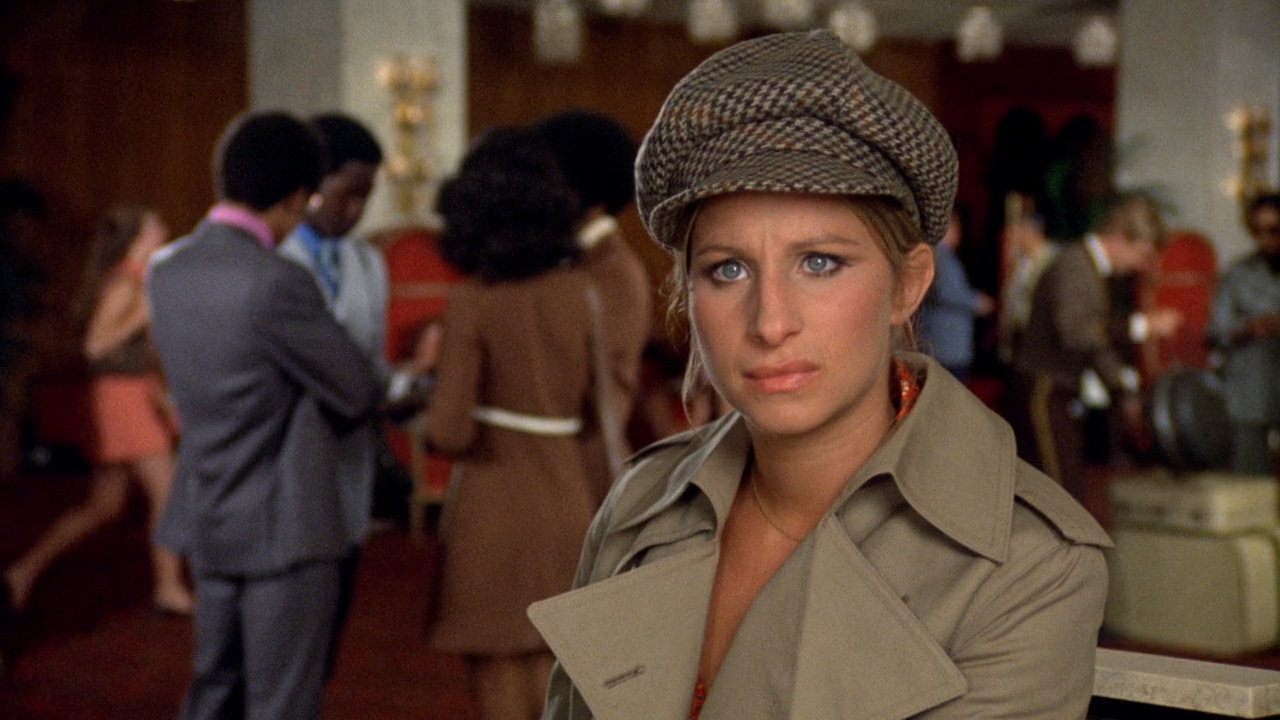
And running through this comic Garden of Eden are two of the Seventies biggest stars, Barbra Streisand and Ryan O'Neal.

Streisand is fresh and quirky here- her not-all-together schtick working perfectly as a well-intentioned girl who leaves disaster in her wake.

O'Neal follows Cary Grant's lead by playing against the romantic lead type and going full-on nerd- albeit a well-toned nerd who has a couple scenes in boxer shorts that will remind you why he was one of the lead hunks of the day.

Rounding out the cast are such wonderful character actors as Kenneth Mars, Sorrell Booke (who would go on to later fame as Boss Hogg), Mabel Albertson (formerly Derwood's mother on Bewitched,  doing one of my all-time favorite pratfalls) and in her first film, Madeline Kahn. Watching Kahn is like watching an astronomical event- no matter how many times you see her- she always dazzles. What fun it must have been to see her for the very first time.

5.) Dr. Strangelove (1964)


Most people don't think of comedy and director Stanley Kubrick together, but Kubrick's films are full of his dark sense of humor. His most completely comic movie Dr. Strangelove or: How I Learned to Stop Worrying and Love the Bomb takes the rather ominous topic of nuclear annihilation, and makes it laughable.

When loony general Jack D. Ripper (Sterling Hayden) falls off his fluoride rocker and orders a nuclear attack on Russia, a chain of events is triggered that threatens to destroy the world. Sounds hilarious, right? Well maybe after I list some of the character names, you'll get Kubrick's drift: President Merkin Muffley, General 'Buck' Turgidsen, Maj. 'King' Kong, Col. 'Bat' Guano, and the titular Dr. Strangelove.

Kubrick fills this Cold War thriller with outlandish characters to show the ridiculousness of nuclear proliferation. The President oohs and coos into the red phone connected to the Soviet Premier like a cuckolded husband. One of the lead generals acts like a spoiled teen when someone comes into his War Room. A lead scientist has an orgiastic Nazi breakdown at the thought of being able to start all over again with a better master race.

The book that the film was loosely based on was a thriller called Red Alert, so all credit goes to Kubrick and co-writer Terry Southern for twisting the material into something we could laugh at. I mean, if the world's gonna end, why not go out whoopin', "Yee-Haw!" from the backside of a nuclear warhead?

So those are my favorite comedies. What are yours?


Saturday, March 26, 2016

Top 5 Tennessees!

On the 105th birthday of Pulitzer Prize-winning playwright Tennessee Williams, it is only fitting that I talk about my five favorite movies that he either wrote or that are based on his work. It might be more fitting to get him a bottle of bourbon and some Seconal, but I don't want to be an enabler.

1.) A Streetcar Named Desire (1951)

Williams' second hit play was also the second movie made of his work. The play's phenomenal success on Broadway and the Pulitzer Prize guaranteed its transfer to film. But nothing could have prepared Hollywood for the star of the play, Marlon Brando.
Brando's performance on stage was considered an atomic explosion in the acting world. Brando used his raw energy and sexuality to bring out the animalistic nature of Stanley Kowalski and stunned theatergoers in the process. His performance in the film version caused the same hub-bub for movie audiences. It is impossible to take your eyes off Brando. His physicality is so sure of itself, the way he enters a room, the way his eye gleams as if he knows you're watching him, the unadulterated explosions of rage that terrify and excite. It is impossible to fully appreciate the impact this performance had on Fifties audiences. For actors there was pre-Brando and post-Brando.

But the rest of the cast of Streetcar was no group of slouches either. Vivian Leigh as the psychically unraveling Blanche Dubois is ethereal. It's almost as if we are watching the end of Scarlett O'Hara- like Leigh is giving the final performance of the character that most defined her career. From the original Broadway cast, Kim Hunter is wonderful as Stella- a role that must be performed expertly or it comes off as inconsequential. And Karl Malden is wonderfully pathetic as Mitch, Blanche's suitor that was never meant to be. These three actors under the expert guidance of director Elia Kazan each won Oscars that year.

Normally you would think that the Academy must have been smoking something pretty intense not to give Brando Best Actor, but that year they gave Humphrey Bogart his only Oscar for The African Queen- and that's fine with me. Williams also lost the Oscar that year to A Place in the Sun, but Williams, unlike Brando, would never win an Oscar.

2.) Cat on a Hot Tin Roof (1958)

How do you find two people more beautiful to look at than Elizabeth Taylor and Paul Newman? You don't- and that's why watching them play Brick and Maggie in Cat on a Hot Tin Roof is so perfect. Brick and Maggie by all accounts should be screwing like rabbits. But they are not- and the reasons are emotionally complicated and deeply buried. But keeping up family appearances is important, so these two perfect-looking people continue to inhabit the same cage not screwing, until secrets erupt.
Cat was written in 1955 when it is was a big deal for a mainstream play to deal with homosexuality- even if it didn't directly confront the issue. Williams' original version of the play did lots of tap-dancing around Brick and Skipper's relationship- even more so when Kazan convinced Williams to re-work the third act. Many critics have called Richard Brooks and James Poe's Oscar-nominated screenplay "neutered" when it comes to gayness, but I disagree.

The sin that daren't speak its name goes unspoken- but the implications are so clear, it is impossible to imagine savvy audiences now and even then weren't aware of what was going on. The bond of love between Brick and Skipper doesn't need to be described in detail. The pain in Paul Newman's face when he is forced to confront his memories is adequate. And Maggie's betrayal is the behavior of a woman eliminating her sexual rival, not just someone who is starving for her husband's attention.

While the script certainly could have been more direct, directness was not Williams' style. Williams was the product of a society that concealed its "otherness," and his writing does the same. But Williams dared to make his audiences face the fact that sexual secrets existed and that they would not stay hidden forever. Besides, what do people expect? Skipper to show-up in a pink Cadillac and drive Brick off into the sunset with a couple of cosmos?

3.) Suddenly Last Summer (1959)

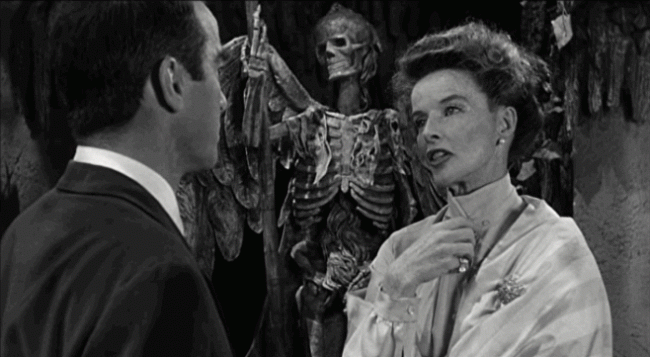
Williams was able to get away with a titch more in Suddenly Last Summer. Catherine (La Liz) is talkin' crazy- or so her aunt Mrs. Violet Venable (the imperious Katherine Hepburn) thinks. Vi is tired of Cat's ramblings about what happened to Vi's beloved son on their summer trip to Spain and asks Dr. Cukrowicz (Montgomery Clift) to give Cat a lobotomy- or Vi won't give a bunch of money to his cash-strapped hospital. But once Cat and Cuk lock eyes, there's no way he's going to chop out a chunk of her brain, so he endeavors to find another way to unearth the terrible memory her mind has hidden from her.

Offscreen friends Liz and Monty rekindled their on-screen chemistry that was famously on display in A Place in the Sun (1951) and Raintree County (1957) and the great Kate is pitch-perfect as a grande mother in deep denial. The Oscar-nommed art direction is fascinating with a Dr. Heidegger-esque garden that hides deathly statues. But the film feels a little fuzzy at times. Clift was still recovering from a devastating car accident and struggled with some of his scenes.
It seems director Joseph L. Mankiewicz was not very kind about it, because Hollywood legend has it that at the end of shooting Kate spat in Mankiewicz's face for his treatment of Clift.
The conflict on set was also present in the writing. Suddenly was based on a play by Williams and according to the credits, he worked on the screenplay. But in later years Williams denied working on the script and Gore Vidal took the credit claiming that Williams was too fucked-up to write the screenplay.

No matter who wrote it, here again we have hints at Sebastian's proclivities for "procuring" young men, but he is never completely outted. Sebastian (Julian Ugarte) is portrayed in flashbacks as a mama's boy who is using his cousin to attract young men on the beaches in Spain, and who winds-up paying a grisly price for it. But as with Cat on a Hot Tin Roof, nowhere do we have an open discussion about gayness.
In fact, the weird confession that Cat relates under the influence of truth serum is surreal enough to be a dream and not a truly accurate recounting of what happened in Spain. We never get a full image of Sebastian, and never hear his side of things. The film makes Sebastian and his sexuality a ghost haunting the proceedings- spoken of, but never fully seen.

4.) The Night of the Iguana (1964)

One would think that the rugged, masculine viewpoint of director John Huston would be incompatible with a Tennessee Williams play. But The African Queen (1951) director had a way of finding the soft parts of his male leads, so Huston and screenplay writer Anthony Veiller adapted Williams' play about a wayward reverend who winds up running cheap bus tours to Puerto Vallarta.

One fine day as he's being ogled by a young lady (Sue Lyon nee Lolita), Reverend Shannon (the beleaguered-looking Richard Burton) has a break-down and forces the bus and its occupants to stay at a beach-side hotel run by Maxine Fault (Ava Gardner smokin' and a drinkin'). The group led by Miss Judith Fellowes (Oscar-nommed Grayson Hall) is soon joined by a broke painter (the always wonderful Deborah Kerr) and her elderly, poetry-spewing father, named Nonno. Throw in a couple cute maraca-shaking cabana boys and you have a party.

This film is successful in conveying the chaos, confusion, and sadness of someone who has lost their way in life- but the movie often feels just as lost. All the leads are pros, however, and are able to dig beneath their glamorous screen personae to find painful truths. None of these characters (except for the cabana boys) seems to have it together and all are struggling with how to express themselves. It's not a bad depiction of what Williams himself was going through.

By 1961, Williams' most successful work was behind him and family, romantic and substance abuse issues plagued the depression-prone writer. It's interesting that his protagonist in Iguana that encapsulates his personal conflicts is a heterosexual man trying to choose (or not choose) between three women. But then again, there are those cabana boys...


5.) The Glass Menagerie (1973)

Williams' first play has been interpreted by many to be his most personal. The story revolves around Tom, a young dreamer who is finding it increasingly hard to live with his domineering, Southern belle mother and his disabled sister. One night a gentleman caller comes to visit the fragile Laura and everything comes to a head.
Many versions of this iconic play exist- it was first made into a movie with Kirk Douglas, Gertrude Lawrence , and Jane Wyman- a fine cast if there ever was one- although I'm skeptical that Douglas can emote the sensitivity essential to portraying Tom.

But one of my favorite versions is the TV movie made for ABC in 1973 starring Sam Waterston, Katherine Hepburn, and Emmy-winner Joanna Miles. Directed by The Lion in Winter helmer Anthony Harvey, this version uses some beautiful camerawork to convey the memory-play aspects of the piece. Tom walks through the dark streets of some far-away town when he sees his sister clad in a white nightgown flit through an alley. This begins his reminiscence of the life he left behind in St. Louis.

The actors are all perfectly cast and all earned Emmy noms that year. Waterston who was tailor-made for narrator roles (he's also Nick in The Great Gatsby (1974)) is wonderful as the conflicted writer, capturing Tom's frustration and sensitivity beautifully.
Hepburn is perfect as Amanda- bossy and manipulative- but passionate about her family- or at least her twisted view of it. The piano score by John Barry is wistful and sad, underscoring this tragic memory piece. If you missed it in your high school theater class, you can see it on You Tube.

When Tom wants to escape his life he runs to the movies. Lucky for us Williams' work was translated to the movie screen so we can escape too.

Thursday, March 24, 2016

Sadie, Sadie Silent Lady

I was able to catch Film Forum's showing of Raoul Walsh's Sadie Thompson (1928) last night and I gotta say, if you get a chance to catch Gloria Swanson in a silent movie- Go! Go! Go! Swanson lights up the screen with her smile and plays the waylaid Sadie with gusto. It's easy to see why Swanson was the queen of the Paramount lot. I was also pleasantly surprised to see the director also act as Sergeant "Handsome" O'Hara. I knew Walsh was a successful director- but I had no idea he also acted in some of his films. Without that eyepatch he was quite a looker.

What I found most interesting, however, was how the experience of seeing Sadie Thompson as a silent film compared to the sound version, Rain, made only five years later. The two films script-wise are so similar that the differences are inconsequential. The two stars, Swanson and yesterday's birthday girl Joan Crawford, both give great performances in the lead roles- Swanson getting an Oscar nomination and Crawford getting panned by critics.

What really makes the two experiences different sounds ridiculously simple- Sound. A key element to the hypnotic/maddening quality of Pago Pago island is the rain. Its constant patter on the roof is enough to unhinge these characters. Add in the ceremonial drumming of the natives and you have an aural sensation of madness. It really helps us accept the stark changes that the two leads make- because the script alone explains little of why Sadie chooses redemption, and the Reverend chooses lust.

But unfortunately, the silent version doesn't have that. Sure you have a piano or organ player who can add some sense of drama, but it's not the same as the pounding of rain and drums. Normally I don't think silent films suffer from a lack of sound- but having the ability to see a sound version that is so like the silent one, in this case, Sadie Thompson's silence isn't enough.

Friday, March 18, 2016

Top 5 Camp Classics!

It's the 60th Anniversary of The Ten Commandments and TCM Big Screen Classics is celebrating by releasing the film in theaters March 20th and 23rd. I'm going to celebrate by including the movie on my Top 5 Camp Classics List!


Camp movies, it might be said, are all in the eye of the beholder. The films included can be everything from drag farce, to epic misfires, to schlocky horror. Not everyone agrees that certain films are camp, and definitions can be a little hazy. But I'm going to take a crack at it anyway.

Successful camp often comes from a film that was produced very seriously- overly so to the point that it feels like "too much." This results in films that are failing so badly at their intended reactions that we find ourselves laughing at them. For me, true camp (with the exception of genre genius John Waters) is not made on purpose. It's the product of a director and/or actors who are not aware how their film is being received by the audience. In other words, camp is one of the most rare of genres because these gems of thwarted expectations are totally accidental.

Here are my Top 5 Camp Classics:

1. The Ten Commandments (1956)

Cecil B. DeMille made EPICS! From as early as the silent era, DeMille made big budget films that included casts of thousands and massive sets- some of which were so large, they were just left in the desert where they were built. DeMille's great ability was to create films that were so extravagant, they had to be seen to be believed. The studios were happy to indulge his cinematic flamboyance because in the '50's, a DeMille film was an event that could compete with the television- the biggest threat to the movie business at that time. And there was no bigger story for DeMille to tell than the story of Moses.

DeMille pulled out all the stops. He spent $13 million dollars on the production (that's $130 mill in today's dollars), shot on location in the Sinai, and a cast a vast army of actors led by: Charlton Heston, Yul Brynner, Anne Baxter, Edward G. Robinson, Yvonne De Carlo, Nina Foch, Cedric Hardwicke, Judith Anderson, and Vincent Price.

One look at the cast, and you can see why this serious epic has become a delightful piece of high camp. It's a who's-who of scenery chewers, each one greater at hamming it up than the next. And the bible-inspired dialogue thuds deliciously off of their tongues.
"You will be king of Egypt, and I will be your footstool!"

"Where's your Moses now?"

"Oh Moses, Moses, why of all men did I fall in love with a prince of fools?"
The lines can't be delivered with a straight face- but they are- desperately so. With its eye-popping costumes, sets, and special effects, the film is like a fabulous biblical theme park- it's so ridiculously gaudy, we can't wait to ride it again and again.
The Ten Commandments was a huge hit at the box office, currently ranking 6th in all-time box office receipts (adjusted for inflation). Ironically, Hollywood wised-up and sold its movies to television, and The Ten Commandments became an Easter staple in living rooms around the country. But nothing beats watching hirsute Chuck Heston part the Red Sea on the big screen.

Oh The Ten Commandments, you stubborn, splendid, adorable fool!

2. Female Trouble (1974)

As mentioned in my intro, John Waters is one of those rare directors who makes camp films on purpose. Much of this stems from The Pope of Trash's desire to poke convention in the eye with a handheld camera. With his muse Divine (Harris Glen Milstead's mascara-ed alter ego) Waters became the king of a whole new genre of underground cinema. His first shot at filthy stardom came with 1972's Pink Flamingos where he shocked viewers with a singing a-hole (no, not Ted Nugent- an actual a-hole that lip-synced)  and Divine eating dog crap on camera. Two years later, Waters applied his special brand of perversity to the story of juvenile delinquent Dawn Davenport (Divine).

From the first moment we see Dawn tramping around the Christmas tree hollering about cha-cha heels we know this girl is no good. So it comes as no surprise that Dawn rebels against marriage and motherhood by becoming a famous murder artist. Along with Divine, Waters' cast of regulars includes Mink Stole as Divine's obnoxiously twitchy daughter Taffy, porcine Edith Massey as the loud-mouthed-crammed-into-her-costume Aunt Ida, and David Lochary and Mary Vivian Pierce as fashionista perverts The Dashers.

Waters has no interest in conforming to film standards in order to tell a story or draw us into a make-believe world. The five cent budget, dialogue improvisation, handheld camerawork, and performers who don't look or act like actors leave the audience not with the idea that we've seen a film- but the most fucked-up home movie ever made. Waters would later clean-up his filmmaking and score a mainstream hit with Hairspray (1988), but I prefer my Waters dirty.

3. Lady in a Cage (1964)

Olivia de Havilland is one of the most memorable actresses of the studio system who starred in such great films as Gone With the Wind (1939), and The Heiress (1949). But by 1964, de Havilland did what many older actresses like Bette David and Joan Crawford did to make a quick buck- she starred in a low-budget horror movie. 


Lady in a Cage starts off with a strange, Saul Bass-esque montage of images- a young black girl rolling her roller skate over a passed out drunk, a dead dog lying in the street, people necking while an evangelist preaches over the radio about an anti-Satan missile. Mrs. Cornelia Hilyard (de Havilland) lives in a house along a busy street. But the calm and quiet of her "looks bigger-on-the-inside" home screens out the noisy outside world. Corny (that's what I like to call her) broke a hip recently and now has to get around with a cane, and an elevator. Yes, you heard right, an elevator.
To go from her bedroom to the living room, Corny has to get into an elevator that feels like it takes 20 minutes to go down one floor. She doesn't mind. She takes along her transistor radio and patiently waits to descend. But today is a bad day for Corny. Her gay son who lives with her has left for the weekend to commit suicide and due to a freak accident with a garbage truck out back, the power to Corny's house is knocked out- while she's suspended over the ground floor in her elevator.
And if that isn't bad enough, a group of drug-addled hippies (led by a young and very hairy James Caan) find out she's trapped and come to rob her home and create general mayhem. The plot is ludicrous, and for a good portion of the film you have to keep yourself from screaming, "JUST JUMP!!!" at the screen- but there's de Havilland. The poise and stature of this regal lady rises above the film and endows it with a gravitas it doesn't truly deserve.

When Corny decides to fight back with a war cry of, "Welcome to the Stone Age!" you abandon all logic and go along with her. I think this film is trying to make a commentary on how the chaos of the Sixties was invading our personal lives- but you'll be too busy watching De Havilland try to knock a phone off the hook with a homemade Grab-It to care.

4. Mommie Dearest (1981)

I have a love/hate relationship with Mommie Dearest. I mean, it's the film that effectively destroyed Joan Crawford's cinematic image forever, and I can't forgive it for that. But God it's fun to watch.

Faye Dunaway stars as Joan Crawford- or at least Dunaway's version of Joan Crawford. In Dunaway's hands, Crawford becomes a glamorous gorgon- a woman who is meticulously in control of everything around her- including her image. Whether she's jogging, putting on elbow cream, or chopping down rose bushes, Dunaway uses the dramatic gestures and voice of an ACTRESS to depict Crawford. Dunaway was obsessed with this role- to the point she felt that Crawford was haunting her. The line between actress and role feels frayed, as if Dunaway didn't just play Crawford but became her.

But is this what Crawford was really like? Even Christina Crawford whose book started this whole mess announced after seeing the movie, "That's not my mother." While Crawford had major difficulty differentiating between public and private, the idea that she was Mildred Pierce behind closed doors is hard to swallow- no matter how enthralling it might be to imagine. Whether Dunaway captures the real Crawford is hardly the point, though. What she does is create a fascinating caricature that is endlessly entertaining in its rejection of reality for grand explosions of love and anger and wire hanger frustration.

This film is a perfect example of accidental camp. The film was released as a serious drama addressing child abuse. But the crowds of gay men cackling at Dunaway's every line soon made it apparent that the audience was seeing it as something else.

5. Valley of the Dolls (1967)

What could possibly happen to three, attractive young women who meet in New York on their way to fame and fortune in the entertainment biz? In the hands of writer Jacqueline Susann, plenty. Based on the wildly successful novel, the film version of Valley of the Dolls follows Anne (Barbara Parkins), Neely (Patty Duke), and Jennifer (the late Sharon Tate) as they attempt to make it in this biz we call show. Successes and failures both professional and private abound and no one makes it out without substance abuse issues.
Along the way Broadway legend Helen Lawson (played by Queen of the scenery-chewers Susan Hayward) stands as a bitchy moral compass, a survivor who turns wig catastrophes into victory laps.

Valley of the Dolls has always been over-the-top, and it is that quality that turns this cinematic soap opera into camp. Over time, the film's desire to shock its audience has only increased that campiness. The sensationalism of drug abuse, sex scandals, homosexuality, and naked pictures turns into laughs as the culture we live in now accepts these aspects of the Hollywood story as de rigeur. The recently reported re-make seems silly to me. What are these girls going to do to shock a modern audience? Get an abortion on live television... on the moon? Part of the joy of this film is the kitsch of the Sixties, that like a fine wine will continue to improve with age. There's no need to make any new bottles of it.

So those are my favorite camp films. What are yours?