Showing posts with label Howard Hawks. Show all posts

Wednesday, June 1, 2016

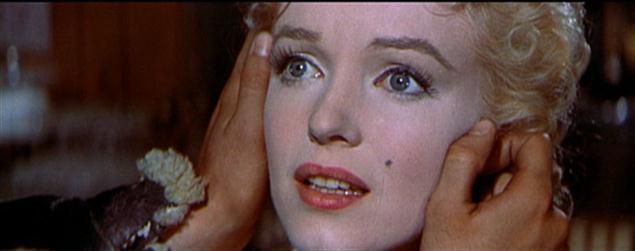
Top 5 Marilyn Monroe Movies

I find it hard to be objective about Marilyn Monroe. In the mid- '80's when I was an impressionable teengayger, the Marilyn re-resurgence was in full swing. Madonna hommaged/ripped-off "Diamonds Are a Girl's Best Friend" in her "Material Girl" video. The sensationalist best-seller Goddess: The Secret Lives of Marilyn Monroe was published, asserting that Marilyn was murdered due to her romantic entanglements with the Kennedys.

Marilyn's face and figure appeared on everything from posters to coffee mugs at Spencer's Gifts. I was swept up in this heady '50's nostalgia wave and could not get enough of the world's most famous blonde. I rented her movies on VHS and was captivated. Soon my bedroom resembled a Marilyn shrine, that face gazing at me from every conceivable surface on my walls.
Before Marilyn, the only classic movies I watched were Disney cartoons or kitschy old horror movies that showed late Saturday nights on Creature Feature with Crenatia Mortem on  KSHB TV out of Kansas City. So in a way, Marilyn was my classic film gateway drug. I started watching for her unique charisma and film image, but then reveled in the aesthetics, style, and writing of older movies- ultimately falling in love with them as well.

Marilyn introduced me to Billy Wilder, Howard Hawks, Bette Davis, Clark Gable, Cary Grant, and Thelma Ritter. From there, the endless world of classic movies was open to me.
I will always be grateful to Marilyn for leading me into that very special world.

On what would have been her 90th birthday, here are my Top 5 Marilyn Movies:


Gentlemen Prefer Blondes (1953) 


It's apropos that the first Marilyn film I saw was the one that made Marilyn a star. Howard Hawks directed this classic musical about a couple of showgirls who know how to turn heads to make ends meet. Marilyn is Lorelei Lee the diamond-digger with a heart of a gold. Lorelei loves millionaire Gus Edmonds, Jr., but when Gus won't propose, Lorelei gets on a boat to Europe, knowing absence makes the heart grow fonder- and in this case jealous. It's not long before Lorelei has stirred-up shipboard trouble for her and gal-pal Dorothy Shaw (Jane Russell in full cross-your-heart bra mode) by chasing a diamond tiara ("I just love finding new places to wear diamonds") and the pudgy Sir who owns it. Gentlemen was a big smash and made Marilyn a bankable star, cementing her "dumb blonde" character in popular culture.

Marilyn didn't play the first dumb blonde- Jean Harlow and Betty Grable created versions of the character before. But something about Marilyn's take was different. Marilyn added a sense of vulnerability and innocence, that made her feel more available to her audience. Her overt sexuality was not ambitious or manipulative, it was welcoming- almost natural so that it didn't come off as "dirty." Men believed this angel could fall in love with them, and women wanted to throw their arms around her and protect her from wolves in men's clothing. It was a hugely successful character- so successful that unfortunately, the public believed Marilyn wasn't acting- that she was the childlike sex object she portrayed. Marilyn fought the rest of her career to prove she wasn't Lorelei- a fight in many respects, she lost.

The Seven Year Itch (1955)


If Gentlemen made Marilyn a star, Seven Year Itch made her a supernova. Marilyn played The Girl Upstairs, an actress who is staying in the apartment above overly imaginative pulp novel editor, Richard Sherman (the goofy Tom Ewell). Richard's family is shipped-off to the country for the summer so he is left alone in the sweaty city, just him and his cinematic fantasies. When The Girl surprisingly accepts his clumsy invitation to have a drink in his air-conditioned apartment, poor Dickie realizes that after seven years of marriage, he has an itch he wants to scratch.

Marilyn's performance sparkles. Under the direction of Billy Wilder, she finds levels of sensitivity that make her so much more than a ditzy sex bomb. This girl feels sorry for the Creature from the Black Lagoon because "maybe he just craved a little affection"- and when Richard proclaims that he knows what girls like her want- she re-educates him. The scene is beautifully tender- and legend has it that she did it in the first take. Marilyn also has the opportunity to play against type in a couple of Richard's fantasies, showing that she was capable of much more than the giggle and the wiggle.

The subway grate scene is so much a part of our culture, it's hard to imagine what that image of Marilyn tittering as her skirt billows up around her must have been like when it first appeared on the screen. Well... the funny thing is that what was shown in the movie was never as much as what was shown on billboards and newsreel footage. That full shot of Monroe's body from the heels all the way to her cherubic face that we are so familiar with does not appear in the movie. But the image, shot on-location in front of thousands of cheering New Yorkers was aggressively sold before the movie came out to pack the houses- and it did. So even if it wasn't in the film itself, the idea of it alone was enough to give the audience an imagined voyeuristic thrill. And it gave us a good Snickers ad.

Bus Stop (1956)


As 1955 came to a close Marilyn was at a turning point in her career. She had just divorced baseball legend Joe DiMaggio, and was anxious to get away from the image that Hollywood seemed determined to keep her trapped in. Marilyn used her considerable box-office muscle to defy the studio and demanded a new contract with better pay, director approval, and her own production company. It is a testament to her star power that the studios acceded to each of those demands.

She also had become a star pupil of Lee and Paula Strasberg of Actor's Studio fame, so she was anxious to leave the dumb blonde behind her, and have the world see her as a serious actress. Joshua Logan's production of Bus Stop was tailor-made to introduce the new Marilyn.
Marilyn is Cherie, a chanteuse in a cruddy Phoenix bar. But Cherie has bigger dreams. Bo (the too-much Don Murray) is a cowboy who also has big dreams- of taking Cherie to his Montana farm where he will marry her and live home on the range ever after. Cherie would rather head for Hollywood and Vine, so a battle of wills (and lassos) begins.

The film suffers from the inaction that can plague stage-to-screen adaptations, and Don Murray makes your teeth grit when he's on the screen- except when he's doing topless sit-ups. Maybe his abs are the reason Murray was nominated for a Best Supporting Actor Oscar.
But watching Marilyn spread her acting wings is a joy. She inhabits Cherie, using her vulnerability and innocence to inform a character who is dreaming of something better- of a life where she's not taken advantage of and can be respected. Unfortunately, the film did not do well at the box office, and Marilyn was not nominated for the Oscar. Hollywood essentially rejected Marilyn's attempt at serious acting.

Some Like it Hot (1959)


Marilyn teamed with Wilder a second time, and the result is what many consider the greatest film comedy of the Golden Era. Marilyn is Sugar Kane, a ukulele player on a train to Florida, playing in an all-girls band to try and get away from men. So it's ironic that two of her new pals in Sweet Sue's Society Syncopators are men dressed up as women to escape the mob. Tony Curtis and Jack Lemmon are superb as Joe and Jerry and as Josephine and Daphne, two guys on the run in heels. Lemmon in particular is so wonderful that you can't help but wish he would stay as Daphne the rest of his life. The writing and the direction on this film are so whipsmart that I defy any viewer not to fall in love with it. It is one of the great achievements of film- and in my opinion- has not and will not show its age.

By the time Marilyn made Some Like it Hot, she was in a very different position than she had been when she worked with Wilder on Seven Year Itch. Her dependence on pills had become a daily concern. Her ability to show up ready to work was horribly compromised- and not helping issues was the fact that Paula Strasberg coddled her star and openly challenged Wilder's authority on the set. Wilder wound-up embittered against his star and according to him, much of the cast and crew were in the same boat. Tony Curtis remarked in a screening room, "Kissing Marilyn is like kissing Hitler." The comment got back to Marilyn- and it only exacerbated her serious emotional issues.

But through all of the offscreen drama, Marilyn turns in a luminous performance. Gone is the dopey blonde. Sugar is a sad sex siren, wanting so much to be loved, and tired of being used up like an old tube of toothpaste- all squeezed out. Marilyn exposes the heart of this character instead of making it a joke. It is the finest comedy performance of her career.


Don't Bother to Knock (1952)


I left this movie for last- because even though it is the earliest film of the five, I think it shows a performance that Marilyn had always strived for- but because of her success, was prevented from doing later in her career.

Marilyn plays Nell, a young woman babysitting Bunny (Donna Corcoran) in a hotel room while Bunny's parents attend a banquet downstairs. When the man across the way (Richard Widmark) shows Nell some attention, it doesn't take much time for her to invite him over. Now what to do with Bunny...? It becomes apparent that Nell is missing some cards in her deck, and what starts out as a flirtation veers suddenly into unhinged infatuation, and full-blown psychosis.

The movie is a slight thriller with laconic work by Widmark and an early appearance by Anne Bancroft as a lounge singer. But again, the focus is on Marilyn- and this time her soft voice is not used as a seductive tool. It is the voice of a young woman who is mentally disturbed, unable to grasp reality, who doesn't see things the way they are.

It is utterly unlike anything Marilyn would portray later in her career- and I think it's safe to say that the only thing that kept Marilyn from being offered serious roles like Nell was the success she would find a year later playing comic roles like Lorelei Lee. Don't Bother is a tantalizing what-if movie that hints at the actress inside this unforgettable Hollywood icon.

Friday, April 1, 2016

Top 5 Comedies

It's April Fool's Day- and while I don't suffer fools, I do love comedies. But comedy is probably one of the most subjective of the movie genres. I mean, we don't judge dramas by how hard you cry. But comedies- you better be laughing the whole way through. What makes someone laugh is as diverse as the human experience. For instance, I and the rest of my family think farting is hysterical. It's totally a sound thing. But even try releasing so much as a "toot" around my boyfriend and he will roll his eyes and act like you just disgraced the family name. So different people find different things funny... it's the only explanation for the careers of both Seth McFarlane and Adam Sandler.

Here are my five favorite classic film comedies:

1.) Young Frankenstein (1974)


A lot of people talk about this film as a Mel Brooks comedy- and he did direct it. But what many people don't realize is that it was written by its star Gene Wilder. Mel Brooks is one of the great spoofers of our time with Blazing Saddles (1974), High Anxiety (1977), Spaceballs (1987), Robin Hood: Men in Tights (1993), and Dracula: Dead and Loving It (1995) in his filmography.

But Young Frankenstein feels different from these films- mainly because it's not so much a spoof, as it is a loving homage to the original Frankenstein films. The characters here do not just make jokes about former iconic characters, they develop their own unique, hysterical personae.

Case in point- Igor. In the hands of googley-eyed Marty Feldman he is not a pitiable, deformed hunchback- but a smart aleck who refuses to even recognize that he has a hump. Frau Blucher is not just some creepy, soothsaying gypsy, but a passionate, widowed girlfriend who can't understand why the horses neigh everytime her name gets mentioned. (Blucher is German for gluehouse.)

Perhaps the greatest evidence of something more than spoof is The Monster himself. Peter Boyle elevates this character beyond square-headed, neck-bolted parody. The Monster is a creature that desperately wants to be loved, so much so that he will attempt a song and dance routine with his overeager creator played with such wonderfully manic tenderness by Wilder.

Rounding out this top-notch comedy cast is Terri Garr, Madeline Khan, Kenneth Mars, and an unforgettable cameo by Gene Hackman. While there are a million quotable one-liners ("Put ze candle back!") this movie never stops being funny because the characters are so much more than just punchlines.


2.) The Palm Beach Story (1942)


Preston Sturges is known as one of the great comic filmmakers of the early 1940's- and as far as I'm concerned, this insane relationship comedy is his funniest. Gerry Jeffers (the impeccable Claudette Colbert) is tired of living the not-good life because her inventor husband (the uber handsome Joel McCrea) can't get his landing strip of the future off the ground. (Literally. His idea is to stretch it like a net over cities.) So she leaves him for greener pastures where she can get him the money to seed his project by romancing rich men. But Tom won't let her go and follows her down the coast by train and by boat to Palm Beach, Florida where the air is thick with millionaires.
The script is wacky and the pratfalls a delight- but again- what makes this stand above the comedy crowd is the wonderful characters that jump in and out of the story: The Wienie King (Robert Dudley) a "deef" hot dog magnate; Toto (Sig Arno) a vaguely Eastern Euorpean tagalong who speaks in a made-up language that nobody fully understands; and my favorite- Mary Astor as the Princess Centimillia, a man-hungry heiress who has slept and married her way across the world looking for love.

Palm Beach Story is light and silly and such a product of its time with a Pullman Car full of a travelling quail hunting club (Sturges favorite William Demarest whoops it up with a shotgun and some crackers) and sight gags involving pince-nez glasses. The Princess gives the advice, "Nothing is permanent in this world... except for Roosevelt, dear." It's a reminder that a month after this movie's release, the country was plunged into the Second World War and laughter on the screen would be a much-needed escape.

3.) Bringing Up Baby (1938)


Hollywood legend portrays Bringing Up Baby as a flop when it was first released. It did not make the Top 20 movies of the year in box office- but some sources show it almost making its money back. Critics were rumored to have hated it- Frank S. Nugent's New York Times review would seem to support that. And Katherine Hepburn was placed on a dubious "box office poison" list after the film came out. So how is it possible that such a sparkling movie did so poorly?


Bringing Up Baby was practically born with a silver spoon its mouth. Hepburn was joined by box office golden boy Cary Grant (their second film together) and successful director Howard Hawks for this romantic screwball comedy. David Huxley (Grant) is a paleontologist who is trying to finish a brontosaurus skeleton, fundraise for his museum, and get married. Along comes flighty socialite Susan Vance with a pet leopard to mess it all up. The Hawks dialogue is fast, witty and furious and the pratfalls are classic vaudeville- all adding up to what I consider a fun time.

What I enjoy most is how Grant and Hepburn play against their typical screen types. Grant eschews his erudite charm for an awkward academic who is so focused on bones, little else seems to make his radar. Hepburn- used to playing smart, no-nonsense women- twists her uppercrust persona by playing Susan as a flighty "million thoughts a minute" gal who gets leopards as pets. The chemistry between these two stars is undeniable and you can't help but feel sorry for any love interest in a Hepburn/Grant romantic comedy that isn't Grant or Hepburn cause they are bound to be left at the altar.

Maybe Baby was ahead of its time. Maybe film history revisionists have painted its performance more negatively than it actually was. Maybe- who cares? It's considered a great comedy now- and that's good enough for me.


4.) What's Up Doc? (1972)


Another fan of Bringing up Baby was Peter Bogdanovich. Bogdanovich was raised on the bible of the Cahiers du Cinema and started his career by writing about film and interviewing the directors and actors he so idolized. So it makes sense that once he became a director himself, the films of the past would influence his work- and nowhere is that influence as obvious as in What's Up Doc? To try and condense the plot of Doc is not only difficult- but probably useless. The fun in this film feeds from its madcap non-sensicalness.

There's a meet cute story, a scientist with a bag of musical rocks, a jewel heist, a car chase through the streets of San Francisco, lots of mistaken identities, and even a lively courtroom scene. It's as if Bogdanovich wanted to cram every screwball comedy trope into one film.
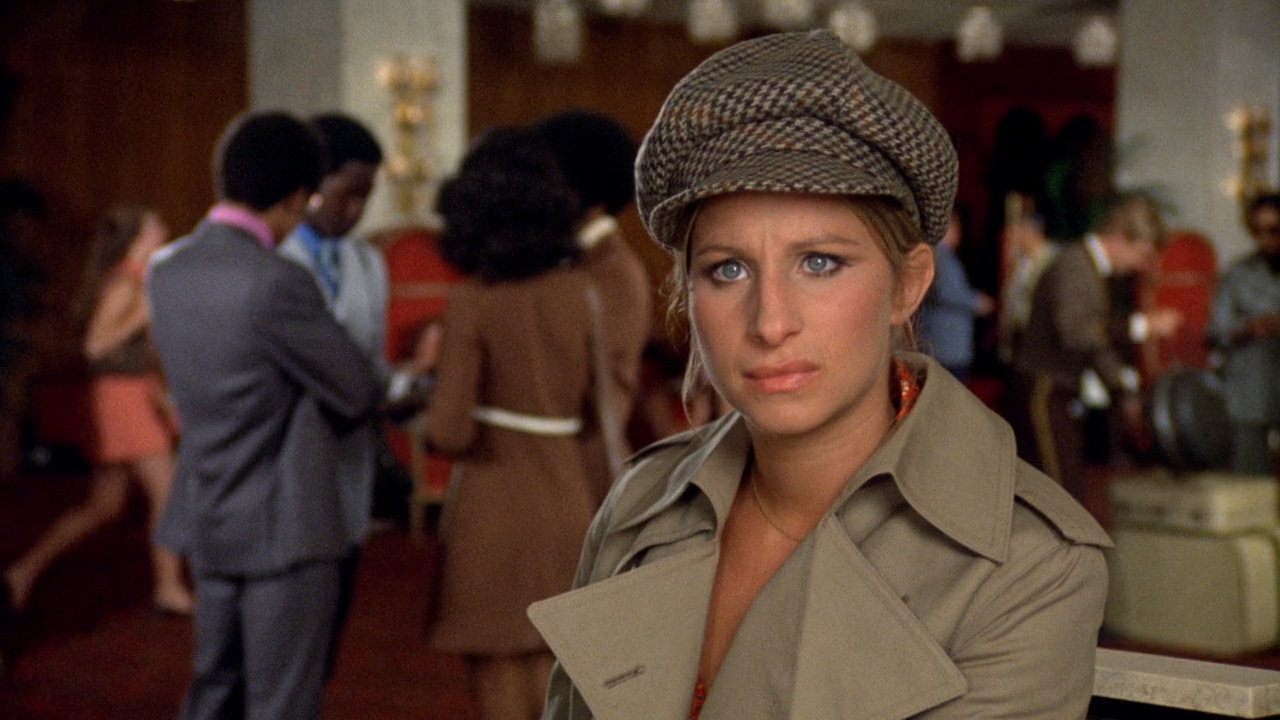
And running through this comic Garden of Eden are two of the Seventies biggest stars, Barbra Streisand and Ryan O'Neal.

Streisand is fresh and quirky here- her not-all-together schtick working perfectly as a well-intentioned girl who leaves disaster in her wake.

O'Neal follows Cary Grant's lead by playing against the romantic lead type and going full-on nerd- albeit a well-toned nerd who has a couple scenes in boxer shorts that will remind you why he was one of the lead hunks of the day.

Rounding out the cast are such wonderful character actors as Kenneth Mars, Sorrell Booke (who would go on to later fame as Boss Hogg), Mabel Albertson (formerly Derwood's mother on Bewitched,  doing one of my all-time favorite pratfalls) and in her first film, Madeline Kahn. Watching Kahn is like watching an astronomical event- no matter how many times you see her- she always dazzles. What fun it must have been to see her for the very first time.

5.) Dr. Strangelove (1964)


Most people don't think of comedy and director Stanley Kubrick together, but Kubrick's films are full of his dark sense of humor. His most completely comic movie Dr. Strangelove or: How I Learned to Stop Worrying and Love the Bomb takes the rather ominous topic of nuclear annihilation, and makes it laughable.

When loony general Jack D. Ripper (Sterling Hayden) falls off his fluoride rocker and orders a nuclear attack on Russia, a chain of events is triggered that threatens to destroy the world. Sounds hilarious, right? Well maybe after I list some of the character names, you'll get Kubrick's drift: President Merkin Muffley, General 'Buck' Turgidsen, Maj. 'King' Kong, Col. 'Bat' Guano, and the titular Dr. Strangelove.

Kubrick fills this Cold War thriller with outlandish characters to show the ridiculousness of nuclear proliferation. The President oohs and coos into the red phone connected to the Soviet Premier like a cuckolded husband. One of the lead generals acts like a spoiled teen when someone comes into his War Room. A lead scientist has an orgiastic Nazi breakdown at the thought of being able to start all over again with a better master race.
The book that the film was loosely based on was a thriller called Red Alert, so all credit goes to Kubrick and co-writer Terry Southern for twisting the material into something we could laugh at. I mean, if the world's gonna end, why not go out whoopin', "Yee-Haw!" from the backside of a nuclear warhead?

So those are my favorite comedies. What are yours?


Friday, February 26, 2016

Lance's Werthwhile Top Oscar Losers


So The Oscars- or as I like to call it, My Superbowl- are fast approaching and everyone is busily prognosticating who will win which category. Will Leo finally get his man? Will Jennifer Lawrence win again because she showed up? How many times will people mispronounce Alejandro González Iñárritu's name?

Me? I'm more interested in what happens to the losers. Do they fight back the tears behind a maniacal grin until they get home and break expensive shit? Do they take out voodoo Scientology hits on the winners? Do they heave a sigh of relief knowing that in some categories (Best Actress I'm looking at you) the winners often disappear from the scene, unable to find roles that will top the performance they carted off the award for?

Oscar Losers is a much bigger club- and its members are pretty amazing. So here are my picks for Top Oscar Losers:

Best Picture- Sunset Boulevard (1950)
The Oscars of 1951 was a true clash of the titans with Sunset Boulevard up against All About Eve in all but one of the big 6 categories. The Best Actress category was a real Sophie's choice with Gloria Swanson up against Bette Davis and Anne Baxter. The joke was on all three of them when Judy Holliday nabbed the statuette for her fantastically ditsy work in Born Yesterday. All About Eve wound up taking Best Picture, Director, and Supporting Actor from Sunset. but did being the loser in those categories tarnish this great Hollywood classic?
Nope. Sunset Boulevard has endured as the definitive screen image of film obsolescence. Norma Desmond may be a silent film actress- but she represents all those elements of film that get left behind in the rabid advance of audience trends. She's the black and white film, VHS tape, 80's teen romance, Kodak celluloid, single-screen theater, Faye Dunaway- all those things that were once so much a part of the movies- but are now gone- relics tossed into the dustbin by the digital 3D superhero adventures that appear to replicate endlessly in multiplexes in malls around the country.
Sunset ends with an eternal, gauzy, fade-out of Norma's close-up, and All About Eve concludes with a shot of the new Eve reflected ad infinitum in a dressing mirror. Both seem to say that film is timeless, forever reaching across the years to speak to us... even if you don't win the Best Picture Oscar.

Best Director- Howard Hawks
Not only did film dialogue innovator Howard Hawks never win a competitive Oscar, but he was only nominated once! For so-so Sergeant York (1941)! The man who brought us such wonderfully lively comedies as Twentieth Century (1934), Bringing Up Baby (1938), His Girl Friday (1940), and Ball of Fire (1941) wasn't even nominated for any of those great films. And don't start with that old chestnut, "Comedies don't win Oscars." I know they don't. But It Happened One Night (1934), a comedy that won oodles of Oscars, came out the same year as Twentieth Century.
And Hawks was so proficient in many different genres: from early gangster flick Scarface (1932) to romantic dramas Only Angels Have Wings (1939) and To Have and Have Not (1944) to film noir The Big Sleep (1946) to sci-fi horror The Thing from Another World (1951) (he is uncredited, but it's pretty clear he had something to do with the dialogue) to sensitive western Red River (1948) to musical comedy Gentlemen Prefer Blondes (1953). The man could direct anything! Shouldn't that get him an Oscar?  The Academy threw him one of those honorary Oscars in 1975, two years before he croaked, but honestly, those honorary Oscars just scream, "We should have given you a real Oscar. Epic fail."

Best Actor- Richard Burton
There are those who say that Richard Burton was the finest actor of his time- and considering that included his most excellent English mates Peter O'Toole and Richard Harris, that is quite a distinction. But Mr. Elizabeth Taylor never won an Oscar despite being nominated seven times. Burton was one of those actors who brought an inborn, thinking-man's masculinity to his screen performances. Stage-trained, Burton used his intense focus and strong voice to project mastery over his scenes and characters. And when it worked best for him was when he was playing someone who was not really in control.

In 1966 Burton starred with his then wife Elizabeth Taylor in first-time film director Mike Nichols' screen adaptation of the Edward Albee play, Who's Afraid of Virginia Woolf? Much was made of the fact that Liz and Dick were playing a dysfunctional married couple- much like the public imagined their real-life marriage operated (it was super-dysfunctional). And while Taylor often gets more attention for plumping and uglying herself up for the role- Burton is extraordinary as George.
He is alternately powerful and weak and hides and exposes himself as the story of these two sad people unfolds. He hates and loves this woman, and himself, and watching him bring the story to its tragic end- knowing that it is destroying both of them- is devastating. His performance is such that it is hard to imagine anyone else playing the role. But that wasn't enough for the Oscar that year.
Fellow Brit Paul Scofield won for playing Thomas More in another stage-to-screen adaptation, A Man for All Seasons. Burton got some cinematic revenge three years later when he ordered Thomas More's execution as King Henry VIII in Anne of a Thousand Days. But he would lose the Oscar for that role to the king of the cowboys, John Wayne for True Grit. It seems like Dickie just couldn't catch a break.


Best Actress- Judy Garland
 There are iconic movie stars and then there is Judy Garland. This sensitive dynamo energized an era and whether she was singing "Over the Rainbow" or "Have Yourself a Merry Little Christmas" or "Come On Get Happy" Garland's voice and screen persona were unforgettable. But Garland fell into a common Hollywood rut. She was not really taken seriously. She was a musical star of great talent and fame- but she wasn't considered to be a serious actress because she danced and sang.
Not true. Aside from her unmistakable pipes, Garland was an expert at interpreting a song. What makes some of her greatest tunes unforgettable is her ability to evoke a pathos in songs that aren't obvious tear-jerkers. The best example of this was Garland's theme song "Over the Rainbow" where a childish tune about rainbows and bluebirds became wish-fulfillment for anyone longing for an escape to a better place. It was Garland's abilities as a song "actress" that made her performances unique.

In 1954, Garland staged a Hollywood comeback by throwing herself heart and soul into George Cukor's A Star is Born. The story about a young woman's rise to fame in Hollywood all while the husband who discovered her descends into alcoholism was not new. The original film in 1937 starring Janet Gaynor and Frederic March was a hit and the story seemed destined for re-visiting (its about to be re-visited again helmed by Bradley Cooper). But with Cukor and Garland this version became a musical highlighting the music of Ira Gershwin. Garland had a lot riding on this project. Four years earlier she had been summarily fired from MGM for erratic behavior, and this film would be her return to the silver screen after years of success on the concert circuit.
Watching Garland you get the sense that she is accessing every bit of her personal history to bring Vicki Lester, nee Esther Blodgett to life. Her degrading makeup session to fix what is wrong with her face seems far too close to home for L.B. Mayer's "little hunchback." And her performance of "The Man Who Got Away" not only evokes the sadness of lost love, but the survival mode that accompanies it. This number is a musical foreshadowing of the loss of Esther's husband to suicide- a scene she does beautifully without singing a single word.
From her hospital room where she had delivered her last child, Garland, along with everyone else, heard the Academy Award for Best Actress go to Grace Kelly for The Country Girl- a movie I've never heard anyone talk about. Judy got a juvenile Oscar in 1940 after The Wizard of Oz which was basically a studio marketing award- and she was nominated again in 1962 for Judgment at Nuremberg, but would never win a competitive Oscar- the man who truly got away.

Best Supporting Actor- Claude Rains
Holy cats, Claude Rains was in everything! Looking at the list of movies he made, it's amazing how many good films the English actor appeared in. From his first hit The Invisible Man (1933) to his final big screen appearance as King Herod in The Greatest Story Ever Told (1965) Rains brought a fascinating moral complication to both his heroic and dastardly roles. He was nominated for Best Supporting Actor four times: Mr Smith Goes to Washington (1940), Casablanca (1942), Mr. Skeffington (1944), and Notorious (1946), but he could have easily been nominated an additional two times for Now, Voyager (1942) and Lawrence of Arabia (1962).
Particularly in Mr. Smith and Casablanca, his characters meld charm and grace with an untrustworthy quality. We aren't entirely sure Senator Paine or Louis are good guys or not. In Notorious, we know Mr. Sebastian is a Nazi Spy- but his Old World appeal makes you want to hang out with him- just don't drink the coffee. Rains was always a pleasure to watch because he played with the ambiguity of good and evil rather than the black-and-white of it. It's a shame he was invisible to Oscar voters throughout his career.

Best Supporting Actress- Thelma Ritter
Hattie McDaniels famously said she'd rather get paid to play a maid than to be a maid- and considering how many times character actress extraordinaire Thelma Ritter played a domestic helper, you'd think she might say the same. Ritter started her film career in an uncredited role in the Christmas staple Miracle on 34th Street (1947), and three years later she was nabbing her first Oscar nomination as Birdie, Margot Channing's sassy dresser/maid/confidante in All About Eve. In Hitchcock's Rear Window (1954), she is a chatty massage therapist. In the romantic comedy Pillow Talk (1959) she is Doris Day's tipsy housekeeper. In the Misfits (1961) she is a lonely Reno boarding house owner who goes along for the ride with Marilyn Monroe and Clark Gable.
Glamour was not Ritter's thing, With her gravelly voice, and her pointed commentary, she was always the earthy gal on the outside looking in, letting fools know when they were fools. It was a refreshing read that put memorable sparks in the films she appeared in. Ritter was nominated six times for Best Supporting Actress but never made it to the top of the Oscar pile. After her fourth nomination she said, "Now I know what it feels like to be the bridesmaid and never the bride."
Don't worry, Thelma. The Oscar Losers Club is proud to have you.

So those are my Top Oscar Losers. What are yours?