Sunday, April 19, 2020

What to Watch When You're Quarantined Week- Whatever

Oh, faithful LWCMD readers, I've started to lose track of time. Life has become a whirl of video conferences, artery-clogging home cooking, pandemic comedy vids, and games of Chips and Guac on Houseparty. (Don't worry if you don't know what the last one is. I didn't 'til yesterday either.) But I did find time in my busy schedule to watch some movies.

Z (1969)

In my rant about Parasite a couple weeks ago, I bemoaned the fact that there have been some amazing foreign films that didn't win Best Picture Oscars that I feel eclipse Parasite. I just found another one to bolster my argument. Z is a top-notch political thriller released less than a year after the assassinations of RFK and MLK Jr. The action takes place in Algeria during a political rally for a leader (played with gravitas by Yves Montand) who causes a stir by promoting denuclearization and world peace. Imagine that.

Intrigue unravels as activists, a plucky reporter, working class thugs, a dogged prosecutor, and military baddies collide, reminding us that self-interest often drives our world more than truth. Director Costa-Garvas kept the pace brisk and found some humor amid the tragedy while Francoise Bonnot took home the Oscar for Best Editing. In a year dominated by Midnight Cowboy (1969), Z had to settle for winning Best Foreign Language Film- but it's a timely movie that should not be forgotten.

Away from Her (2006)

Actress Julie Christie turned 80 last week so I celebrated by watching her fourth Oscar-nominated role in Away From Her. Christie was one of the great screen beauties of the '60's and '70's, but she proved time and time again in classics like Billy Liar (1963), Doctor Zhivago (1965), Fahrenheit 451 (1966), and Shampoo (1975) that she was more than just a pretty face. She even got the ultimate call-out in a Robert Altman movie, when she played herself in Nashville (1975). (Karen Black's Connie White can't believe she's famous. "Oh, come on. She cain't even comb her hair.")

At age 66 Christie is still a stunner- but Away from Her relies less on her looks, and more on her ability to immerse herself in the mind of an Alzheimer's sufferer. Fiona (Christie) has started doing kooky things like putting skillets in the freezer, labeling what's in her kitchen drawers, and wandering off into a wintry wilderness.

Her husband (Gordon Pinsent), desperately wants to protect her, but Fiona chooses the isolation of a local nursing home where she adapts to her new environment and reality, becoming involved with another patient (Michael Murphy looking grimly grizzled.) With a wonderful supporting turn from Olympia Dukakis, Away is a quiet film, that relies on subtlety over dramatic outbursts to communicate the humanity that is erased by this inhumane disease.

The Boy Friend (1971)


Another beauty from the Swingin' Sixties who made her way to the big screen was fashion icon Twiggy. The pouty, gawky model was on every magazine cover in the late '60's, so it was just a matter of time before someone decided to make a movie star out of her. British director Ken Russell believed that Twiggy's "naturalness" would be a perfect fit for the "All-Talking, All-Singing, All-Dancing" 1920's/30's musical extravaganza. Too bad Twiggy is only okay at talking, singing, or dancing.

Twiggy is Polly, an assistant stage manager who gets her big break to go onstage when the lead in a down-in-the-dumps music hall show breaks her ankle. The stakes get even higher when 'Pol' has to kiss her co-star whom she has been madly idolizing backstage and a big-shot Hollywood director is in the audience. If this sounds like a lot- it is. Too much in fact.

The movie can't decide whether it is an homage to the Twenties or to the Busby Berkeley movie musicals of the Thirties. In fact, I'm not even sure it's an homage. Russell simultaneously wants to evoke the escapist glamour of a by-gone era and likewise skewer it within a setting of middling, delusional failures.

The classic musicals worked because their fantasies emanated from the hopes and talents of their characters (and their audiences), whereas Boy Friend calls out the distinction between fantasy and show biz mediocrity. Specifically in numbers like "I Could Be Happy with You" Russell forces his star to make Berkley-styled love to the leading man who she believes is in love with another castmate, breaking the musical spell at the same time he's trying to weave it.


Twiggy's unique look is on full display, her cupid bow mouth and large deep-set eyes brought out by makeup and costume- and a pair of glasses that quickly disappear. In one scene she appears as an Erte-inspired vamp. It's a perfect example of how Twiggy frozen as an image can be stunning. But her lack of physical grace (a gait that I would say was anything but natural) and an almost non-interested acting style did not catch on with the movie-going public, and Twiggy's dreams of Hollywood stardom went the way of raccoon coats and rouged knees. Do check out the impossibly young and thin Tommy Tune.

Outlaw of Gor (1988)


Sometimes in a quarantine you have to just bake two dozen peanut butter cookies from your mother's favorite Good Housekeeping recipe and then sit down and eat them in front of the worst movie you've ever seen. While I might be able to work off the peanut butter cookies, I will never be able to lose the memory of watching Outlaw of Gor. This crap movie is the stuff of Mystery Science Theater 3000 legend. Now called Gor II, this sequel based on a popular fantasy book series was shot on a budget of $12. It doesn't matter what the plot is. It is simply one terrifically awful scene after another. Between the 80's video vixen hair, the little person sidekick, and Jack Palance chewing the scenery in a number of kiki hats, it's impossible to do anything except wonder if Italian beefcake Urbano Barberini's mini-skirt will blow to the side long enough to see his sword. Do not watch this unless you are drunk or high... or full of peanut butter cookies.


Sunday, April 12, 2020

What to Watch When You're Quarantined- Peaster Edition

Happy Passover/Easter- or as I like to call it Peaster. So with a basket of candy in one hand and a bottle of Tito's en autre, here are the '70's Peaster classics I watched to see if I could entice the Easter Bunny to come in and join me.


Jesus Christ Superstar (1973)

Andrew Lloyd Webber has been busily entertaining us during the quarantine with piano recitals of his most iconic work, and no rock concept album turned Broadway show is more integral to the Easter season than Webber's JCS. Filmed in the Holy Land, Norman Jewison's 1973 film version is visually extravagant with the undescribable, desolate beauty of Israel; the far-out costume creations of Yvonne Blake; and the talented, rag-tag band of players bringing this unconventional version of the Christ story to electric life.

Webber and his partner Tim Rice created a musical full of unforgettable tunes and such thought-provoking lyrics as, "Could Mohammed move a mountain or was that just PR?" The recent NBC live staging was one heckuva show with a cavalcade of stars- but the original movie version keeps the hippy chic- and pluck front and center.

On a Clear Day You Can See Forever (1970)

What says Spring more than Barbra Streisand singing to a bunch of flowers? Streisand plays Daisy Gamble- a wacky girl who has the ability to make plants grow and knows when the phone is going to ring. When hypnotherapist Yves Montand discovers that Daisy is also the reincarnation of a spicy Nineteenth Century English social ladder-climber named Melinda, a most complicated musical love story unfurls.


Clear Day is movie musical maestro Vinncetne Minnelli's final foray in the genre that made him famous. It is full of his cinematic trademarks: lush production design; sweeping, fluid camerawork; and songs that emerge from characters as extensions of thought- not stage-performances. Clear Day is kooky- but Streisand's vocals are some of her best- and her decolletage-bearing scene for "Love with All the Trimmings" is a feast for the eyes and the ears. Watch for Jack Nicholson as Daisy's far-out step-brother who may have some boundary issues...

The Wicker Man (1973)


Guys- religion is freaky And apparently if you live on a Scottish island run by drag-messianic Lord Christopher Lee- religion gets downright pagan. Sergeant Howie (a stiff-upper-lipped Edward Woodward) comes to the remote island of Summerisle to search for a missing a girl. What he finds are a lot of cagey townspeople, spooky animal masks, and lots of titties. The upright sarge starts throwing Christ in everyone's face, and at one point it feels like he's the actual villain of the movie, but in the end you can't be more evil than Christopher Lee. The film became a cult favorite and was re-made in 2006 with Nic Cage and Ellen Burstyn. But for my money, stick with the creepy-weird original.

Stay risen, Kids!


Sunday, April 5, 2020

What to Watch When You're Quarantined Week Three

Well, they say the third time is the charm- but I don't think they were referring to shelter-in-place. Three weeks in and I'm trying to figure out how to turn vintage cloth napkins into face masks.

Pandemic 2020: Making You Crafty.

When I wasn't folding cloth with rubber bands so I could go buy Prosecco, here are the movies I watched:


Hud (1963)

If I had to choose someone to be isolated with, Paul Newman would most definitely be at the top of the list. Even with a coronavirus mask on, those eyes would make my spine turn to custard and I wouldn't care if it was a Wednesday or a Friday. Every day would be Paulday.

In Hud, a family of ranchers experience a pandemic of their own- Hoof and Mouth disease. But Hud (swagger-ific Newman) doesn't seem to care if the family's cattle and livelihood are about to be wiped out. He is too busy raising hell in honky-tonks and the bedrooms of bored housewives.

Patriarch Homer (a wonderfully aged Melvyn Douglas) does what he can to set Hud straight- but nothing seems to keep Hud from following his baser instincts. Will young and impressionable nephew Lon (gone-too-soon Brandon De Wilde) follow in his uncle's notorious bootsteps, or is there redemption to be found on the desolate Texas prairie?

The acting performances here are masterful earning Newman, Douglas, and Patricia Neal Oscar noms- with both Douglas and Neal taking home the statues. Also winning an Oscar for his stunning black-and-white cinematography was the legendary James Wong Howe.

Howe's Texas vistas are breathtaking, and his shots of small town life are bleakly tender. A precursor to such lonely, modern westerns as The Last Picture Show (1971) and Days of Heaven (1978), Hud is a feast for the eyes any way you look at it.

The Farewell (2019)

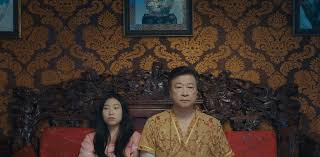
If Ozu and Wes Anderson made a movie, it would be The Farewell. Awkwafina's Nai Nai (the utterly charming Shuzhen Zhao) has three months to live- but in true Chinese cultural fashion, the family has decided not to tell Nai Nai. So a wedding is concocted to bring the family together so that Nai Nai can get all the hugs and scoldings in before she drops dead.

There is space here for raucous family comedy and larger-than-life character, but director Lulu Wang takes it in a quieter, more touching direction. There aren't any explosive Terms of Endearment blow-ups, just typically complicated familial confessions with an underlying tone of mortality. It's simple- and it works.

Awkwafina surprised me, as I was only familiar with her comic reputation from Crazy Rich Asians (2018) and Nora from Queens (2020) but she's quite good as the black sheep of the family despondent over the impending loss of the one relationship she could count on.

Wang's focus on heavily constructed shots and atmosphere-enforcing soundtrack overwhelm at times- but the images of fallow Changchun, China are an eerie foretelling of the empty spaces this pandemic has produced not only in China, but around the world.

The High and the Mighty (1954)


In times of disaster, sometimes it's fun to watch films about- well, disaster. And the granddaddy of the "plane danger" genre is 1954's The High and the Mighty. Long before Airport (1970) this doomed flight adventure was taking wing with audiences and making them question whether that six hour flight was really worth the air miles. H&M takes us back to the golden age of flying when your seat was the size of a barcalounger, there were only 21 people on your flight, and you could smoke everywhere- even on the flight deck.

John Wayne as Whistlin' Dan (No, seriously. He whistles a LOT. A drinking game should be played where you quaff each time Dimitri Tiomkin's theme tune is heard) is a co-pilot with baggage and he along with Captain Robert Stack (who parodies this very character in Airplane (1980)) are flying from Honolulu to San Francisco with a cabin filled with disaster movie stereotypes:

Newly married couple- Check! Couple ready for the divorce attorney- Check! Cuckolded married man ready to get revenge on the man who he thinks shtooped his wife- Check! Precocious kid who winds-up sleeping through the whole flight- Check! Insensitive portrayals of Asian, Italians, and Mexicans- Check!

The gang's all here- and with scenery-chewing performances from the likes of Claire Trevor, Sidney Blackmer, and Jan Sterling- you have the perfect group-viewing movie. Zoom it with your favorite cineastes- and don't miss the best line of the film, "I always thought your brain would fit nicely in a demitasse."

I could tell you all about my Netflix binge-viewing of zeitgeist darling Tiger King (2020) or Dark Horse comic to series entry The Umbrella Academy (2019)- but this is a movie blog- and this pandemic won't make me change my rigid blogging standards... but let's see what week 4 brings...

Stay safe faithful LWM readers!


Sunday, March 29, 2020

What to Watch When You're Quarantined Weeks One & Two

Hello LWM Fans!

Like many of you, I've been wondering what I can do during this time of social distancing to keep from turning into dull boy Jack Torrance. Working from home keeps me busy, but the weekends stretch out into eternity without people to order drinks from, or Grindr hook-ups to give me now passe STDs

So I thought, "Hey! Why don't I tell people what movies I've been watching and they can add (or not add) them to their pandemic movie viewing queue." "That's a great idea, Lance!" I said- cause I've started talking to myself.

So because I'm a little bit behind- I'm rolling Weeks One and Two of Lance's Werthwhile Coronavirus Movie Diary into one post.

Enjoy... in no particular order.

Parasite (2019)

It was the big spoiler for Best Picture at this year's Academy Awards, with jaws dropping everywhere for this first  foreign film Best Picture winner. I'm very fond of director Bong Joon Ho's Snowpiercer (2013) so I figured Parasite would give me all the Korean feels.

Nope.

This creepy mix of a "house with secrets" thriller and class warfare drama is fine. Ho is adept with visuals and the plot has plenty of twists- but Best Picture? Over Jo-Jo Rabbit (2019) or Once Upon a Time in Hollywood (2019)? Sorry. Don't get it. In a world where Fellini, Kurosawa, and Almodovar's foreign films were never even nominated for Best Picture, I don't see how this film pulled off this historical win.

Knives Out (2019)

This picture was not nominated for Best Picture at this year's Academy Awards- but it should have been. Not since the trailer for Wes Anderson's latest film has there been such a cast!

Headlined by Daniel Craig and Chris Evans with expert support from Jamie Lee Curtis, Michael Shannon, Toni Colette, Lakeith Stanfield, the always winning Christopher Plummer, and an un-earthed Don Johnson, the cast makes this by-the-book murder mystery an effervescent cocktail of duplicity and snide-ness. Between Craig's eyes and Evans' sweater-sheathed chest- I almost missed whodunnit.

Blonde Venus (1932)

Whenever I need a dirty elegance fix, I love to dig into my Dietrich/von Sternberg box set and relish in von Sternberg's sumptuous shadows and Dietrich's magnetic face. This time I re-watched their teaming in Blonde Venus. Dietrich is a club chanteuse shaking her money-maker to keep her radium-infused hubby (stalwart extraordinaire Herbert Marshall) alive and winds-up falling for playboy Cary Grant. I mean, who wouldn't? Dietrich drags her bonnie lad (cutie patootie Dickie Moore) from gin joint to gin joint until she does the motherly thing and returns her son to his father.

Released six months after Shanghai Express, Blonde Venus doesn't have the rich visual tapestry of that masterpiece. But watching Dietrich monkey around in the highly charged "Hot Voodoo" number is worth the price of admission.


Dark Waters (2019)

Todd Haynes is one of my favorite directors. The Velvet Goldmine (1998), Far From Heaven (2002), I'm Not There (2007), Carol (2015) are all exceptional films (not to mention his early art film Superstar- the Karen Carpenter Story told with Barbie dolls). So I was a little surprised how- well, quiet Dark Waters is. Mark Ruffalo plays an attorney who helps a cow farmer sue Dow chemical for killing all his cattle with their icky runoff. No spoiler alerts necessary- Dow did it- but will the little attorney who could make them pay for poisoning a whole nation?

Haynes is brilliant at steeping his movies in atmosphere- and Dark Waters is no exception with a sickly grey/green patina and dowdy Midwestern touches. But the tension of your typical investigative drama is not present here- leaving you wishing Victor Garber would twirl a mustache or Anne Hathaway would chew some scenery. What fascinated me most was the comparison of this film with early Haynes movie Safe (1995) where Julianne Moore's hypochondriac forces us to question the effects of our poisoned environment on our psyches.

Manhattan Murder Mystery (1993)

I've been working through the Woody Allen films I haven't seen before they're all outlawed and Netflix sent me this much-loved entry. Allen experiments with his own persona by making Diane Keaton the neurotic weirdo he usually plays. When their elderly neighbor dies of a heart attack, Keaton (with flimsy evidence at best) concludes that she was murdered and with the help of cozy pal Alan Alda decides to track down the evidence to bring the deceased's dastardly husband to justice.

Allen works hard to bring some reason to the proceedings (and keep his wife from diddling Alda) but in the end, the joke's on us, because the paranoid neurotic is right. Some good laughs, my beloved city of Manhattan, and Angelica Huston as a sexy authoress make MMM land somewhere in the middle of my Allen film ranking.

Faithless (1932)

Tallulah Bankhead was one of the great notorious figures of American culture. Her libertine hedonism shocked and titillated, resulting in a successful stage and radio career. While the great Tallu also graced the silver screen- her impact there was much less- well, impactful. Her gravel-filled voice and grand, theatrical gestures were overpowering on the screen, but there were a couple cinematic gems where you can see what made her a one-of-a-kind sensation.

Faithless features Bankhead as a spoiled heiress who has the Depression era lesson that "money isn't everything" bludgeoned into her well-coiffed head. The Pre-Code twist is daring, even for today- and hearing her intone, "Sausages! Sausages!! Sausages!!!" makes the creaky morality tale palatable.

So that's what I watched. What movies did you watch?


Sunday, September 8, 2019

Quentin Goes to Hollywood


When director Quentin Tarantino announced his ninth film would take place in Hollywood in 1969, it was a given that I would be excited to see the movie. As his PR machine deftly released casting notices, and lurid plot points (Would it or would it not be about the Manson killings- wait, Margot Robbie is playing Sharon Tate- it must be!) I prepared myself to manage my expectations so I wouldn't go in wanting more than Tarantino could give me. I'm happy to report Once Upon a Time in Hollywood (2019) delivers on some of my highest hopes.

As the title suggests Once takes place in Hollywood and follows the intersection of the lives of three people in 1969: fading TV actor Rick Dalton (the not fading Leonardo DiCaprio), aging stuntman and professional best buddy Cliff Booth (Brad Pitt- more on him later), and doomed actress Sharon Tate (the appropriately Sharon, Margot Robbie).

Dalton is watching his career fade away in an angry haze of booze and cigarettes. Booth tries to keep his drunk and emphysema-level hacking friend together enough so Dalton can shoot any number of "heavy" Western roles. Booth is struggling himself though- a stuntman whose rumor-fueled past keeps him from actually stunting. He's a Hollywood appendage who has an unappreciated body of his own.

Tate is Dalton's neighbor and acts as the propellant for the unavoidable ending- a sort of blond tracking shot that leads Dalton and Booth to the historic events on Cielo Drive on August 8, 1969.

Tarantino's evolution as a director is in full flower. His earlier predilection to allow the Tarantino style of cleverness and cultural curation to overwhelm his story is actually used in Once to immerse us in this dizzying, mod world.

Like a pubescent teen who can't shuttup about the latest new thing he's discovered, Tarantino floods the screen with a multitude of 60's uber-specific references: radio ads, TV show footage, movie marquees, neon-signed Hollywood hotspots, eclectic soundtrack, and even dog food cans.

Cool Hollywood cameos are in abundance: Steve McQueen (Damian Lewis), Bruce Lee (hilariously pompous Mike Moh), Mama Cass (Rachel Redleaf), George Spahn (Bruce Dern still giving us acting realness at age 83), and the cast of infamous "hippies" that inhabited the Spahn Ranch.

Tarantino has a field day showing us that no one knows more about this time period than he does. But wisely, these gorgeous details are kept as elements of the setting- like a trippy kaleidoscope that his leads walk through as they navigate their show business destinies.

Tarantino has also learned to master the art of dramatic suspense- not in a thriller sort of way- but as a creeping dread. From the moment we see Tate and Polanski depart the Pan Am airplane, we know what the ending is.

I practically squeezed my theater armrest to shreds imagining how Tarantino was going to shoot the Manson Murders. It allows Tarantino to stretch out the apprehension to sometimes unendurable levels, while at the same time creating fantastic and hilarious moments of subverted expectations.

That dread is mirrored in the lives of Dalton and Booth because as surely as we know the fate of the occupants of 10050 Cielo Drive, we also know Hollywood is about to fall apart and these two showbiz brahs could wind-up as the detritus of a new age.

As Booth, Dalton, and Tate cross paths the tension of what must happen provides enervating fuel, raising the stakes of this oft-told story of unfulfilled and empty Hollywood lives. It's like the first gut-knot inducing scene of Inglorious Basterds (2009) stretched out over a whole, swinging movie.

I also have to give Tarantino credit for giving Brad Pitt a role that fits him like a torn and used glove. Pitt is perfection as a Lebowski-level cool guy who is nonetheless aware that he's a hanger-on. While he isn't really sure what he should be doing- he knows he's wasting himself. Pitt's screen charm is electric and so casual, it's hard to tell he's acting at all. I suspect with the success of this film, Pitt can look for an Oscar nom come next year.

Is the film too long? Yes. Are there long stretches where actors play actors acting? Yes. But the ending of this film is as satisfying as anything I've seen recently. Tarantino believes that movies can redeem and save us. Once graphically illustrates that belief.