Sunday, March 29, 2020

What to Watch When You're Quarantined Weeks One & Two

Hello LWM Fans!

Like many of you, I've been wondering what I can do during this time of social distancing to keep from turning into dull boy Jack Torrance. Working from home keeps me busy, but the weekends stretch out into eternity without people to order drinks from, or Grindr hook-ups to give me now passe STDs

So I thought, "Hey! Why don't I tell people what movies I've been watching and they can add (or not add) them to their pandemic movie viewing queue." "That's a great idea, Lance!" I said- cause I've started talking to myself.

So because I'm a little bit behind- I'm rolling Weeks One and Two of Lance's Werthwhile Coronavirus Movie Diary into one post.

Enjoy... in no particular order.

Parasite (2019)

It was the big spoiler for Best Picture at this year's Academy Awards, with jaws dropping everywhere for this first  foreign film Best Picture winner. I'm very fond of director Bong Joon Ho's Snowpiercer (2013) so I figured Parasite would give me all the Korean feels.

Nope.

This creepy mix of a "house with secrets" thriller and class warfare drama is fine. Ho is adept with visuals and the plot has plenty of twists- but Best Picture? Over Jo-Jo Rabbit (2019) or Once Upon a Time in Hollywood (2019)? Sorry. Don't get it. In a world where Fellini, Kurosawa, and Almodovar's foreign films were never even nominated for Best Picture, I don't see how this film pulled off this historical win.

Knives Out (2019)

This picture was not nominated for Best Picture at this year's Academy Awards- but it should have been. Not since the trailer for Wes Anderson's latest film has there been such a cast!

Headlined by Daniel Craig and Chris Evans with expert support from Jamie Lee Curtis, Michael Shannon, Toni Colette, Lakeith Stanfield, the always winning Christopher Plummer, and an un-earthed Don Johnson, the cast makes this by-the-book murder mystery an effervescent cocktail of duplicity and snide-ness. Between Craig's eyes and Evans' sweater-sheathed chest- I almost missed whodunnit.

Blonde Venus (1932)

Whenever I need a dirty elegance fix, I love to dig into my Dietrich/von Sternberg box set and relish in von Sternberg's sumptuous shadows and Dietrich's magnetic face. This time I re-watched their teaming in Blonde Venus. Dietrich is a club chanteuse shaking her money-maker to keep her radium-infused hubby (stalwart extraordinaire Herbert Marshall) alive and winds-up falling for playboy Cary Grant. I mean, who wouldn't? Dietrich drags her bonnie lad (cutie patootie Dickie Moore) from gin joint to gin joint until she does the motherly thing and returns her son to his father.

Released six months after Shanghai Express, Blonde Venus doesn't have the rich visual tapestry of that masterpiece. But watching Dietrich monkey around in the highly charged "Hot Voodoo" number is worth the price of admission.


Dark Waters (2019)

Todd Haynes is one of my favorite directors. The Velvet Goldmine (1998), Far From Heaven (2002), I'm Not There (2007), Carol (2015) are all exceptional films (not to mention his early art film Superstar- the Karen Carpenter Story told with Barbie dolls). So I was a little surprised how- well, quiet Dark Waters is. Mark Ruffalo plays an attorney who helps a cow farmer sue Dow chemical for killing all his cattle with their icky runoff. No spoiler alerts necessary- Dow did it- but will the little attorney who could make them pay for poisoning a whole nation?

Haynes is brilliant at steeping his movies in atmosphere- and Dark Waters is no exception with a sickly grey/green patina and dowdy Midwestern touches. But the tension of your typical investigative drama is not present here- leaving you wishing Victor Garber would twirl a mustache or Anne Hathaway would chew some scenery. What fascinated me most was the comparison of this film with early Haynes movie Safe (1995) where Julianne Moore's hypochondriac forces us to question the effects of our poisoned environment on our psyches.

Manhattan Murder Mystery (1993)

I've been working through the Woody Allen films I haven't seen before they're all outlawed and Netflix sent me this much-loved entry. Allen experiments with his own persona by making Diane Keaton the neurotic weirdo he usually plays. When their elderly neighbor dies of a heart attack, Keaton (with flimsy evidence at best) concludes that she was murdered and with the help of cozy pal Alan Alda decides to track down the evidence to bring the deceased's dastardly husband to justice.

Allen works hard to bring some reason to the proceedings (and keep his wife from diddling Alda) but in the end, the joke's on us, because the paranoid neurotic is right. Some good laughs, my beloved city of Manhattan, and Angelica Huston as a sexy authoress make MMM land somewhere in the middle of my Allen film ranking.

Faithless (1932)

Tallulah Bankhead was one of the great notorious figures of American culture. Her libertine hedonism shocked and titillated, resulting in a successful stage and radio career. While the great Tallu also graced the silver screen- her impact there was much less- well, impactful. Her gravel-filled voice and grand, theatrical gestures were overpowering on the screen, but there were a couple cinematic gems where you can see what made her a one-of-a-kind sensation.

Faithless features Bankhead as a spoiled heiress who has the Depression era lesson that "money isn't everything" bludgeoned into her well-coiffed head. The Pre-Code twist is daring, even for today- and hearing her intone, "Sausages! Sausages!! Sausages!!!" makes the creaky morality tale palatable.

So that's what I watched. What movies did you watch?


Sunday, September 8, 2019

Quentin Goes to Hollywood


When director Quentin Tarantino announced his ninth film would take place in Hollywood in 1969, it was a given that I would be excited to see the movie. As his PR machine deftly released casting notices, and lurid plot points (Would it or would it not be about the Manson killings- wait, Margot Robbie is playing Sharon Tate- it must be!) I prepared myself to manage my expectations so I wouldn't go in wanting more than Tarantino could give me. I'm happy to report Once Upon a Time in Hollywood (2019) delivers on some of my highest hopes.

As the title suggests Once takes place in Hollywood and follows the intersection of the lives of three people in 1969: fading TV actor Rick Dalton (the not fading Leonardo DiCaprio), aging stuntman and professional best buddy Cliff Booth (Brad Pitt- more on him later), and doomed actress Sharon Tate (the appropriately Sharon, Margot Robbie).

Dalton is watching his career fade away in an angry haze of booze and cigarettes. Booth tries to keep his drunk and emphysema-level hacking friend together enough so Dalton can shoot any number of "heavy" Western roles. Booth is struggling himself though- a stuntman whose rumor-fueled past keeps him from actually stunting. He's a Hollywood appendage who has an unappreciated body of his own.

Tate is Dalton's neighbor and acts as the propellant for the unavoidable ending- a sort of blond tracking shot that leads Dalton and Booth to the historic events on Cielo Drive on August 8, 1969.

Tarantino's evolution as a director is in full flower. His earlier predilection to allow the Tarantino style of cleverness and cultural curation to overwhelm his story is actually used in Once to immerse us in this dizzying, mod world.

Like a pubescent teen who can't shuttup about the latest new thing he's discovered, Tarantino floods the screen with a multitude of 60's uber-specific references: radio ads, TV show footage, movie marquees, neon-signed Hollywood hotspots, eclectic soundtrack, and even dog food cans.

Cool Hollywood cameos are in abundance: Steve McQueen (Damian Lewis), Bruce Lee (hilariously pompous Mike Moh), Mama Cass (Rachel Redleaf), George Spahn (Bruce Dern still giving us acting realness at age 83), and the cast of infamous "hippies" that inhabited the Spahn Ranch.

Tarantino has a field day showing us that no one knows more about this time period than he does. But wisely, these gorgeous details are kept as elements of the setting- like a trippy kaleidoscope that his leads walk through as they navigate their show business destinies.

Tarantino has also learned to master the art of dramatic suspense- not in a thriller sort of way- but as a creeping dread. From the moment we see Tate and Polanski depart the Pan Am airplane, we know what the ending is.

I practically squeezed my theater armrest to shreds imagining how Tarantino was going to shoot the Manson Murders. It allows Tarantino to stretch out the apprehension to sometimes unendurable levels, while at the same time creating fantastic and hilarious moments of subverted expectations.

That dread is mirrored in the lives of Dalton and Booth because as surely as we know the fate of the occupants of 10050 Cielo Drive, we also know Hollywood is about to fall apart and these two showbiz brahs could wind-up as the detritus of a new age.

As Booth, Dalton, and Tate cross paths the tension of what must happen provides enervating fuel, raising the stakes of this oft-told story of unfulfilled and empty Hollywood lives. It's like the first gut-knot inducing scene of Inglorious Basterds (2009) stretched out over a whole, swinging movie.

I also have to give Tarantino credit for giving Brad Pitt a role that fits him like a torn and used glove. Pitt is perfection as a Lebowski-level cool guy who is nonetheless aware that he's a hanger-on. While he isn't really sure what he should be doing- he knows he's wasting himself. Pitt's screen charm is electric and so casual, it's hard to tell he's acting at all. I suspect with the success of this film, Pitt can look for an Oscar nom come next year.

Is the film too long? Yes. Are there long stretches where actors play actors acting? Yes. But the ending of this film is as satisfying as anything I've seen recently. Tarantino believes that movies can redeem and save us. Once graphically illustrates that belief.

Monday, August 19, 2019

The Madness of Joan Crawford- Possessed (1947)

The other day I was watching an old British TV interview of Joan Crawford on YouTube (as one does) when they showed a clip of the climax of the 1947 Crawford starrer Possessed. As Joan screamed out her lover's name over and over I remembered how much I love this performance. After a bottle of Chardonnay in the tub, I re-watched this classic and re-confirmed that Joan Crawford was not just a bitch in an Adrian gown. This woman could act.

Possessed (not to be confused with the 1931 Joan Crawford/Clark Gable film of the same name) was part of Joan's Warner Brothers renaissance. Following up her Oscar-winning turn in Mildred Pierce (1945) and the equally moving role of doomed socialite Helen Wright in Humoresque (1946), Crawford grabbed the part of mentally broken nurse Louise Howell with both gloved hands.

Possessed opens with a stricken Crawford aimlessly wandering the streets sans makeup and finery, calling out for a man named David. The mixture of Perc Westmore's non-makeup makeup and Crawford's vacant stare are a striking opening for the picture- and an uncharacteristic view of Crawford totally stripped of her glamour armor. I mean, she's not even wearing her signature fuck-me pumps!

The ensuing psychotropic drug flashback is a mixture of romantic melodrama and Female Gothic with Louise slowly losing her mind over the love of a man who doesn't want her (the ever-charming Van Heflin) and the new stepdaughter (Geraldine Brooks) he does want. Crawford is at her acting peak- balancing vulnerability and a hard edge as she descends into madness. One minute sweating and shaking as she tries to separate reality from hallucination, and the next slapping her step-daughter down a flight of stairs.

Crawford went to sanitariums and met with mental patients to try and give her performance an air of reality, making Louise more than just a crazed ex-lover who is one donut short of a dozen. And it works. The Crawford image is dulled and then re-shined and then torn apart, in a way, stripping this actress down into the disparate elements that made her such an interesting film star.

Crawford earned her second Oscar nom, but the rest of her stay at Warner Brothers would result in more soap-y fare like the deliciously slap-happy Flamingo Road (1949) and Crawford's least favorite movie This Woman is Dangerous (1952). Possessed is sort of a perfect middle-point for Crawford the actress- between her successful studio career, and the darker victim films she would make after the studio system lost its grip.


Tuesday, July 23, 2019

Oh Please, Mary!

In order to survive the NYC heatwave this weekend, I dipped my feet in a plastic babypool, shared popsicles with a 19 month old, and sat in front of my AC with a movie that I hoped wouldn't raise my temperature- Mary Poppins Returns (2018).

As those of you who follow me know- I'm a little remake/sequel averse. If a movie is practically perfect in every way, why try to recreate it or stretch it out? More often than not the attempt ruins the recipe and creates a dim reflection of the original. Of course there are exceptions- but that's another blog post... that I'll probably write when Spielberg's West Side Story comes out.

The original Mary Poppins (1964) is an undeniable childhood classic. It's unjaundiced view of imagination and the sparkling impenetrable propriety of its star Julie Andrews is a delight from stem to stern (as Admiral Boom would say). Yes, animation and live action filming techniques have come a long way since 1964, but the freshness of this film's images still retain the glee that audiences first experienced back when Barry Goldwater was running for President.

So why do Mary Poppins Returns 54 years later? Well... Disney's on a re-boot/remake kick. They have had success with a string of animation to live action remakes including this weekend's $185 million box office bonanza, The Lion King (2019)- which pretty much just replaces 1994 animation with 2019 CGI animation... and Beyonce. So it was inevitable that the execs at Disney would bring back the famous umbrella-wielding nanny for a "new generation" of expected box office dollahs.

They get some stuff really right. The cast includes the emotionally vulnerable (and Brit cutie) Ben Whishaw as all grown up Michael Banks, David Warner as the aforementioned land-lubbed Admiral Boom, Meryl Streep in a red wig that Johnny Depp may have turned down for Alice in Wonderland (2010) (another Disney re-make), Colin Firth as the charmingly duplicitous Wilkins, and a couple Supercalifragilisticexpealidocius cameos that I refuse to spoil.

The nostalgic animation style in the "Royal Doulton Music Hall" number is pure golden era Disney. There are flashes of unassailable charm and a couple moments where I got choked-up dreaming of what (or who) I would find in "The Place Where Lost Things Go." So why didn't I love this movie?

The reason Returns wasn't such a jolly holiday with Mary is at the core of the danger of remakes- are you doing something new- or are you literally repeating what worked before? Return can't seem to make up it's mind which one it's doing. Marc Shaiman's songs feel like they were in the final running for the original Mary Poppins. They're good- but almost identical to the originals.

The finale "Nowhere to Go But Up" might as well be "Let's Go Fly a Kite" replacing the item at the end of the string with a balloon. Richard M. Sherman who along with his deceased brother did the original Poppins music was involved in Returns, so maybe his influence was too reverenced to overcome.

The songs aren't the only carbon copies, though. The situations for the numbers follow the original gameplan- almost to the letter. Instead of a song about cleaning up your room, it's one about taking a bath. Mary pops the children into a chinabowl instead of a chalk painting. Instead of visiting an uncle who laughs and floats up to the ceiling (God, I love Ed Wynn), we visit a cousin whose world turns upside down.  Instead of dancing chimneysweeps, we get dancing (and bike-riding) lamplighters. It's as if the writers took whiteout to the old script and filled in new nouns.

But all of this similarity happens in a much darker setting. Gone is the colorful Edwardian Cherry Lane, replaced with a London gripped by the Great Depression. While the first Mary Poppins grappled with a stuffy society that discouraged imagination, Returns focuses on using imagination to deal with the death of your mother and possible homelessness. I mean, whoa. There's a big difference between trying to decide whether to give an old bird lady your tuppence or invest it; and how can I make sure I remember my dead mommy? It's fucking bleak.

It felt like some screenwriting guru whispered "raise the stakes" to Rob Marshall one time too many. I know we live in a much different world now and kids are used to seeing death and destruction in super hero movies and on the news- but the joy of the first Poppins was pure escapism. This one brings along our societal baggage- and it definitely holds more than a coat rack.

As for the stars, Emily Blunt is graceful yet prickly- but her singing chops are nowhere close to La Andrews. Lin-Manuel Miranda as the 30's version of Dick Van Dyke is engaging enough- but his dancing doesn't measure up to his magnetic, sooty forebear (although Kristen Bell would likely disagree with me.)

Returns wants it both ways- "It worked the last time- let's do it again" and "Let's update this classic." In this particular case, it feels like you can't have your candyfloss and eat it too.


Thursday, June 6, 2019

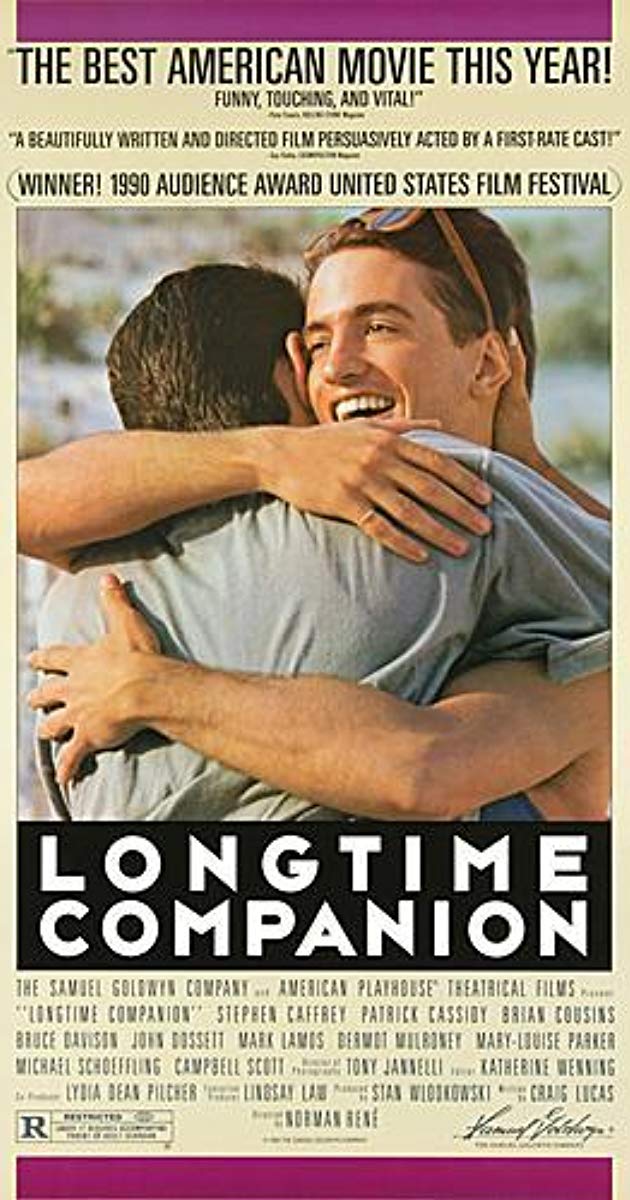
Lance's Werthwhile Pride Movies: Longtime Companion

AIDS Movies. It's not the most upbeat Hollywood genre. In fact it took Hollywood around four years after the infamous 1981 NY Times Gay Cancer article to even broach the subject with Buddies (1985). But over the years, there have been some excellent dramas, comedy-dramas, and documentaries that have given cinematic coverage of one of the darkest times in this country's history. One movie I'd heard of but hadn't seen until recently is a special entry in this genre- Longtime Companion (1989).

LC opens on Fire Island in 1981 with a group of gay friends doing what gay friends do on Fire Island- drinking cocktails at a tea dance, watching hunky guys sashay on the beach, and finding love... or at least lust among the dunes. But interspersed with these idyllic moments of gay life are shots of various characters coming across the aforementioned Times article. I don't know if there was a time when a viewer watched this and wondered, "Hm. What's going to happen?" But for me, the spectre of AIDS haunts this film from the very first title card: July 31, 1981.

The film proceeds to show how the AIDS epidemic affects this group of friends and their extended NYC circle through a series of jumps in time. It feels like a gut punch every time the screen goes to black and a title card shows a new date. "Jesus. Who's dead or dying now?" It borders on predictable cliche- but perhaps that's the point. As this disease spread and decimated entire communities, every day was a new funeral, another friend gone, a lover diagnosed, a mysterious sore appearing. It was a never-ending nightmare that seemed both random- and sickeningly predictable.

What makes this movie stand-out from some of its more famous cinematic kin (yes, I'm talking about you, Philadelphia) is how it deals with this circle of friends. LC is insular. It is the world of this particular group of gay men. While the import of this disease stretches far beyond their ranks, the focus remains on the connections between them- the details of their grief and dying.

Refreshing even for now (revolutionary for 1989) there is no sense that they are struggling with being gay. This movie celebrates these self-made gay communities, accepting these bonds at face value. LC has no time for gay shame. These men are fighting too hard for their lives. There is freedom here even in the midst of an epidemic. It's a unique perspective.

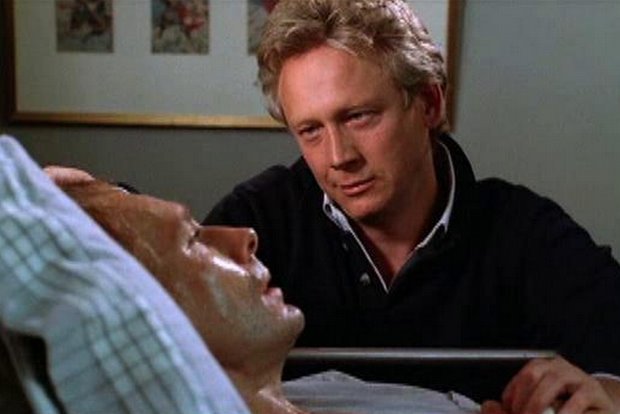
LC isn't great cinema. The editing feels a little too made-for-TV and melodrama overwhelms on occasion- but what it does well is focus on small, human moments that warm, terrify, and devastate. The overhead shot of the first victim of this group (an impossibly young and beautiful Dermot Mulroney) shows him lying alone in his hospital bed hooked up to respirators through tubes and a mask, his eyes wide in both terror and wonder.

Bruce Davison (the baddy Senator Kelly from the X-Men franchise) was nominated for an Oscar for his portrayal of the titular companion- and Mary Louise Parker and Tony Shalhoub add some good "Before they were stars" moments. Sadly director Norman Rene died of AIDS in 1996 at the age of 45. He left behind a beautiful testament to the strength and power of friendship and love- and that's what Pride is all about.