Friday, September 14, 2018

What the Hell Happened to Horror?

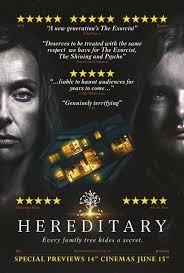
Sometimes I'm accused of being a bit of a cinematic stick in the mud. "Oh, Lance. You don't like anything made after 1968- or that doesn't have Joan Crawford in it." Not true. I can enjoy modern movies especially when they give me an opportunity to talk about how current films relate to the movies that came before them (see Get Out (2017)). Recently I was excited to see two very much  buzzed aboot horror movies: A Quiet Place (2018) and Hereditary (2018).

Unfortunately my initial excitement turned to true horror.

Before I go negative- let me talk about what I liked. Quiet Place has a deafening premise! The idea of how you re-think your life based on how much sound you make is fascinating. Be quiet or die. I'm pretty sure I would have been a goner in the first wave of this extraterrestrial invasion. And John Krasinski spent a good deal of time behind the camera, but I'm all for every minute he spends in front of it... preferably nude.
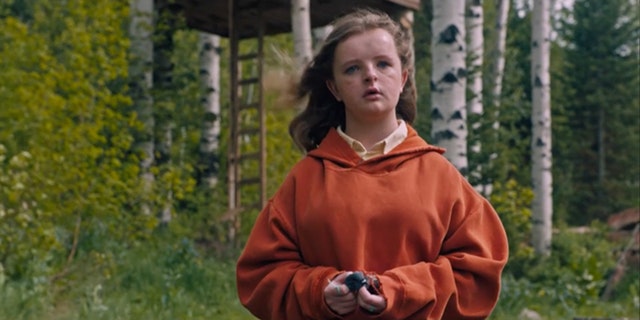
Hereditary contains the exceptional acting wiles of Toni Collette, who I could watch paint miniature houses for hours. And Alex Wolff is a cutie... as long as he washes his hair. Both films use some fascinating non-traditional casting with two Millies- Millicent Simonds (Quiet Place) and Milly Shapiro (Hereditary) both depicting young ladies that don't look like one of the Fanning sisters. That's what I liked. Now on to what chaps my film snob hide- and yes, there will be spoilers.

As much as I loved the premise for Quiet Place, the execution of this end-of-the-world/monster survival flick is as messy as the monsters' faces. Can we start with one of the first and most obvious head-slappers? How can you pull a nail out of a step with a laundry bag when the nail is turned upside down? Aside from being a violation of the simple, physical laws of how nails are put into stairs, it is amazingly clumsy foreshadowing. Gee, I wonder if someone's going to step on that at some point- perhaps at a hugely inconvenient moment- like going into labor.

If you can build a sound-proof room to safeguard your newborn, why not do the whole house in newspaper and Hearos ear plugs? Or at the very least, use the room as a place to communicate with each other- like a DIY Big Brother Diary Room.

Then of course there's all the difficulties of grain elevators, busted water pipes, and a hearing aid that only screeches feedback when the script deems it necessary- which is apparently not when it could save your father. How many ridiculous complications does this family have to endure beyond being hunted by these terrifying creatures? As much as the scriptwriters (hint: director and star Krasinski is one of them) wants.

There is also a big missed opportunity to allude to the abortion debate. A horror movie like Rosemary's Baby (1968) can successfully weave the controversial topic into a film without being preachy- making a statement within an unexpected format.

For Quiet Place, we never hear anyone question the sanity of giving birth to a child that will scream and make noise constantly- endangering the whole family. Wouldn't it be wiser to not give birth to the monster magnet in the first place? At a time when the future of Roe v. Wade is in question, I think this movie missed an amazing opportunity to be part of the cultural conversation.

Hereditary starts off in the creepy vein of modern atmospheric chillers like It Follows (2014), The Boy (2016), and A Ghost Story (2017), but quickly devolves into a supernatural stew that takes ingredients from successful films without creating anything unique of its own. Pacing is key for this genre- and while a slow-paced horror film like The Shining (1980) or A Ghost Story can overcome their plot speed with shocking revelations, Hereditary luxuriates in taking its time- to a brutal point.

By the time we discover what the F is going on thanks to Grandma's box (not sure I still fully know), we've already moved on to the more attention-worthy topics of "Did I remember to call my mom on her birthday?" or "Would Alex look better with or without that mole?"

Arbitrary plot points abound here as well. It's not enough that little Charlie's windpipe is closing up due to her brother's negligence in watching her and what she sticks in her mouth, but she has to have her head knocked off when said brother dodges an animal carcass in the road as he races to the hospital and Charlie unluckily happens to have her head hanging out the window to get more air and says hello to a telephone pole. It's shocking- and then you have to laugh. It's just too much.

The plot suffers from the same problem. Is this movie about a haunting (Poltergeist (1982)?) A satanic cult (Rosemary's Baby?) Creepy possessions where people can contort their bodies and climb walls (Exorcist (1973) meets The Ring (2002)?) It is all of these things- and that's way too many familiar ingredients to create anything unique.

The final line of the movie isn't even original. The old, naked people chanting "Hail Paimon!" are way too close to the geriatrics chanting "Hail Satan" at the end of Rosemary's Baby. With a droning, atmospheric soundtrack that resembles those of Wendy Carlos and Rachel Elkind (The Shining) and John Carpenter, Hereditary doesn't as much use horror films of the past as inspiration, but as a blueprint.

So what do I think is wrong with these two very popular horror movies? They don't trust their premises and are working too hard to add extraneous details. They have a case of the "Horror Cutes."

Simplicity is an underrated virtue in horror films and I think both of these properties could have benefited from a vicious red pencil that would make the writers and directors distill these stories into tighter, more focused projects that transcend (or at least creatively re-imagine) the bells and whistles we've seen before. Don't worry about the next jump scare- or poster-worthy visual. Boil your story down to the bones.

I wonder if I should go see The Nun (2018) or just watch Two Mules for Sister Sara (1970).


Thursday, August 30, 2018

I Married a B Movie

Last night, after sitting through the star-studded, bloated, literal circus melodrama of Cecil B. DeMille epic The Greatest Show on Earth (1952), I decided to cleanse my cinematic palette with something low-budget and decided on the titillatingly titled I Married a Monster from Outer Space (1958). Greatest Show may have won Best Picture, but for my money, IMMFOS was more fun to watch.

IMMFOS was originally created by Paramount to be the top-billed flick in a horror double-feature with The Blob. Color film and a new actor named Steve McQueen quickly flipped that billing, and IMMFOS would wind-up on the historical backend of drive-in theater fare. But there are some intriguing touches that elevate this B movie to at least a B+.

IMMFOS uses the post-Invasion of the Body Snatchers red scare device where alien invaders don't make a big show of their arrival with giant flying saucers and death rays. Instead, they take over the bodies of our friends and neighbors and plot a takeover from within.

Whereas Body Snatchers' pod people were indiscriminate in the sex of who they took over, IMMFOS gives the genre a gender-twist. Only the men of bucolic Norrisville are victims of the alien body switch. This leaves women in the position of having to discover the intergalactic plot- well, one woman anyway.

Marge (the wide-eyed Gloria Talbott) is confused why her betrothed Bill (the luscious Tom Tryon) is late to the altar. It's just not like him. The awkward way he navigates the honeymoon night might have set-off alarm bells too, but Bill is hot, so it's assumed Marge overlooked it.

A year later, though, she's concerned about how Tom has stopped drinking, sets off dogs whenever he comes near, and there is no bun in her oven. The answer that he's been taken over by a race of aliens doesn't occur to her until she follows him into the woods one night and watches him get a methane recharge.

At this point the film plays with the trope that Female Gothic Films have well-trod: a woman is trapped in a marriage with a husband she doesn't know and has to fight society's stigma that she is crazy for thinking that marriage is not all that it's cracked up to be. Women's issues are an area that sci-fi/horror films didn't often cover with notable exceptions like Attack of the 50 Foot Woman (which came out the same year), so it's intriguing to see it handled so blatantly here.

Marriage is made fun of by all the men as a freedom-killer, and for women, marriage is a danger not only to them- but to the world. Even the fact that it's an all-male alien invasion force hints at a pre-Stonewall society of dudes who don't need dames except for species survival purposes. Fun stuff for 1958!

The movie looks like it's shot on the backlots of TV studios (because it was), but the effects work of John P. Fulton (of Hitchcock and Ten Commandments fame) is really a hoot!

Talbott is appropriately terrified (she excelled playing a bitch of a daughter in All That Heaven Allows) and Tom Tryon is eye-catching (yes, he was a big ol' mo who would wind-up dating a cast member from A Chorus Line and a porn star.)

Tab Hunter competitor Ty Hardin appears handsomely under the name Ty Hungerford (which is a step-up from his birth name, Orison Whipple Hungerford, Jr.). "God he was everywhere on TV and in the movies in the Fifties and Sixties" actor Ken Lynch gives the town doctor his distinctive brand of earnest go-getter-ness. And even pugilist, turned actor, turned restauranteur "Slapsie" Maxie has a couple scenes.

So go marry a space monster. It's better than being in a circus.


Friday, August 24, 2018

Seeing Double!

Well, classic film friends, it's time once again for that end of Summer treat of treats- The 3rd Annual Film Forum Summer Double Features Festival! Just like it used to be in olden times, you can pay for one ticket and stay through two movies! Unlike in olden times, the two movies have been specially curated by film wizard, Bruce Goldstein, to highlight/connect an actor, director, genre, or maybe just a title.

Here are my picks for the best of the festival, starting Friday, August 24:

The Last Detail/Five Easy Pieces

Before he became a leering parody of himself, Jack Nicholson was the quintessential '70's actor. He instinctually portrayed the man who vainly struggled to fit into the world, and found rebellion to be the surest escape. In Five Easy Pieces (1970) and The Last Detail (1973), Nicholson does some of his best work. In Five, he's the disaffected pianist who pisses off his family by rejecting his talent and working in an oil field. In Detail, he's a Navy grunt who takes pity on a wayward seamen. Nicholson's ease with masculinity but discomfort with the rules that defined a man made for an explosive combination that would be his stock in trade for his Seventies career earning him three Oscar noms and eventually a win for One Flew Over the Cuckoo's Nest (1975).

But Nicholson's not the only reason to watch these two flicks. Five was nominated for a Best Picture Oscar and his co-star Karen Black is a dim-witted spitfire with a monologue that nabbed her an Oscar nom as well. Not to mention you get to see Sally Struthers engaged in some very un-Little Goyl activities.


Detail was directed by Harold & Maude auteur Hal Ashby and also featured an Oscar-nommed supporting performance from Randy Quaid as the childlike AWOL dufus that Nicholson is tasked with retrieving. Robert Towne was Oscar-nommed for the screenplay and would go on to win the next year for another Nicholson classic, Chinatown (1974).

Badlands/Carrie

Sissy Spacek started her movie career with a bang. As homicidal gal pal, Holly, in Terrence Malick's harrowing murder-opus Badlands (1973), Spacek creates an initial impression of freckles and sweetness.

But through the picture, she helps her murderous boyfriend Kit (an impossibly young Martin Sheen) in a cross-state killing spree, evolving into a complicit and complicated woman. The performances from these two actors are spellbinding- and that's saying something as Malick's camerawork with the endless Texas prairie and radiant sunsets competes for our attention.

Three years later, Spacek would again play an innocent hiding darker, blood-soaked urges in Brian de Palma's horror classic Carrie (1976). So much has been written about this movie that it would be a waste of pixels for me to try and find something original to say.

It is a standout for the genre in this time period, period. I once sat in an audience packed with Carrie fans (and Piper Laurie) who knew what was coming at the end- and we all still screamed our fool heads off.


Taxi Driver/Mean Streets

This double feature doubles-up on several items: Direction by Martin Scorsese, performances by Robert De Niro, and the grubby setting of Seventies New York City.
Taxi Driver (1977) is an unassailable classic with distinctive direction from Scorsese, chilling Oscar-nommed performances from De Niro and Jodie Foster, and a posthumous Oscar nom for film score maestro Bernard Herrmann. It's a sick, dark chocolate of a movie- but wow, it holds up.

Before Taxi Driver though, Scorsese, De Niro, and New York cut their teeth on Mean Streets (1973). While his later work gets the majority of the attention, Mean Streets is a fascinating watch to see how the elements of Scorsese's direction that would become his signature style were all there from the beginning.

Morally ambiguous (or downright moral-less) protagonists, a loose- improvisational dialogue style, and a visually cynical view of the New York streets are the center of this tale about a hood who dreams of bigger crimes and greater glory. One particular scene employs inventive, swirling camerawork to bring the audience into a sprawling barfight- almost by centrifugal force. Scorsese always had it, and Mean Streets proves that.

Desperately Seeking Susan/After Hours

Who would have thought of doing a Rosanna Arquette/80's New York double feature? Apparently Mr. Goldstein- and it's a fantastic idea! Both released in 1985, these two cultural gems set in New York City offer a more lively and eccentric view of the Big Apple as it crawled its way back from being told to "Drop Dead."
Desperately is best remembered for helping launch the media domination of a girl named Madonna. Having released her Like a Virgin album only six months earlier, Madonna was becoming a pop star- but wasn't content with just ruling the airwaves. She wanted to be a movie star too.

It didn't hurt that her hit song "Get Into the Groove" was on the soundtrack and the accompanying hit video with clips from the movie had young girls (and gays) flocking to the theater to see their newfound idol of music, fashion, and chutzpah. Madonna's made many attempts since Desperately to conquer the big screen, but her most natural, genuine performance happened in this film. Oh yeah. Rosanna Arquette's in it too.

If after seeing Taxi Driver and Mean Streets you think Scorsese would not be a good candidate to direct a comedy, think again! Paul Hackett (Griffin Dunne) plays a square microprocessor who falls down the rabbit hole into the quirky art world of Soho. At a time where there are no smartphones, ATMs, or Venmos Paul goes from whacky misfortune to whacky misfortune all with the hope of making it with the screwy object of his desire, Marcy (Arquette playing screwy well).

With a supporting cast full of notables like Cheech & Chong, Linda Fiorentino, Terri Garr, Catherine O'Hara, John Heard, and a pre-Balki Bronson Pinchot, After Hours proves that Scorsese could find comedy on the grungy streets of New York as much as he found drama.
"Is That All There Is?" indeed.


If you want to go from double-vision to triple-vision, I HIGHLY recommend you check out the documentary Three Identical Strangers (2018). This is one of those times where I can barely tell you anything about this film without spoiling it, so all I'll say is this story of triplets separated at birth is an emotional rollercoaster ride with twists and turns that will leave you with your mouth hanging open. Director Tim Wardle dispenses and reveals facts to us in such a way that the film plays more like an ingenious suspense story than a documentary. I literally gasped and yelled at the screen. Don't miss this one. Also, the triplets have a cameo in Desperately Seeking Susan.

How's that for making connections, Film Forum?


Tuesday, July 17, 2018

You Kiss Your Mother With That Mouth?: Savage Grace

Sometimes ignorance is bliss. A couple weeks ago, one of my friends recommended I watch Savage Grace (2007). I vaguely remembered the title- and once I recalled Julianne Moore was in it- I was good to go. I would watch La Moore poop in a can- and for all I know, that happens in the upcoming Bel Canto (2018). What I'd forgotten was that this was the somewhat infamous based-on-a-true-story film about an uncomfortably close relationship between a mother and son. I didn't look any further into it than that- and I'm glad I didn't- cause the ending made my jaw drop.

Savage Grace recounts the life of our narrator, Antony Baekeland (Eddie Redmayne), heir to the Bakelite fortune and apple of his omnipresent mother's eye. Barbara (the aforementioned not-pooping Julianne Moore) has shifted her affections to her son because her icy husband (the nicely built Stephen Dillane) is tired of her social-climbing and philandering. As Antony tells us, "I was the steam when hot meets cold." As we watch Antony's story unfold, we realize that steam can cloud and confuse what we see.

What made Savage Grace so interesting to me was the classic style in which director Tom Kalin shot it. I don't just mean the beautifully realized period costumes and exotic European hotspots from the Forties to the Seventies that populate the film. For a film that is so much about sex, we see very little of the act. Glances, touches, and cuts to "the next morning" take the place of our seeing what actually happens when passions become unmanageable.

Classic movies did this to avoid the evil red pen of Joseph I. Breen. But Kalin does it to allow our imaginations to fill-in the blanks. When we do catch these moments, Kalin focuses more on faces than on bodies. It is not about the act- it is about what is going on internally for this fucked-up family.

Objects also receive unusual focus in the camera frame. Whether it's the dog collar of a long-dead pet, a record player, the serving of morning tea, or the accoutrements of a failed suicide attempt, objects hold the permanence in this story over the people. This is after all a memory play- and memory thrives on physical anchors. Throw in some mirrors and portraits and in style, Savage Grace feels like a Minnellian or Sirkian melodrama but with content that far exceeds anything classic Hollywood could have produced.

Moore is absolutely magnetic as the emotionally starving Barbara, and Redmayne gives a wounded, natural performance free of the tics and tricks he's picked up lately. If you don't know about the true story, I recommend waiting to research it until after you've seen the film. Trust me. Give yourself a little surprise in a world that has become reliably insane.