Friday, December 2, 2016

That's Showbiz, Kid

Tuesday night my friend Dave took me to Lincoln Center to see the new documentary Best Worst Thing That Ever Could Have Happened... (2016). Directed by one of the stars of the original doomed Broadway cast, Best Worst chronicles the creation of the Stephen Sondheim/Harold Prince musical Merrily We Roll Along (1981) which famously closed after only 16 performances.

It's a really great documentary that parallels the story of Merrily with the lives and careers of a cast of Broadway hopefuls whose lives didn't exactly turn out the way they thought they would. It reminded me that life in the spotlight isn't always what it's cracked-up to be- and often the backstage story is as interesting as what gets shown on the big screen.

Here are my Top 5 Documentaries about people in the movie biz:

Marlene (1984)

Marlene Dietrich was one of the biggest stars of the Golden Age of Hollywood. Launched as Paramount's answer to Greta Garbo, Dietrich quickly became a star in her own right, lighting up silver screens (and bedrooms) from the early '30's until the late '50's with her unique brand of Teutonic beauty and glamour. But after her performance as German war widow Frau Bertholt in Judgement at Nuremberg (1961), Dietrich said goodbye to Hollywood and focused on her traveling one-woman show until a nasty spill off a stage in 1975 broke her thigh and her spirit. Dietrich would eventually seek the comfort of her Paris apartment- and in true Garbo fashion- wanted to be left alone.

In the early '80's Dietrich's Nuremberg co-star, Maximilian Schell coaxed Dietrich into participating in a documentary about her legendary life. Well, sort of. Dietrich agreed to be interviewed for the documentary- but not to be filmed. So Schell was left with a set of audio tapes and film clips of her old movies to construct a whole documentary. But he did it. Shot like an art film, Marlene uses Dietrich's voice and shadowed reconstructions to bring to life the great star at a time when she was no longer the glamorous Hollywood icon- but an angry recluse whose memories bounce from German to English and from reverence to venom at the tap of a cigarette.

It's a strange and sad portrait of stardom that would garner an Oscar nom for Best Documentary. Read Dietrich's daughter's biography Marlene Dietrich for more fascinating insight into this riveting Hollywood personality.


Divine Trash (1998)

John Waters has always been an out-loud and proud ambassador for his unique brand of cinematic kitsch/filth. His pencil-thin mustache is as recognizable as the trashy characters from his films. But there's more to this indie film idol than meets the eye. Steve Yeager's documentary Divine Trash wonderfully chronicles Waters' rise in the Baltimore suburbs along with his muse, Glenn Milstead- better known as drag artist Divine. The two began making films together in 1966 and their unique brand of raunchy comedy and equally perverse castmates took them from 8mm short films to nationwide cult hits.

But what is intriguing about this offscreen look at some of the most notorious movies ever made (the "singing butthole" guy from Pink Flamingos (1972) refused to be filmed in full lighting) is Waters' dedication to filmmaking.

From the very beginning he studied editing and shooting to create the "homemade" quality of his films. While his eyes twinkle about all the drugs they were on, actress Mink Stole recalls how important the script was- having to endure multiple re-takes until she got lines and blocking exactly right.

As loose and amateur as Waters' films feel, he was in fact using his camera and his actors to very specific effect. While it doesn't deal with his more mainstream successes like Hairspray (1988), Divine Trash gives us a window on the mind and revolutionary times of one of filmdom's most unique storytellers. And if you'd like to see a list of movies that John Waters likes, click here.

On Cukor (2000)

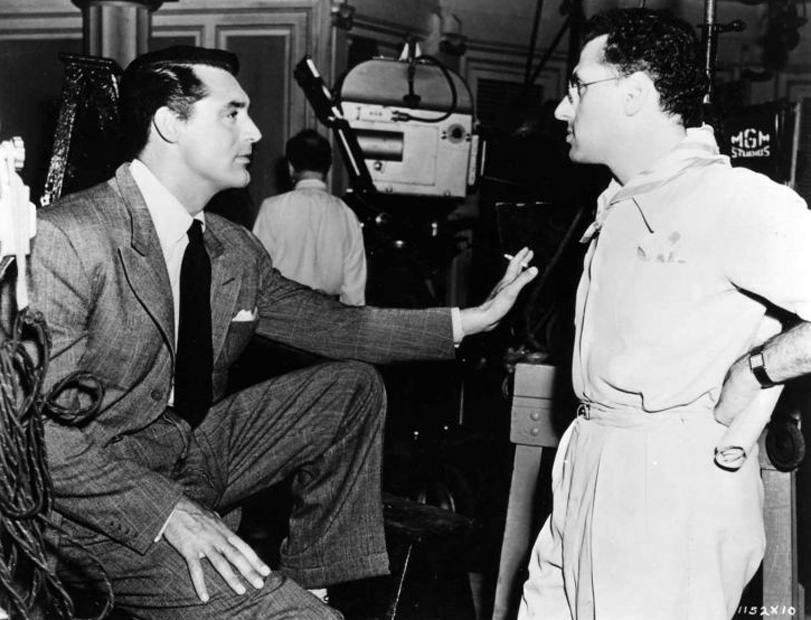
George Cukor was one of the greatest directors of the Studio Era. Not everyone thinks of Ol' George when naming iconic directors because he wasn't known for a striking visual style. What Cukor excelled at was smart properties and getting the best performances from his actors.

Twenty-one actors were nominated for Oscars in Cukor films and five of them took home the trophy. Cukor was labeled a woman's director because of his work crafting performances with actresses like Greta Garbo, Joan Crawford, and Kate Hepburn. But Cukor was also masterful with some of the best male actors in the business like Spencer Tracy, Cary Grant, and Jimmy Stewart.

Cukor's long history in Hollywood is covered in loving detail in the American Masters special On Cukor, and it's particularly fascinating because it delves into Cukor's homosexuality. Cukor was a classic example of a Hollywood mover and shaker whose sexuality was well-known, but never discussed publicly. The Tinsletown Closet allowed some artists to be gay, but never in situations where the public or press could find out.

For Cukor it meant hiding his sexuality at work, but Angela Landsbury who earned an Oscar nod in Cukor's Gaslight (1944) tells of Cukor's Sunday brunches at his home where he and his friends could let their hair down and be themselves. Oh if that pool could talk. On Cukor is a wonderful glimpse of Cukor's extraordinary body of work and his guarded private life.

Marilyn Monroe - The Final Days (2001)

Speaking of Cukor, Marilyn Monroe and Cukor paired-up on one of Hollywood's most famous unfinished films. Cukor directed Monroe in the My Favorite Wife (1940) re-make Something's Got to Give (1962). Their previous film together Let's Make Love (1960) was only successful in getting Monroe and her co-star Yves Montand's affair into the gossip rags. Monroe's next film The Misfits (1961), while fascinating, was a box office dud. So Monroe and 20th Century Fox hoped that Something and Cukor could re-establish her as the queen of the box office. She missed the throne... 

The Final Days details the making of Something with interviews with many of the people involved in the project and footage from the film- thought lost long ago. They reveal a woman who was fighting for her career while at the same time struggling with personal demons that would ultimately scotch the film- and later her life. It is a touching portrait of a woman the world has consistently tried to define- but always falls short of fully discovering.

The documentary ends with a reconstruction of forty-five minutes of Something so that we can take a peek into that remarkable world of "What if?" Monroe is luminous and funny- her Sixties look beguiling. It's hard to believe that the tragedy that would end her life was just two months away.

The Kid Stays in the Picture (2002)


Robert Evans was discovered by Norma Shearer because she thought he looked like her deceased producer husband, Irving Thalberg. Evans would go from playing a producer to being one. Producers and agents are often the catalysts to so much of what we see on the screen long before it ever makes it there. The deals, the dinners, the phonecalls- all the work that goes into a picture is usually hidden from public view. But The Kid Stays in the Picture is one of those movies that makes the audience feel like they are insiders in the Hollywood Game.

Evans started off as an actor, but quickly realized his charm and savvy could make more moolah as a producer. Evans landed at Paramount after nabbing the screenrights to The Detective (1968) for Frank Sinatra and for the next almost forty years he has been hustling to make some great movies. If his list of movies is impressive (The Godfather (1972), Chinatown (1974), and Marathon Man (1976)) his life as the quintessential Hollywood producer is the stuff of movie legend. 

The Kid is based on Evans' autobiography of the same name, so one gets the feeling that not all the bodies are exhumed (like his close friendship to Roman Polanski during his child rape case), but Evans' coke-fueled downfall is covered with enough candor to make us feel like Evans is shooting straight with us. His Rolodex is a collection of the biggest Hollywood stars of the '60's and '70's and this film allows us to flip through it... and watch Dustin Hoffman do his Robert Evans impersonation.

What are your favorites docs about Hollywood?


Friday, November 18, 2016

Movies Matter

Hello, faithful LWM readers. Last week's election put me in a bit of a funk. When you feel like the world is wobbling on the edge of a precipice, it's daunting to question yourself and wonder what you can do to help stop the impending fall. I watch and write about movies. What good is that in the grand scheme of things? Did my enthusiastic viewing of Homicidal (1961) a couple weeks ago help stave off national insanity? Did my post on the scariest movies for Halloween make the world any less terrifying?

The answer (I first thought) is, no. Watching a movie is a healthy act of escapism that allows us to take a breather from the "news" in our lives. We come back to the "real" world grateful (or not so grateful- I'm talking to you Mother's Day (2016)) for the brief cinematic vacation- but our fears and disappointments are right where we left them when the lights come up. And as a film critic/historian, I can only hope to help others discover the movies I write about and pass on that momentary spiritual rest-stop. But that's all. Movies don't change the world.

Or do they?

There are movies that give voice to discontent. They depict important cultural issues without cloaking them in metaphor and dim lighting set-ups. They take a stand and sometimes, become part of the national discourse that eventually leads to change.

Here are my Top 5 Movies Matter Movies:


The Birth of a Nation (1915)

Now just because movies can be part of change, doesn't mean that change is good. Exhibit A is D. W. Griffith's racist classic, The Birth of a Nation. Many people will discuss the cinematic virtues of Griffith's first blockbuster film: the use of close-ups, fade-outs, color-tinting, and a customized musical score to be played at theaters that showed the film. But I was distracted by the blatant racist depiction of blacks during the Civil War and Reconstruction and the lionization of the Ku Klux Klan.

The scene where Congress convenes for the first time with black elected Congressmen is jaw-droppingly racist. Black Congressmen (many played by white actors in blackface) drinking hooch and eating porkchops; taking off their shoes and putting their sockless feet on the desks to air out; jumping up and down to pass a miscegenation law so they can finally sleep with white women. The "helpless white minority" looks on from the gallery in disgust.

The film is posited as a historical re-telling- but historical inaccuracies  and outright fabrications abound. The fact that it is based on a book called, The Clansman: An Historical Romance with the Ku Klux Klan is an indication that Griffiths is making a fairy tale. But this fairy tale has a bad ending. With Griffiths' heroic portrayal of the Klan rescuing sacred white women from hordes of ravaging Blacks, the real Ku Klux Klan was reinvigorated and race riots erupted in several large cities. President Woodrow Wilson watched the film in  the White House and declared, "It is like writing history with lightning, and my only regret is that it is all so terribly true." I wonder if the movie will be shown in the White House again soon...

Gentleman's Agreement (1947)

That old chestnut about Jews running Hollywood is rather amusing when you look at the absence of Jewish characters in popular movies before WWII. Because movies were made for a mainly Christian audience, depictions of Jews were either stereotypical characters meant for derision, or they were absent altogether. Not to mention Hollywood stars quickly changed Jewish sounding names like Emmanuel Goldenberg to more marquee friendly names like Edward G. Robinson.

So the antisemitism present in America at that time was a problem that Hollywood ignored in the theaters. That is until the Holocaust. The epic devastation that unfolded in Europe shined a spotlight on our own country's troubled relationship with Jewish citizens. When head of 20th Century Fox, Darryl F. Zanuck was denied membership to a country club because they mistakenly thought he was Jewish, Zanuck decided it was time to take on the problem on the silverscreen.

Directed by Elia Kazan, Gentleman tells the story of news reporter Phil Green (Gregory Peck) who takes an assignment on antisemitism and decides to get a Jew's-eye view by pretending to be Jewish. He finds out soon enough that the difference between Green and Greenberg is staggering.

Perfectly normal and upright citizens talk about how untrustworthy "that Race" is. Green's Jewish childhood friend Dave Goldman (the always watchable John Garfield) is denied housing. Green himself is denied a room in a hotel for his honeymoon because they have a no Jew policy. Even Green's young son (played by plucky kid actor and future Quantum Leaper Dean Stockwell) is dragged into the bigotry when he gets into a fight with some of his friends because they call him a "dirty Jew."

What makes this movie insightful is that it goes to the heart of antisemitism. The gas chambers and burning crosses are the obvious products of bigotry- but they aren't the genesis. The roots of hatred are much more subtle and much more ingrained in "civilized" culture than we think. Gentleman's 8 Oscar nominations and 3 wins including Best Picture and Best Director helped dig up those roots and expose them to an American audience that needed to take a hard look at itself.

Love with the Proper Stranger (1963)

When I first started watching Love with the Proper Stranger, I wondered if it was going to be another one of those Natalie Wood vehicles where young love goes horribly wrong and poor Natalie would wind-up in an insane asylum or hugging her shot-to-death boyfriend. I never expected it to be an abortion movie.

Wood plays Angie Rossini, a Macy's salesgirl who takes a shine to musician Rocky Papasano (Steve McQueen- or as I like to call him, Steve McSqueeeeen!) and after a couple drinks winds-up knockin' boots and tootin' his horn. When Angie realizes she has a bun in the oven, she tracks down Rocky only to discover he doesn't even remember her. It's a brutal scene- but not as brutal as the scene where Rocky does the proper thing and escorts Angie to the local backalley abortionist.

We hear stories of how bad it used to be to get an abortion, but Love brings all the horror to vivid life. Without being graphic, this one scene is an honest look at the filthy conditions, fear, and degradation that women were subjected to during the years before Roe v. Wade made abortion legal. The movie becomes a more traditional romantic comedy after that, but it is this scene that elevated the film to five Academy Award nominations including a Best Actress nom for Wood. It is a scene that sticks with you- as this issue has stuck with our culture. Coincidentally, you can watch Love tonight on Turner Classic Movies.

The Accused (1988)

Between a certain pussy-grabbing president, an actor whose big break turned into the unearthing of an old rape case, and that awful swim-team rape case where the rapist only got six months- it's clear that female rape is still a big problem in this country. Almost twenty years ago a movie came out that shocked the nation and put the issue on the front page.

Based on a true story, The Accused shows the brutal gang rape of Sarah Tobias (Jodie Foster) in a bar, surrounded by cheering patrons. After the rape, the perpetrators get a plea deal and are only convicted of reckless endangerment.

But Tobias decides enough is enough and since she can't go after the rapists, she enlists the help of Asst. District Attorney Kathryn Murphy (Kelly McGillis) to go after the cheerers for criminal solicitation. It's a tough case to hear- with "she wanted it" and questions about what she was wearing and her sexual activity used to shift blame to the victim. Foster's mixture of grit and vulnerability are perfect for the role and it won her an Oscar (even though I would have given the Best Actress statue that year to Glenn Close for Dangerous Liaisons.)

McGillis was originally offered the role of Tobias, but she felt the role was too close to her personal experience. McGillis was robbed and raped in her home in 1982, making this one of those times when real life and the movies are far too similar.


Philadelphia (1993)

Hot on the heels of his Oscar for Silence of the Lambs (1992), Jonathan Demme chose to direct a controversial, loosely-based-on-actual-events movie about a wrongful termination suit  brought against a law firm by a gay man who had contracted AIDS. In '93 a movie about a gay man was rare enough- but one about a gay man dying of AIDS? It just didn't happen. But Demme pulled off a bit of directorial inspiration, by casting two of the most popular straight stars in Hollywood to play the leads. Tom Hanks is Andrew Beckett, the gay man with AIDS who is suing his law firm, and Denzel Washington is Joe Miller, the initially homophobic lawyer who takes his case.

The film not only addresses AIDS- which was then still taboo- but it also addresses the reason it was the disease that shall not be named- because the popular conception was that it was a gay disease- and homophobia was still deeply entrenched in this culture.

Demme goes to great lengths to show Beckett as a "normal" guy- not a man you would assume is gay. Hanks' relatable screen persona seems as buttoned-up as the rest of the white collar lawyers at his firm, and even old fuddy-duddy lawfirm head Charles Wheeler (Jason Robards) considers him to be a future good ol' boy. But Beckett is different from that crowd.

Demme pivots to show Beckett's tender relationship with his partner Miguel Alvarez (Antonio Banderas in a sailor suit. All aboard!) Once the audience learns what Beckett has been hiding, it's too late. They already like him.  Audiences who were perhaps not empathetic enough to understand the suffering of this scourge could perhaps understand the plight of AIDS patients and gay men by seeing one of their favorite stars portray this man- and another of their favorite stars play a man who changes his mind about how he feels about him. Hanks would win his first Academy Award for that feat.

Demme doesn't sugarcoat the disease that ultimately outs Beckett. I can't remember the first time I'd seen Kaposi Sarcoma lesions- but the most vivid recollection I have is from this movie. When Beckett lifts up his shirt in court the image is heart-rending- and indelible.

All that being said, I find Philadelphia a little overwrought, but it was an admirable movie at the time to make the AIDS crisis part of the national discussion. For less Hollywood-ized- yet equally eye-opening views of that era, I recommend documentaries How to Survive a Plague (2012), We Were Here (2011), and Vito (2011).

So take some time and watch a movie that gets you energized about making a difference. Or catch one of the many MGM Musicals at BAM this weekend for some good old fashioned escapism.

Either way- Movies do matter.


Friday, October 28, 2016

Boo to You!

I know many of you are going to be busy this Halloween dressing-up the kids for their annual sugarpocalypse, or creating your own slutty ________ costume for a party or creepy bar crawl.

But sadly, I'm an old poop. I prefer to stay home in a smoking jacket with a friend or two and curl up with a scary classic movie and a couple cocktails. Is that so wrong? Doesn't that sound more fun than dragging a cranky child on a sugar high around the neighborhood trying to avoid the houses that give out toothbrushes and celery? Or slipping in the yack that the drunk Harley Quinn over there just unloaded on the floor of some east side brah-bar? Of course it does.

So for those of you who prefer your scares in the comfort of your own home, here are my picks for Top 5 Scary Classic Movies:

Them! (1954)

This is one of the first scary movies I remember seeing on KSHB TV's Creature Feature with Crematia Mortem. Released the same year as Godzilla, Them! joined a growing movement of giant monster movies that used the Atomic Age's effect on nature as a basis for cinematic destruction. In Godzilla and The Beast from 20,000 Fathoms (1953) the monsters were giant, singular monsters that looked like creatures from another era. With Them! the terror comes not from fantastical animals from our past- but from simple creatures that live in our backyards.

Police Sgt. Ben Peterson (the venerable Brooks in Shawshank Redemption (1994)- actor and Tender Chunks spokesman James Whitmore) has been getting some strange emergency calls lately: A young girl wandering in the desert in a trance, clutching her cracked-up doll. A family's vacation trailer ripped to shreds, but the occupants missing. A general store demolished for what appears to be a sugar heist. Something terrible is happening in the New Mexican desert and only Peterson, FBI special agent Robert Graham (Gunsmoke's James Arness), Dr. Harold Medford (Santa himself, Edmund Gwenn),  and his daughter Pat (also a doctor- but probably earns less) can solve the riddle and save the world.

The great fun in this movie is the length of time we wait until the monsters are finally revealed. The high-whining sounds they make and the terror on the faces of their victims are the only cues our imaginations need to run wild. Once the giant ants reveal themselves they are fascinating in that the choice was to use physical creations for the monsters instead of superimposing enlarged footage of someone's ant farm. These ants (while not very fast-moving) are real, and have heft. The actors are reacting to being trapped in mandibles, not just pointing and yelling at a blank screen.


Them! in some ways looks hokey with its early special effects, but the story has a great arc, and there are real emotional consequences which is rare for these films. I will never forget the terror this film inspired when I was a child, and so I step on ants anytime I come across them.

Alien (1979)

In space, no one can hear you scream. But that does not hold true for the movie theater... or my living room. Ridley Scott's sci-fi horror masterpiece Alien spawned sequels, videogames, and prequels, but for my money nothing beats the first one. A mining crew is awoken out of cryogenic slumber to answer an SOS from an abandoned ship on a desolate planet. They discover a strange egg patch shrouded in mist in the belly of the giant ship. It's a case of curiosity bursts out of the cat's stomach when unlucky crew-member Kane (John Hurt) becomes a host to an alien and the rest is movie history.

I love this film so much because woven into the crew vs. alien survival story is the deeper social/psychological theme of female empowerment in an era of corporatization. Ripley (the perfectly cast Sigourney Weaver) is not only pursued by a deadly alien, she is also betrayed (and attacked) by the corporation that she works for. The Female Gothic films of the '40's often featured women endangered in their homes and marriages. But Alien moves that terror from the traditional home into the workplace. In a '70's post-Women's Lib twist, Ripley eschews traditional femininity, puts on her space pants and kicks ass like the best of the boys.

These gender themes are mirrored in the Oscar-winning design of H.R. Geiger. The cavernous alien ship is rounded and organic- like a space womb with entryways that look like things that Trump would like to grab. The alien itself is a walking phallic symbol with a second pair of teeth that shoot out of its mouth like a little eager weiner. It's impossible to avoid the sexual implications of Geiger's work. He spent a lifetime melding human and mechanical forms and with Alien found a vehicle to explore that cringe-worthy imagery.

The complexity and the devotion to style and the look of the film elevates what could have just been another space monster flick into an unforgettable classic. Scott will return again to the Alien mythology next August with Alien: Covenant. Don't ask me if I think it will be better than Alien. It won't be.

The Shining (1980)

The Shining gives me nightmares every time I see it. All someone has to say is "Come and play with us, Danny," and I am guaranteed a toss-and-turn evening... and not in the good way. But amazingly enough the author of the book that the film is based on, horror maestro Stephen King, doesn't like it. Whut???!!!

King once said that he had a problem with Stanley Kubrick's casting of Jack Nicholson as Jack Torrance, the father of a small family who decides to take a job as caretaker of a snowed-in hotel during the long, cold winter. King felt that Nicholson naturally gave off a crazy vibe, so that when he stopped being a "dull boy" it felt less like he'd been possessed by the spirits of the Overlook Hotel, and more that he just had a screw loose from the beginning. Point well-made, Mr. King.

But after reading the book and rolling my eyes at the animal-shaped topiary that came alive and went after little Danny, I decided that Kubrick's idea is scarier. While the supernatural aspects of the Overlook and its grim past haunt the picture- to me, the descent into madness of an outwardly normal father (even if he is a writer) is more terrifying than a story where "the ghosts made me do it."

For Kubrick the space itself- its isolation, its emptiness, its never-ending hallways and mazes force Jack to look at himself- and the regret and anger he sees drives him insane. Of course Jack is a little off at the beginning- he agreed to take this crazy job in an empty hotel. It's the new level of crazy that his wife and child see in the wild eyes of the man that they thought they knew that terrifies. Now that's scary. That and those fucking twins.

Return of the Living Dead (1985)

Okay, this movie is less scary and more funny. Dan O'Bannon's (who coincidentally wrote Alien) take on George Romero's classic cult zombie flick Night of the Living Dead (1968) does not take itself very seriously. Even the poster proclaims, "They're back from the grave and ready to party!" When Frank (Pathmark pitchman James Karen) and Freddy (Thom Matthews) start putzing around with the old army canisters in the basement, they accidentally unleash a toxic gas that brings the dead back to life. Soon the graveyard next door is full of brain-hungry zombies who chase a group of young people from location to location hoping to get some cranial action all to a punk soundtrack.

Where Romero's film had underlying themes of race and social upheaval, Return just wants to have a gory good time with ridiculous characters and throwaway lines like, "Like this job?" The special effects by father-son team Kevin and Robert McCarthy are actually very good- with one slimy zombie in particular providing plenty of ick. If you are pissed at this season's premiere of The Walking Dead, try watching Return for some undead with a sense of humor.

The Others (2001)

Nothing is as creepy as a good ol' Gothic ghost story, and this one is a doozy! Grace (Nicole Kidman looking ethereal) and her two children live in a remote English country house at  the end of WWII. Grace has her hands full with a husband missing in the war and two children who have a rare disease that makes them photosensitive. The sprawling home with mazelike hallways and rooms is made even more eerie with shades and drapes constantly drawn so the kiddies won't be exposed to pesky sunlight.

After the arrival of some elderly servants to help out (including the Irish spitfire, Fionnula Flanagan), Grace begins to hear and see other people in the house and fears that something- or someone is threatening her family. In the tradition of the Gothic female film, the heroine doubts her own sanity- struggling with whether or not what she is experiencing is real.

Director Alejandro Amenabar is a master of mood in this film, and the encroaching dread is almost a physical sensation. The Others doesn't need zombies, axe-murderers, or giant ants to make you jump out of your seat. It makes the hair on your neck stand-up with a simple oil lamp and a closed door.

So curl up with one of these fright flicks... if you dare...