Thursday, June 6, 2019

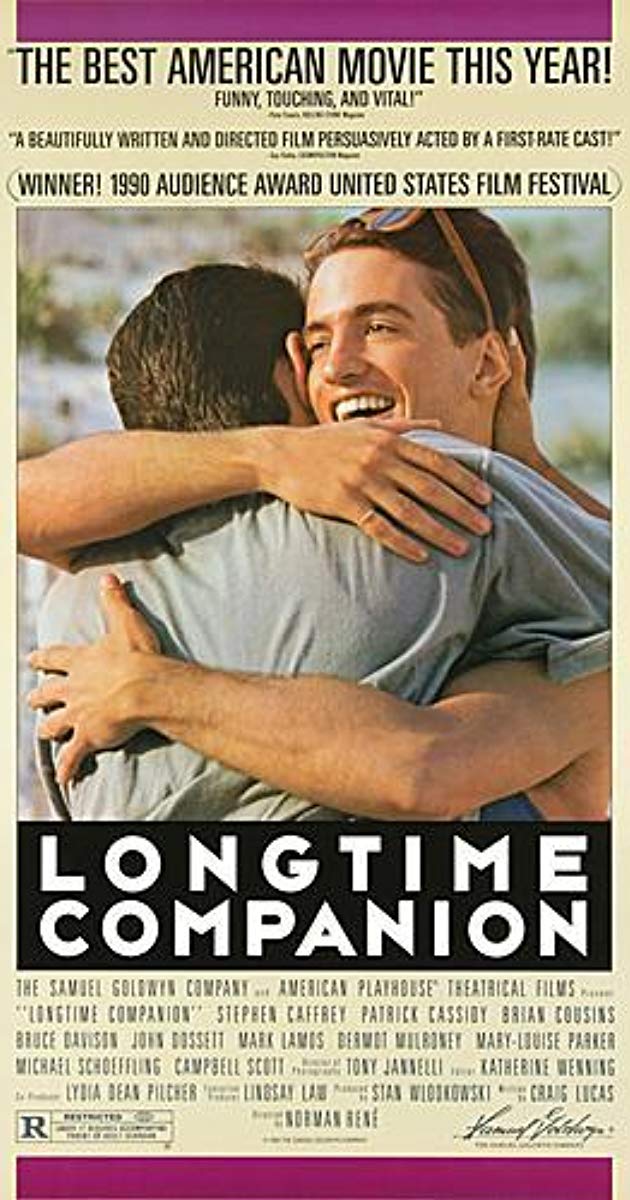
Lance's Werthwhile Pride Movies: Longtime Companion

AIDS Movies. It's not the most upbeat Hollywood genre. In fact it took Hollywood around four years after the infamous 1981 NY Times Gay Cancer article to even broach the subject with Buddies (1985). But over the years, there have been some excellent dramas, comedy-dramas, and documentaries that have given cinematic coverage of one of the darkest times in this country's history. One movie I'd heard of but hadn't seen until recently is a special entry in this genre- Longtime Companion (1989).

LC opens on Fire Island in 1981 with a group of gay friends doing what gay friends do on Fire Island- drinking cocktails at a tea dance, watching hunky guys sashay on the beach, and finding love... or at least lust among the dunes. But interspersed with these idyllic moments of gay life are shots of various characters coming across the aforementioned Times article. I don't know if there was a time when a viewer watched this and wondered, "Hm. What's going to happen?" But for me, the spectre of AIDS haunts this film from the very first title card: July 31, 1981.

The film proceeds to show how the AIDS epidemic affects this group of friends and their extended NYC circle through a series of jumps in time. It feels like a gut punch every time the screen goes to black and a title card shows a new date. "Jesus. Who's dead or dying now?" It borders on predictable cliche- but perhaps that's the point. As this disease spread and decimated entire communities, every day was a new funeral, another friend gone, a lover diagnosed, a mysterious sore appearing. It was a never-ending nightmare that seemed both random- and sickeningly predictable.

What makes this movie stand-out from some of its more famous cinematic kin (yes, I'm talking about you, Philadelphia) is how it deals with this circle of friends. LC is insular. It is the world of this particular group of gay men. While the import of this disease stretches far beyond their ranks, the focus remains on the connections between them- the details of their grief and dying.

Refreshing even for now (revolutionary for 1989) there is no sense that they are struggling with being gay. This movie celebrates these self-made gay communities, accepting these bonds at face value. LC has no time for gay shame. These men are fighting too hard for their lives. There is freedom here even in the midst of an epidemic. It's a unique perspective.

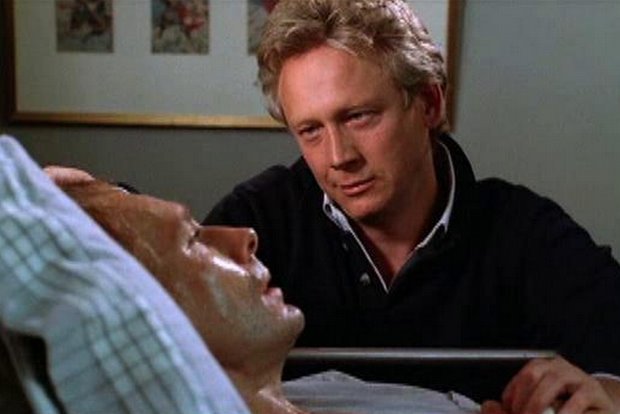
LC isn't great cinema. The editing feels a little too made-for-TV and melodrama overwhelms on occasion- but what it does well is focus on small, human moments that warm, terrify, and devastate. The overhead shot of the first victim of this group (an impossibly young and beautiful Dermot Mulroney) shows him lying alone in his hospital bed hooked up to respirators through tubes and a mask, his eyes wide in both terror and wonder.

Bruce Davison (the baddy Senator Kelly from the X-Men franchise) was nominated for an Oscar for his portrayal of the titular companion- and Mary Louise Parker and Tony Shalhoub add some good "Before they were stars" moments. Sadly director Norman Rene died of AIDS in 1996 at the age of 45. He left behind a beautiful testament to the strength and power of friendship and love- and that's what Pride is all about.

Thursday, May 2, 2019

Shuttup and Close Your Eyes!- A Quiet Bird Box

Last night I finally made the time to watch the much squawked about Netflix apocalyptic monster flick, Bird Box (2018). I won't go into a major dissertation on the problems I have with movies whose monsters have undefinable abilities and origins, who seem to appear and disappear at the behest of the scriptwriter. What I do want to talk about is how this movie seems to be connecting to the same zeitgeist as, and in a similar way to, last year's horror breakout A Quiet Place (2018).

Both films see human civilization wiped out, reduced to a subsistence existence after the invasion of unknown monsters. In order to survive, we have to give up our most basic of senses: In Quiet you can't speak or make sound; Bird Box makes seeing deadly.

I'm not proposing that Bird Box is a big ol' copycat. I think these two films are tapping into our current political/social anxieties. How do you survive in a world where speaking out doesn't help- or even worse, makes you a target? Seeing is dangerous when our leaders lie to our faces on our big screen TVs- or worse, the very media that is supposed to show us the "truth" manipulates what we see for ratings and political power.

In these two dark mirror films, we must close our mouths and our eyes to survive. I know I've had to stop watching the news and refrain from speaking up on social media posts that will result in my blood pressure skyrocketing. There is so much that is horrific in the world right now, it sometimes feels like the only way to get through it in one sane piece is to close our eyes and keep quiet.

At the center of both films we also have pregnant women who struggle to keep their families, and themselves safe. In fact, the actual births of the children endanger- or kill others. There is something perverse about watching two heroines make the choice to bring babies into these bloodcurdling worlds at any cost. Perhaps the filmmakers intend these newborns to be symbols of hope and the indefatigability of the human race.

I question why anyone would want to have children in these environments in the first place. What kind of life is it where children aren't allowed to see or speak or they die- in really awful ways? Not to mention that in both movies, the kids' very existence threatens that of the mother and those around her.

The spectre of abortion haunts these films- it is the unspoken answer of what to do when having a baby is a really bad idea.  I'm not sure that's intentional- Quiet avoids overtly mentioning the "A" word and Bird Box only offers options like adoption in a pre-apocalypse OBGYN visit. But horror movies that tap into our cultural dilemmas are often so effective because they aren't overt.

In the world outside the movie theater, we've recently witnessed a spate of state laws passed that limit a woman's right to choose- even in cases of incest and rape. Birth no matter what. The residual dread and bodycount of A Quiet Place and Bird Box seem to question that premise.

Sunday, April 14, 2019

Sing Out Aretha!: Amazing Grace

I have often described the movie theater as a kind of church for me- but I have never found religion quite like I did at BAM this weekend watching Amazing Grace (2018). In 1972 Aretha Franklin recorded her first gospel album in a Baptist church in South L.A. It was an historic enough occasion that film cameras directed by Sydney Pollack captured the two nights of concerts and rehearsals. Whether it was imagined to be a television special or Warner Brothers film- due to technical difficulties the resulting footage was never released. After Pollack's passing in 2008, producer Alan Elliott took another crack at it- and thank God he did.

Let's start with Franklin. After hearing this miracle of a voice, how did any artist have the chutzpah to  warble ever again? The power, the nuance, the sheer thrill of Franklin's vocals matched with the addictive rhythmic spell of gospel is so electric, it was impossible for the audience to keep their asses in their seats. Like a divine high priestess, Franklin stands erect at the mic, casting her soul and her sweat (there's a lot of sweat) into the music, defying the hardest heart not to erupt in pure joy.

While Franklin is clearly the star- Pollack's camera coverage of the audience and the musical performers and James Buchanan's editing are so deft- that the entire setting feels like an exercise in virtual reality.

The rapturous faces, the 70's styles, and the Black Pride swept us up- and we were all soon applauding for and clapping along to a performance that was over forty years old- as if we were there sitting next to Mick Jagger, be-wigged gospel icon Clara Ward, and Aretha's daddy the right reverend C.L. Franklin, watching a once-in-a-lifetime moment.

I'm not a church-goin' guy, but boy did I leave this concert film with religion. See Amazing Grace- and let Aretha into your heart.


Sunday, March 10, 2019

The Gays of Future Past: Different from the Others (1919)

This week I watched a movie that really got my film geek juices flowing! It's that perfect junction between film and history that makes me want to sit down and write a blog post. Aren't you lucky?

The film is Different from the Others (1919) and the fact that I was able to see it at all is a miracle. Different is credited as one of the first films to sympathetically depict homosexuality. It was co-written by and stars well-known German sexologist Magnus Hirschfeld and was intended as a sort of PSA against the German law Paragraph 175 which made it illegal for men to bonk men.

In the film, famous violinist Paul Korner (Conrad Veidt one year before he would rocket to fame in The Cabinet of Dr. Caligari (1920) and many years before he would be immortalized playing Major Strasser in Casablanca (1942)) falls in love with starstruck pupil Kurt (Fritz Schulz) and soon the two are inseparable.

This comes to the attention of call-boy turned blackmailer Franz (Reinhold Schunzel... which sounds like a tasty German breakfast pastry) who threatens Paul with exposure of his illegal lifestyle if he doesn't cough up some marks.

Hirschfeld appears as himself to explain to Paul (and the audience) that there are many facets of human sexuality- and that homosexuality is as natural and as moral as heterosexuality... IN 1919!!! ONE HUNDRED YEARS AGO!!! We've literally been trying to explain this to everybody since men wore spats!

Different was assumed lost because once the Nazis took power every available copy was burned along with Hirschfeld's entire Institute of Sexual Research library in Berlin. But luckily a copy was found in the Ukraine in the 1970's so now we can see this unique attempt by a film to try and sway public and political opinion. It's like the Philadelphia (1993) of 1919.

The film that exists is just a fragment. There are numerous title cards and still photos to explain what we can't see. But what is here is remarkable. There are no passionate makeouts or man-on-man sexfests. The passion and longing are kept to glances and touch- and the good ol' indicators of homosexuality are refined culture, effeminate hand gestures and hands on hips... and kicky silk dressing robes.

I was struck by how similarly gays are filmed in some recent releases: The effeminate, bookish out gay kid in Love, Simon (2018); the longing glances that make up for any actual gay sexual activity in Bohemian Rhapsody (2019) (and if the trailer for Rocketman (2019) is any indicator, there will be lots of gay eyeball-only action for Taron Egerton too); the one-night hand-holding that takes the place of more carnal intimacy in Boy Erased (2018). 

While we do have Call Me by Your Name (2017)God's Own Country (2017)and Todd Haynes to put the sex in gay sexuality, it feels to me that there has been some neutering of the gay experience in popular Hollywood product.

It is ironic that a movie that was made when being gay was literally illegal, shares so much in common with gay movies made in today's more permissive culture.

We're here. We've been here. Get used to it.


Monday, February 25, 2019

F**k The Best!- The Best Best Pictures in History

No! I did not watch the Oscars last night! Maybe I was scared of what I would do if Glenn Close lost the Best Actress contest. Maybe I was scared I'd have nightmares of David Korin's wig-shaped set. Maybe I'm a lonely old movie queen who got drunk, watched Spike Jonze's her (2013) and cried into his MacBook.

Whatever the case, it wasn't until this morning that I learned the winners and losers of the coveted statuette. One winner in particular stood out. Whether it's comparisons to the old-fashioned Driving Miss Daisy (1989), the Shirley Family's disgust with Nick Vallelonga's version of the story about their relative, or Seth Meyer's pretty-spot-on parody of white-written black rights narratives, Green Book (2018) is the most maligned Best Picture winner since Crash (2004).


What struck me is the idea that whether or not Green Book is the Best Picture of the class of '18 or not, the mantle of Best Picture often carries with it the idea that the winner will be a superlative example of film for many years. I don't think that happens as often as the Academy would like.


So whether it's a sense of firsts, unmistakable artistry that is constantly copied or remade,  or a movie that's worked it's way into our popular zeitgeist, here's my list of Best Picture winners that have that special something that I think will stand the test of time:

All Quiet on the Western Front (1930)
It Happened One Night (1934)
Gone with the Wind (1939)
Rebecca (1940)
Casablanca (1943)


The Best Years of Our Lives (1946)
All About Eve (1950)
On the Waterfront (1954)
The Bridge on the River Kwai (1957)
Ben Hur (1959)


The Apartment (1960)
West Side Story (1961)
Lawrence of Arabia (1962)
The Sound of Music (1965)
Midnight Cowboy (1969)
The Godfather (1972)
Rocky (1976)
Annie Hall (1977)


Terms of Endearment (1983)
The Silence of the Lambs (1993)
Forrest Gump (1994)
Titanic (1997)


That's my list. You think I left something off? Feel free to tell me what you think.

In the meantime, let's see whether Olivia Colman finds a rabbit boiling on her stove...


Wednesday, February 20, 2019

Imagine This- Son of Rambow

I love coming across little film gems, and this week thanks to the Netflix DVD service (yes, I still use it- and they will pull those red envelopes out of my cold, dead hands) I stumbled onto delightful British indie, Son of Rambow (2007).

I'm not particularly drawn to most childhood best friends flicks (unless there's a body ala Stand by Me (1986)), but this tale of two misfits really made me misty. Rambow is like Wes Anderson set Rushmore (1998) in an English school without his trademark aestheticism. Young Will Proudfoot (gangly Bill Milner) has a very active artist's imagination- which isn't that big a deal- until you realize he is being raised in one of those religious cults that doesn't allow contact with modern technology.

So while the other kids get to watch a video in class, Will sits in the hall doodling fantastical cartoons in his bible. That's where he meets school ne'er-do-well Lee Carter (the fiendishly deviant Will Poulter) who immediately recognizes a good mark when he sees one. Lee cons and guilts Will into starring as the "stuntman" in the film he's making for a young person's film contest- but once Will gets a gander at Lee's bootleg video of First Blood, an obsession is born.

Will's imagination takes flight (along with a dog statue attached to a kite) and the two never-belongs use a video camera to expand their worlds and their friendship. Visiting French foreign language student Didier Revol (appropriately gender indistinct Jules Sitruk) inserts his cool self into the film and the boys experience their version of art vs. popularity.


The film never dips too deeply into ooey gooey friendship- just enough to make us feel the loneliness that these two boys desperately wish to fill. Director and writer Garth Jennings keeps it light with wry Eighties nostalgia and imaginative blendings of illustration and VHS recording. The underground new wave club where kids don eyeliner, drink Coke with Pop Rocks, and dance to Siouxsie and the Banshees is a magical place that I wish had existed for me.

And kids smoke. Awesome.


Friday, February 8, 2019

The Big Screen in the Sky: RIP Albert Finney

A sad start to this Friday with the news that actor Albert Finney has passed. He seemed tailor-made to play a rebellious Brit at a time when youth culture exploded. But that sparkling deviltry never left his roles even as he aged in a film career that spanned almost sixty years. Finney earned five Oscar noms (never won- Geesh!) and a knighthood that he summarily rejected- a very Tom Jones thing to do. Finney was 82.


Lance's Werthwhile Finney Picks:

Tom Jones (1963)- This is the movie that shot Finney to international stardom and his first Oscar nomination. And why not? He's hot as hell in it- in a naughty British sort of way. I once dated a guy who looked like a young Albert Finney. I have very good taste in men.


Two for the Road (1967)- Finney and Hepburn make the perfect imperfect couple in this swingin' Stanley Donan dram-com.

Murder on the Orient Express (1974)- In a cast crowded with stars like Lauren Bacall, Ingrid Bergman, Sean Connery, Anthony Perkins, Vanessa Redgrave et al., Finney's Poirot takes a backseat to none of them and earns another Oscar nom.

Under the Volcano (1984)- This character piece earned Finney his fourth Oscar nom as a drunk bureaucrat who is headed for the end- but doing it his way.

Erin Brockovich (2000)- While Julia Roberts (and her rack) may have been the focus of this popular little woman vs. the big guy flick, Finney is a wonderfully gruff counterbalance to the Roberts charm. It was the last time he would be announced as an Oscar nominee.


Big Fish (2003)- As the inveterate storyteller in Tim Burton's father-son masterwork, Finney's charm puts over every one of his tall tales, even the most un-swallowable of them.


Skyfall (2012)- He's an old groundskeeper with a shotgun who helped raised James Bond. What more could you want?